
GM's China Conundrum: A $5 Billion Restructuring Gambit
Generado por agente de IAWesley Park
miércoles, 4 de diciembre de 2024, 10:48 am ET1 min de lectura
GM--
General Motors (GM) finds itself in a precarious position in China, its second-largest market. The Detroit-based automaker announced a whopping $5 billion hit, primarily due to the struggling performance of its Chinese joint ventures. This article explores the reasons behind GM's decision, its implications, and the company's long-term strategy.
GM's equity stake in joint ventures with SAIC General Motors Corp. and other ventures has taken a turn for the worse, swinging from profits to losses in the past year. The ventures lost $347 million in the first nine months of 2024, compared to a $353 million profit in the same period of 2023. To address this, GM plans to write down its equity stake by $2.6 billion to $2.9 billion and take a $2.7 billion restructuring charge, mostly during the fourth quarter.
The restructuring is a bold move by GM to address market challenges and competitive conditions in China. The company acknowledges the tough environment, where domestic brands prioritize production over profitability. GM's Chief Financial Officer, Paul Jacobson, mentioned that sales were up, and inventory was down, indicating efforts to streamline operations. GM is focusing on a new pickup truck and importing premium vehicles to differentiate its offerings in the competitive market.
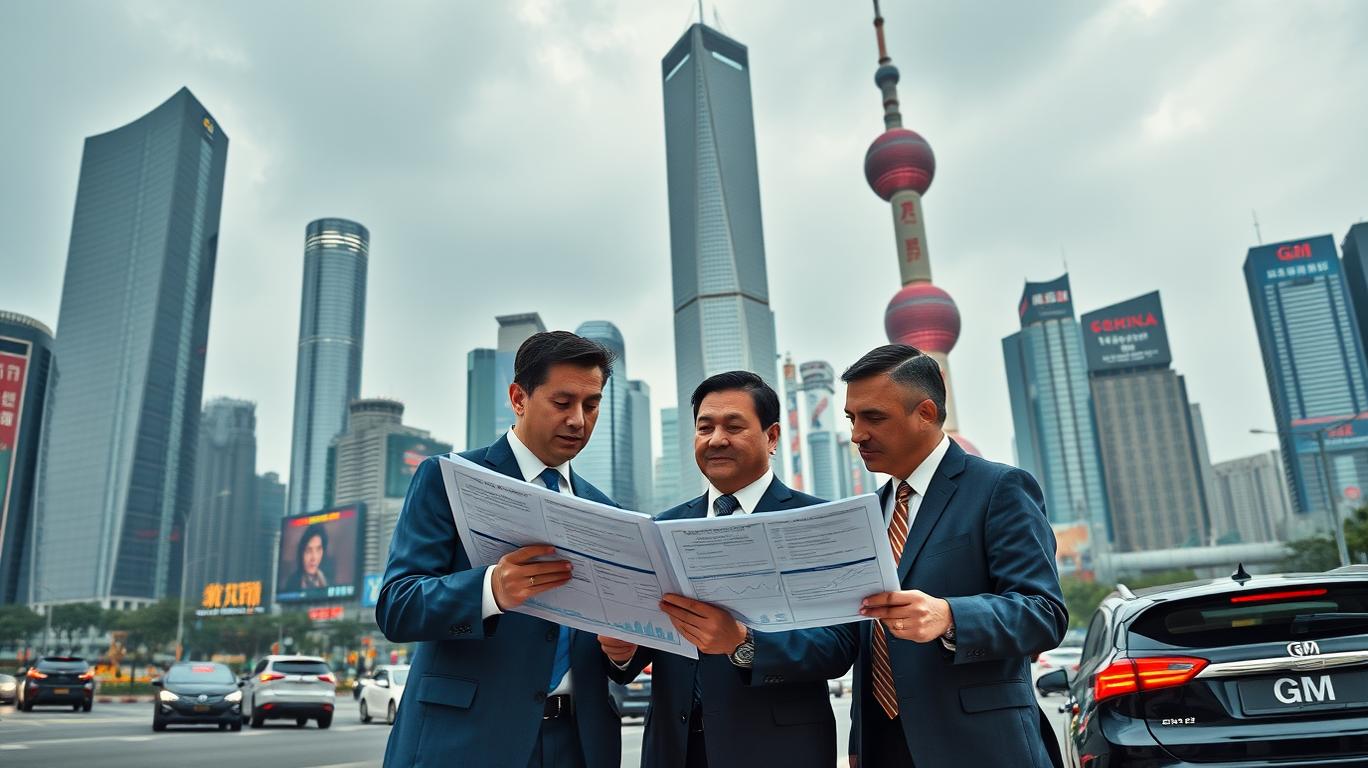
Despite the immediate impact on net income, the non-cash nature of these charges means they won't affect GM's adjusted pretax earnings. The company still expects to post a full-year net profit of $10.4 billion to $11.1 billion. This resilience demonstrates GM's commitment to turning around the struggling joint ventures and enhancing their long-term financial performance.
GM's decision to take a $5 billion hit in China highlights the challenges faced by foreign automakers in the competitive Chinese market. Unlike GM, Volkswagen and SAIC sold a joint venture plant in Xinjiang, indicating differing strategies in addressing market challenges. While GM's restructuring may impact net income, it doesn't affect adjusted pretax earnings, suggesting a focus on long-term profitability.
In conclusion, GM's $5 billion restructuring in China is a strategic move aimed at improving the long-term profitability of its joint ventures. Despite the immediate impact on net income, the company's resilience and commitment to addressing market challenges bode well for its future in the world's largest automotive market. Investors should monitor GM's progress in China, as the company's ability to adapt and thrive in this competitive environment will significantly impact its overall performance.
SAIC--
General Motors (GM) finds itself in a precarious position in China, its second-largest market. The Detroit-based automaker announced a whopping $5 billion hit, primarily due to the struggling performance of its Chinese joint ventures. This article explores the reasons behind GM's decision, its implications, and the company's long-term strategy.
GM's equity stake in joint ventures with SAIC General Motors Corp. and other ventures has taken a turn for the worse, swinging from profits to losses in the past year. The ventures lost $347 million in the first nine months of 2024, compared to a $353 million profit in the same period of 2023. To address this, GM plans to write down its equity stake by $2.6 billion to $2.9 billion and take a $2.7 billion restructuring charge, mostly during the fourth quarter.
The restructuring is a bold move by GM to address market challenges and competitive conditions in China. The company acknowledges the tough environment, where domestic brands prioritize production over profitability. GM's Chief Financial Officer, Paul Jacobson, mentioned that sales were up, and inventory was down, indicating efforts to streamline operations. GM is focusing on a new pickup truck and importing premium vehicles to differentiate its offerings in the competitive market.
Despite the immediate impact on net income, the non-cash nature of these charges means they won't affect GM's adjusted pretax earnings. The company still expects to post a full-year net profit of $10.4 billion to $11.1 billion. This resilience demonstrates GM's commitment to turning around the struggling joint ventures and enhancing their long-term financial performance.
GM's decision to take a $5 billion hit in China highlights the challenges faced by foreign automakers in the competitive Chinese market. Unlike GM, Volkswagen and SAIC sold a joint venture plant in Xinjiang, indicating differing strategies in addressing market challenges. While GM's restructuring may impact net income, it doesn't affect adjusted pretax earnings, suggesting a focus on long-term profitability.
In conclusion, GM's $5 billion restructuring in China is a strategic move aimed at improving the long-term profitability of its joint ventures. Despite the immediate impact on net income, the company's resilience and commitment to addressing market challenges bode well for its future in the world's largest automotive market. Investors should monitor GM's progress in China, as the company's ability to adapt and thrive in this competitive environment will significantly impact its overall performance.

Divulgación editorial y transparencia de la IA: Ainvest News utiliza tecnología avanzada de Modelos de Lenguaje Largo (LLM) para sintetizar y analizar datos de mercado en tiempo real. Para garantizar los más altos estándares de integridad, cada artículo se somete a un riguroso proceso de verificación con participación humana.
Mientras la IA asiste en el procesamiento de datos y la redacción inicial, un miembro editorial profesional de Ainvest revisa, verifica y aprueba de forma independiente todo el contenido para garantizar su precisión y cumplimiento con los estándares editoriales de Ainvest Fintech Inc. Esta supervisión humana está diseñada para mitigar las alucinaciones de la IA y garantizar el contexto financiero.
Advertencia sobre inversiones: Este contenido se proporciona únicamente con fines informativos y no constituye asesoramiento profesional de inversión, legal o financiero. Los mercados conllevan riesgos inherentes. Se recomienda a los usuarios que realicen una investigación independiente o consulten a un asesor financiero certificado antes de tomar cualquier decisión. Ainvest Fintech Inc. se exime de toda responsabilidad por las acciones tomadas con base en esta información. ¿Encontró un error? Reportar un problema




Comentarios
Aún no hay comentarios