
GM Navigates Tariff Crossroads: Q1 Wins Mask Clouded Horizon
General Motors’ first-quarter 2025 results reveal a company caught between short-term resilience and long-term uncertainty. While GM eked out earnings and revenue growth, the withdrawal of full-year guidance—coupled with the looming shadow of U.S. auto tariffs—paints a picture of cautious optimism. Let’s dissect the numbers and their implications for investors.
Financial Highlights: Gains Amid Growing Pains
GM reported Q1 revenue of $44.02 billion, a 2.3% year-over-year increase, exceeding Wall Street’s $43.05 billion estimate. Adjusted EPS hit $2.78, narrowly beating the $2.72 consensus, though operating income dipped to $3.35 billion—$100 million below expectations. A closer look reveals cracks beneath the surface:
- Adjusted EBIT fell 9.8% to $3.49 billion, with the EBIT margin shrinking to 7.9% from 9.0% in Q1 2024. CFO Paul Jacobson cited rising production costs, a product mix skewed toward lower-margin trucks, and a $300 million hit from the Mexican peso’s depreciation.
- Net profit dropped 6.6% to $2.7 billion, exacerbated by a $400 million surge in expenses, including warranty costs and plant upgrades. A fire at ITW’s seatbelt component plant in Mexico further disrupted truck production, a key growth driver.
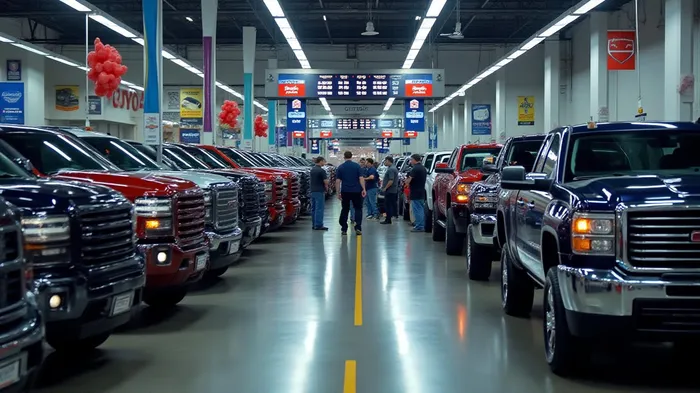
Despite these hurdles, GM’s U.S. sales soared 17%, fueled by record truck sales (over 200,000 units) and a 31% jump in Tahoe/Suburban/Yukon sales. The latter’s pre-tariff surge hinted at consumer urgency ahead of President Trump’s April 2 tariffs. Meanwhile, China operations turned a corner, contributing $45 million in equity income compared to a $106 million loss last year.
The Tariff Wild Card: Deal or Disaster?
The real story lies beyond the numbers: GM’s decision to withdraw full-year guidance underscores the high-stakes uncertainty around U.S. auto tariffs. The White House’s proposed policy—reported by the Wall Street Journal—aims to prevent double taxation by capping tariffs on foreign-made cars and parts. Key terms include:
- Retroactive refunds for tariffs paid on steel/aluminum since 2020.
- Auto parts tariffs capped at 3.75% of a U.S.-made car’s value in year one, phasing to 2.5% thereafter.
GM CEO Mary Barra called the administration’s talks “productive,” but CFO Jacobson emphasized the need for clarity before reinstating guidance. The stakes are high: the company’s 2025 targets—$11.2–$12.5 billion net income and $11–$12 adjusted EPS—are now “under review.”
Investor Sentiment: A Wait-and-See Stance
Despite outperforming on EPS and revenue, GM’s stock dipped 2% pre-market, reflecting skepticism about long-term tariff impacts. Analysts remain divided:
- Bulls point to strong truck sales and China’s turnaround, arguing GM’s $47.03 closing price (up from $44.99 at quarter’s start) signals investor confidence in its operational execution.
- Bears cite margin pressures and the $300 million currency hit, warning that tariff uncertainty could derail cost-saving efforts.
Conclusion: The Tariff Deal is the Make-or-Break
GM’s Q1 results are a mixed bag. While its trucks and China rebound are positives, margin erosion and production hiccups underscore vulnerabilities. The tariff deal’s final terms could determine whether 2025 becomes a comeback story or a cautionary tale.
- Optimism Anchor: The proposed tariff structure—particularly the refund mechanism—could recoup lost revenue. If finalized, it might allow GM to reinstate guidance as early as Q2, boosting investor confidence.
- Risk Factors: A hardline tariff policy or further production disruptions (e.g., ITW’s recovery timeline) could deepen margin woes. The $400 million in unexpected costs in Q1 suggest operational challenges may persist.
Investors should monitor two key metrics:
1. White House tariff policy finalization (expected before Trump’s May 1 Michigan rally).
2. GM’s EBIT margin recovery—if it can rebound to 8.5% or higher, it’ll signal resilience.
For now, the verdict is clear: GM’s Q1 was a win, but the next move rests with Washington. Until clarity emerges, this stock is a hold—ideal for investors willing to bet on tariff resolution but too risky for the risk-averse.





Comentarios
Aún no hay comentarios