
GM's EV Strategy Reassessment: A Turning Point for Long-Term Value?
General Motors' (GM) electric vehicle (EV) strategy has undergone a dramatic reassessment in 2025, driven by shifting market dynamics and the need to align production with affordability-focused demand. While the company celebrated record EV sales for the year, a sharp fourth-quarter decline exposed vulnerabilities in its approach. Now, GMGM-- is recalibrating its strategy through production cuts, cost innovations, and a renewed emphasis on profitability. For investors, the question remains: Is this realignment a sustainable path to long-term value creation, or a temporary fix for a struggling segment?
A Year of Contrasts: Record Sales and Q4 Woes
GM's 2025 performance was marked by contradictions. The company reported a 5.5% increase in U.S. sales for the year, with EVs driving much of the growth and securing its position as the second-largest EV seller in the U.S. However, this success masked a critical downturn in the fourth quarter, where EV sales plummeted 43% year-over-year, with models like the Cadillac Lyric and Chevy Blazer EV suffering steep declines. Analysts attribute this to the expiration of the $7,500 federal EV tax credit, regulatory shifts, and high interest rates that dampened consumer demand.
Strategic Realignment: Cutting Overcapacity and Prioritizing Profitability
In response, GM has embarked on a strategic realignment to reduce EV overcapacity and align production with customer demand. The company announced a $1.6 billion charge related to this shift, including converting the Orion Assembly plant from EV to internal combustion engine (ICE) production. CFO Paul Jacobson emphasized a pivot to "build to demand", a strategy aimed at improving EV profitability. This move reflects a broader industry trend of scaling back aggressive EV production targets in favor of more measured, demand-driven approaches.
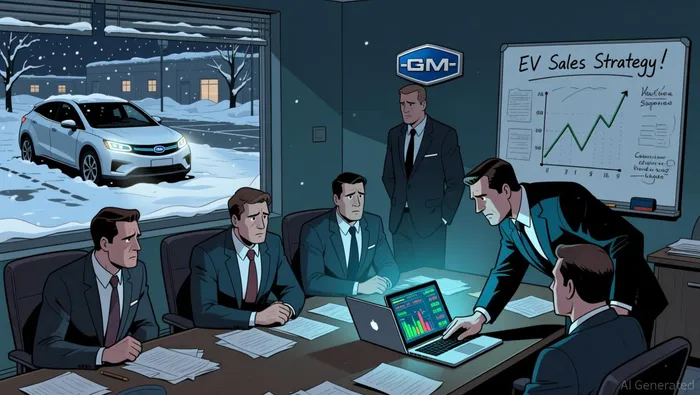 GM's realignment also includes reducing incentives, which now account for 8.7% of its average transaction price of $49,000. While this may temporarily hurt sales volume, it signals a focus on stabilizing margins. The company has also delayed work at major EV factories, citing weak demand. These steps, though costly in the short term, aim to create a leaner, more responsive production model.
Affordability-Driven Innovations: Battery Tech and Cost Discipline
Central to GM's recovery is its focus on affordability, achieved through cost-reduction innovations in EV manufacturing. The company is shifting to lithium iron phosphate (LFP) battery chemistry and prismatic cell formats, which promise lower costs without sacrificing performance. Collaborations with partners like Samsung and LG Energy Solution are also expanding GM's battery strategy, leveraging joint ventures to drive down expenses.
Material cost reductions, such as larger battery modules and optimized manufacturing processes, are expected to yield significant savings. GM has already saved tens of millions of dollars in 2025 through improved equipment effectiveness and yield. These innovations, combined with a redesigned manufacturing footprint, position the company to compete more effectively in a price-sensitive market.
Long-Term Value: A Path to Stabilization? Despite near-term challenges, GM's strategic shifts have bolstered its financial outlook. The company raised its 2025 adjusted core profit forecast to $12–$13 billion, citing stronger-than-expected earnings and reduced tariff impacts. This optimism is grounded in a belief that the EV market will stabilize over time, with GM aiming to restore North American margins to historical levels through cost discipline and operational efficiency.
However, skepticism persists. The Orion Assembly plant's pivot to ICE production underscores the limitations of GM's current EV strategy, at least in the short term. For long-term value creation, the company must demonstrate that its affordability initiatives can sustain consumer demand without relying on government subsidies. Success will depend on whether GM can balance innovation with profitability while navigating a competitive landscape increasingly dominated by Chinese EV manufacturers and Tesla.
Conclusion: A Turning Point or a Temporary Fix?
GM's EV reassessment represents a critical juncture. By prioritizing affordability, cutting overcapacity, and innovating in battery technology, the company is addressing immediate challenges while laying the groundwork for future growth. Yet, the path to long-term value remains uncertain. Investors should monitor GM's ability to execute its cost-reduction strategies, maintain profit margins, and adapt to evolving regulatory and market conditions. If successful, this realignment could indeed mark a turning point-a pivot from speculative overreach to sustainable, demand-driven growth.







Comentarios
Aún no hay comentarios