
GM and Bolt's EV Shipping Momentum and Market Implications
GM and Bolt's EV Shipping Momentum and Market Implications
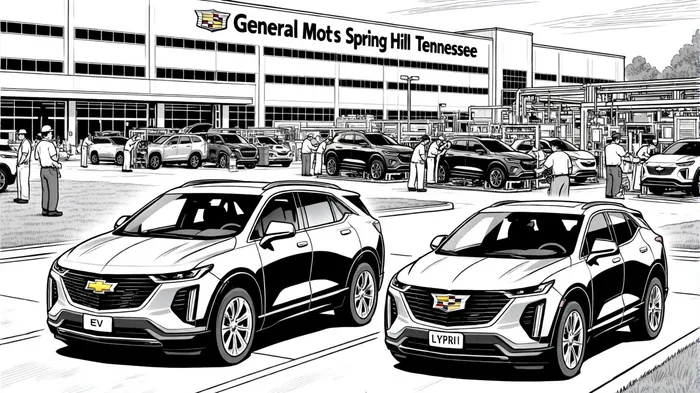
General Motors (GM) finds itself at a crossroads in the U.S. electric vehicle (EV) market. On one hand, the automaker has achieved a historic surge in EV sales, with 66,501 units delivered in Q3 2025-a 110% year-over-year increase, according to GM's Q3 sales report. The Chevrolet Equinox EV, GM's most affordable and practical offering, accounted for 38% of these sales, underscoring its role as a gateway to electrification, the report noted. Year-to-date, GMGM-- has already sold 144,545 EVs in 2025, a 103% jump from 2024, the company said. These figures suggest a growing consumer appetite for EVs, particularly as the federal $7,500 tax credit neared its expiration in September 2025, spurring a last-minute rush to purchase, per the GM release.
Yet, beneath this momentum lies a strategic recalibration. GM has abruptly scaled back EV production, including halting output for the Cadillac Lyriq and Vistiq models in December 2025, according to a MotorBiscuit report. The company has also delayed the second shift at its Kansas City plant, where the new Chevrolet Bolt EV is set to debut, Bloomberg reported. These moves reflect a sobering reality: while demand for EVs is growing, it remains insufficient to justify aggressive scaling. GM's CEO, Mary Barra, has acknowledged that "customer demand will dictate the pace" of reaching the company's one million annual EV sales target, a point noted in coverage of the production cuts.
The tension between sales growth and production cuts raises critical questions for investors. On one side, GM's EV portfolio is among the most diverse in the industry, spanning affordable models like the Equinox to luxury offerings like the Cadillac LYRIQ, as described in a GM investor release. Battery costs are declining, and purpose-built EV platforms are improving profitability, the release added. On the other, external pressures-including Trump-era tariffs and the loss of the federal tax credit-are forcing GM to prioritize flexibility over expansion. The sale of its Michigan battery plant to LG Energy Solution for $2 billion, noted in the same investor release, signals a shift toward strategic partnerships rather than vertical integration, a move that could stabilize costs but also limit control over supply chains.
Investor confidence, however, remains resilient. GM's ability to deliver 200,000 EVs in 2024-despite earlier targets of 300,000-demonstrates operational discipline, the investor release observed. The company's focus on large pickups and SUVs, which continue to outsell EVs, has provided a financial buffer, as GMAuthority reported. For now, GM is maintaining 2025 capital spending at 2024 levels, a decision the company outlined in its investor materials to balance prudence with the need to fund new models like the Cadillac VISTIQ and the return of the Chevy Bolt.
The market implications are twofold. First, GM's production cuts highlight the fragility of the EV sector's growth narrative. While the company's sales figures are impressive, they are driven in part by a shrinking tax credit and a narrow range of models; without broader consumer adoption, the risk of overproduction looms large. Second, GM's strategic pivot underscores the importance of adaptability in a rapidly evolving industry. By scaling back production and focusing on profitability, GM is positioning itself to weather near-term headwinds while preserving long-term flexibility.
For investors, the key takeaway is that GM's EV strategy is no longer about aggressive scaling but about sustainable growth. The company's ability to balance innovation with fiscal caution will determine its success in a market where enthusiasm often outpaces reality. As the dust settles on the tax credit expiration and the Bolt's delayed launch, one thing is clear: the U.S. EV market is entering a new phase, and GM's ability to navigate it will test the mettle of its leadership-and its shareholders.





Comentarios
Aún no hay comentarios