
GLUE's $300M Offering: A 5% Discount Creates a Tactical Setup
The catalyst is clear: Monte Rosa Therapeutics (GLUE) has priced a $300 million underwritten public offering. The company sold 11.125 million shares of common stock at $24.00 per share, a 5.1% discount to Thursday's close at $25.31. To sweeten the deal for certain investors, it also priced pre-funded warrants to purchase an additional 1.375 million shares at $23.9999 per warrant. The structure includes a 30-day option for underwriters to buy up to 1.875 million additional shares, providing a buffer and potential for further dilution.
The immediate market reaction was a clear vote of concern. Shares fell 0.7% in premarket trading on Friday following the announcement. This move underscores the classic tension between raising essential capital and the dilution cost it exacts on existing shareholders. The 5% discount is a standard feature of such offerings to attract buyers, but it also signals to the market that the company is willing to accept a haircut to get the deal done. The setup now hinges on whether the capital raised can accelerate the development of its pipeline-like the promising MRT-8102 program that drove a 50% premarket surge earlier this week-fast enough to justify the share price erosion.
The Dilution Math vs. Recent Surge
The $300 million raise is a substantial cash infusion for a clinical-stage biotech. Before expenses, it extends the company's cash runway significantly, providing the fuel to advance its pipeline without immediate pressure to raise more capital. This proactive move aligns with the company's recent actions, including the expansion of its GFORCE-1 study for MRT-8102 and planning for a Phase 2 trial in atherosclerotic cardiovascular disease, both of which require dedicated funding.
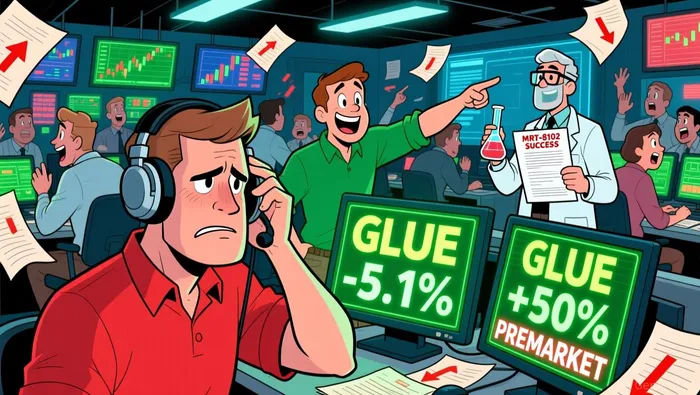
The dilution cost is quantifiable: the common stock was priced at $24.00 per share, a 5.1% discount to Thursday's close at $25.31. This is the standard market haircut for such offerings, but it still represents a tangible cost to existing shareholders. However, the math shifts when viewed against the stock's path earlier in December. Shares were trading in the $15–17 range during that period, meaning the offering price is more than 40% above those levels. The 5% discount is a small price to pay for capital raised at a price that reflects the company's recent, positive momentum.
The offering's size also signals a strategic, forward-looking approach. The company upsized from an initial $200 million target, suggesting confidence in the capital markets' appetite and a need for a larger war chest. This isn't a reactive, last-minute fix; it's a planned capital raise to fund the accelerated development path now open after the positive interim data for MRT-8102. The tactical setup is clear: the dilution is a known cost for a known benefit-the ability to fund the next critical phases of a promising program. The market's initial concern is understandable, but the offering's scale and timing point to a company preparing for an inflection, not retreating from one.
The Setup: Buy the Rumor, Sell the News?
The event creates a classic mispricing setup. Over the past year, GLUEGLUE-- stock has surged nearly 300%, a move that likely pressured the company to raise capital now while its valuation and momentum are high. The recent offering at a 5.1% discount to Thursday's close is the market's way of pricing in that dilution cost. But the real catalyst-the positive interim Phase 1 data for MRT-8102-is already priced in. The stock's 50% premarket surge earlier this week followed the release of data showing the drug reduced CRP levels by 85% in subjects with elevated cardiovascular risk. That news drove the share price to levels where raising capital became feasible without a deeper discount.
The tactical question is whether the offering itself is the "sell the news" event. The mechanics suggest it is. The company is raising a substantial war chest to fund the accelerated development path now open after the positive data. The GFORCE-1 study is expanding, and the company plans a Phase 2 readout in H2 2026. The offering provides the cash to get there. The 5% discount is the price of admission for that capital. For a stock that has already run up 300%, this is a rational, forward-looking move, not a sign of distress. The market's initial premarket slide reflects the dilution, but it may be overreacting to the mechanics while underestimating the value of the upcoming catalyst.
The setup favors a tactical, event-driven approach. The "buy the rumor" phase-the surge on the positive data-has already occurred. The "sell the news" phase is the capital raise, which is now priced in. The next catalyst is the H2 2026 readout from the expanded GFORCE-1 study. The offering ensures the company has the runway to reach that milestone without further dilution pressure. In this light, the current dip may be a temporary mispricing, creating a potential entry point for investors who believe the upcoming clinical data will justify the stock's elevated valuation.
Catalyst Watch: H2 2026 Readout & Post-Offering Sentiment
The immediate catalyst is now in the rearview. The offering closed on January 12, and the company is moving forward with its capital deployment. The next major event is the anticipated readout from the expanded GFORCE-1 study in H2 2026. This will be the definitive test of whether the $300 million war chest was wisely spent. The interim data showed a 85% reduction in CRP levels after four weeks, a powerful signal. The expanded study aims to accelerate development in atherosclerotic cardiovascular disease, and the H2 2026 readout will determine if that momentum can be sustained and translated into a clinical advantage.
Management's commentary in the upcoming conference call will be a key sentiment gauge. The company plans to host a presentation on January 7, shortly after the offering was priced, to discuss the interim data. While that call focused on the science, the next earnings or update call will be watched for details on how the raised capital is being allocated and any reassessment of the development timeline. Positive guidance on the use of proceeds could help quell dilution concerns and reinforce the thesis that the offering was a strategic, not a desperate, move.
Watch for a potential 'buy the rumor, sell the news' pattern in the stock's behavior. The positive data drove a 50% premarket surge earlier this week, while the offering announcement triggered a 0.7% premarket dip. If the stock rebounds after the offering closes, it would suggest the market is pricing in the future catalyst and discounting the dilution. Continued weakness, however, would signal that dilution concerns are persisting and that investors are waiting for more concrete proof of value from the capital raised. The setup is now binary: the stock must hold its ground and build toward the H2 2026 readout, or the tactical opportunity created by the offering's discount may fade.





Comentarios
Aún no hay comentarios