
GLP Insider Buying: A Tax-Driven Exercise or a Mispricing Setup?
The recent insider activity is a textbook case of administrative noise. Global GP LLC, the general partner of Global Partners LPGLP--, purchased a total of 3,917 common units on December 5 and 8, 2025, at a weighted average price of $45.16. This was not a discretionary bet on the stock. The transactions were explicitly to satisfy obligations under the company's Long-Term Incentive Plan for awards granted to directors and officers. The pattern continued through the month, with additional purchases reported on December 16, 17, and 18, indicating this was a sustained, contractual exercise.
The key detail is timing and price. The December 5 and 8 purchases occurred at $45.16, which was near the stock's year-to-date high. That sets up a clear mispricing opportunity versus today's price. The units were bought at a premium to the current market level, creating a temporary gap. For investors, this frames the purchase as a tax-driven necessity, not a signal of undervaluation. The general partner was simply fulfilling a plan requirement to acquire shares for distribution, a routine activity that averages over 21 trades per year. The buying was non-discretionary, executed under a 10b5-1 plan to satisfy the affirmative defense conditions.
The Mechanics: Why This Creates a Tactical Setup
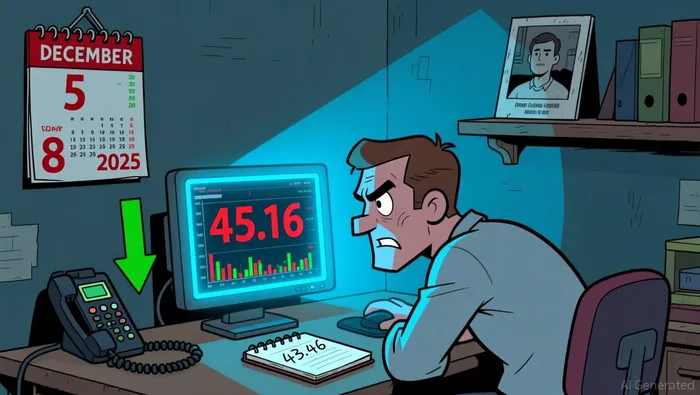
The operational reason for the buying is straightforward and administrative. Global GP LLC purchased the units to cover tax liabilities when restricted units granted to directors and officers vest under the partnership's Long-Term Incentive Plan. This is a standard, non-discretionary function for any limited partnership with such an award program. The company's own analysis confirms this, stating the transactions were essentially fulfilling their obligations and were not strategic. This creates a clear tactical setup. The purchases are mechanical, not a signal of confidence. Following the December 8 buy, Global GP's direct holdings were valued at approximately $9.75 million. This is a routine adjustment to its stake, not a new bet on the partnership's future. The general partner continues to purchase shares for the plan, with activity reported as recently as January 6, 2026, indicating this is an ongoing administrative cycle, not a one-off event.
The immediate impact is a temporary mispricing. The December 5 and 8 purchases occurred at a weighted average price of $45.16, which was near the stock's year-to-date high. That price is now a premium to the current market level. For investors, this sets up a clean arbitrage: the general partner was forced to buy at a higher price to satisfy tax obligations, creating a gap versus today's lower trading price. The event itself-buying to cover taxes-does not change the underlying valuation of the partnership. It simply highlights a momentary disconnect between the cost of fulfilling a plan and the market's current assessment.
The Risk/Reward Setup: A Trader's Opportunity
The setup here is a clean, tactical arbitrage. The general partner was forced to buy at a weighted average price of $45.16 in early December, a premium to the current trading level near $43.46. This creates a clear mispricing if the stock remains range-bound. The immediate catalyst for a price move back toward that purchase cost would be a fundamental event, not administrative buys. Positive news on distribution growth, a strategic acquisition, or a stabilization in refining margins could provide the necessary momentum.
The primary risk is that the stock stays pressured. The partnership operates in a volatile sector, and continued pressure on refining margins or a slowdown in fuel demand could keep the price below the $45.16 mark. The broader market context matters too; a risk-off environment could amplify these headwinds. The event itself-the tax-driven buying-does not change the underlying business trajectory, so any fundamental weakness will persist.
For a trader, the parameters are defined. The opportunity hinges on the stock retesting the $45 area, which it has not done recently. Monitor for any material changes in the Long-Term Incentive Plan structure or, more critically, for significant insider selling by officers or directors. That would signal a shift in sentiment that could invalidate the current mispricing thesis. For now, the activity is routine, with additional purchases reported as recently as January 6, 2026, indicating the cycle continues without a strategic signal.
The bottom line is a defined, event-driven play. The ~$2 gap is a statistical artifact of a necessary tax payment, not a valuation error. The trade works if the stock finds support and the catalysts for a move higher materialize. It fails if the fundamental pressures deepen or if the administrative buying pattern suddenly stops, removing the temporary support.





Comentarios
Aún no hay comentarios