
GLP-1 Drug Demand Reshaping Consumer and Retail Sectors: Assessing Long-Term Risks and Opportunities for Investors
The rapid adoption of GLP-1 receptor agonist (GLP-1RA) drugs, such as Novo Nordisk's Wegovy and Eli Lilly's Zepbound, is triggering a seismic shift in both the healthcare and food retail sectors. As these medications redefine weight management and metabolic health, investors must navigate a landscape of unprecedented disruption. For the first time in decades, a single class of drugs is poised to alter consumer behavior, corporate strategies, and global markets. This article examines the financial implications for food retailers and healthcare stakeholders, offering a roadmap for investors to capitalize on opportunities while mitigating risks.
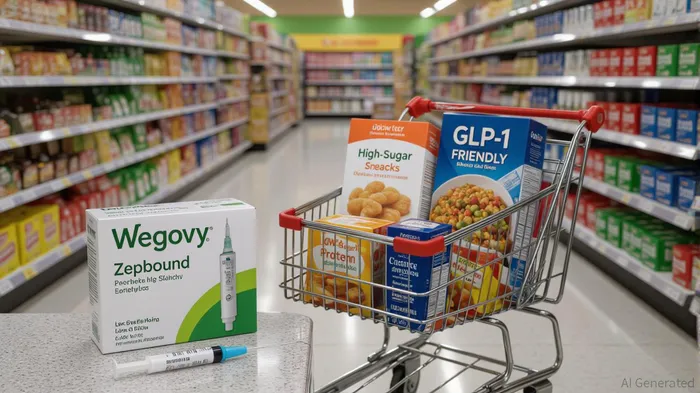
The GLP-1RA Revolution: A $50 Billion Market by 2030
The GLP-1RA market is expanding at an extraordinary pace. By 2030, it is projected to reach $48.84 billion for obesity-related applications and $156.71 billion when including diabetes treatments, driven by drugs like semaglutide and tirzepatide. These medications, initially designed for diabetes, have demonstrated remarkable efficacy in weight loss, reducing body mass index (BMI) by up to 15–20% in clinical trials. Their adoption is accelerating due to celebrity endorsements, insurance coverage expansions, and a cultural shift toward prioritizing metabolic health.
For investors, this growth is a double-edged sword. While pharmaceutical giants like Novo NordiskNVO-- and Eli LillyLLY-- are reaping record profits, the ripple effects are reshaping entire industries.
Food Retail: Adapting to a New Normal
Food retailers are scrambling to align with the dietary preferences of GLP-1 users. Recent data shows that households with at least one GLP-1 user spend 6% less on groceries overall, with high-income households cutting spending by 9%. Categories like chips (-11.1%), sweet bakery items (-6.7%), and soft drinks (-7%) are bearing the brunt of this shift.
Retailers are responding with aggressive product repositioning. For example, WalmartWMT-- and KrogerKR-- have introduced private-label lines emphasizing high-protein, low-calorie, and gut-friendly ingredients. These “GLP-1 friendly” products are not just a marketing tactic—they're a survival strategy. One major retailer reported a 20% increase in sales of its high-protein meal kits after rebranding them for GLP-1 users.
However, challenges remain. The shift toward smaller portion sizes and functional foods threatens traditional revenue streams. For instance, the decline in savory snack sales could pressure companies like PepsiCoPEP-- and MondelezMDLZ-- International, which rely heavily on these categories. Conversely, firms like Beyond MeatBYND-- and WhiteWave Foods (a Danone subsidiary) stand to gain as demand for plant-based, protein-rich alternatives surges.
Healthcare Sector: Winners and Losers in a GLP-1-Driven World
The healthcare sector is experiencing a tectonic shift. For pharmaceutical companies, the GLP-1RA boom is a gold rush. Novo Nordisk's share price surged by 70% in 2023 alone, while Eli Lilly's stock doubled, reflecting the market's confidence in their dominance of the obesity drug space. These companies are investing heavily in next-generation formulations, including oral GLP-1RAs and dual agonists targeting multiple metabolic pathways.
Yet, the downstream effects are less rosy for other players. Insulin pump manufacturers like DexcomDXCM-- and MedtronicMDT-- face a shrinking market as GLP-1RAs reduce the need for diabetes management devices. Similarly, dialysis providers such as Fresenius Medical Care may see declining demand as GLP-1 drugs lower the risk of kidney disease.
Insurers are also recalibrating their models. While GLP-1RAs are costly—Wegovy, for instance, retails at $1,300 per month—payers are increasingly covering these drugs due to their ability to reduce long-term healthcare costs. UnitedHealth GroupUNH-- and Anthem have already expanded coverage, but this comes at the expense of higher premiums in the short term. Investors must weigh the potential for reduced chronic disease claims against the upfront financial strain on insurers.
Strategic Opportunities for Investors
For investors, the GLP-1RA revolution presents a mix of high-risk, high-reward opportunities:
Pharmaceutical Giants: Novo Nordisk and Eli Lilly are the clear beneficiaries of this trend. Their robust pipelines and pricing power position them as long-term winners, though their valuations already reflect much of the expected growth.
Functional Food and Beverage Companies: Firms like Nestlé and General MillsGIS-- are rebranding their portfolios to include GLP-1-friendly products. Investors should monitor their private-label innovations and partnerships with functional ingredient providers like IngredionINGR-- or Cargill.
Healthcare Systems and Insurers: Companies like UnitedHealth Group and HumanaHUM-- are adapting to the new normal. While their margins may face short-term pressure, their ability to integrate GLP-1RA coverage into broader health management strategies could create long-term value.
Disruption-Resilient Sectors: Investors wary of the GLP-1RA-driven shakeout might consider sectors less impacted by dietary shifts, such as essential healthcare services861198-- or non-food retail.
Risks to Watch
- Regulatory Headwinds: The FDA and CMS may impose restrictions on GLP-1RA access if long-term safety concerns emerge.
- Market Saturation: As generic or biosimilar GLP-1RAs enter the market in the late 2030s, pricing power could erode.
- Consumer Fatigue: The novelty of GLP-1 drugs may wane if side effects or diminishing returns become widespread.
Conclusion
The GLP-1RA revolution is more than a medical breakthrough—it's a catalyst for systemic change. For food retailers, the imperative is to innovate or risk obsolescence. For healthcare investors, the challenge lies in balancing the tailwinds of pharmaceutical growth with the headwinds of industry disruption. As these drugs redefine health and consumer behavior, investors must adopt a nuanced approach, favoring adaptability over complacency. In a world where weight loss is now a mainstream medical intervention, the winners will be those who anticipate the next wave of innovation—and the losers, those who cling to the old playbook.





Comentarios
Aún no hay comentarios