
Global Wine Sector Vulnerabilities: Navigating Supply Chain and Demand-Side Risks in 2025
The global wine industry in 2025 is at a crossroads, grappling with unprecedented supply chain vulnerabilities and shifting demand dynamics. From climate-driven production disruptions to geopolitical trade tensions and evolving consumer preferences, the sector faces a complex web of challenges that demand a nuanced investment strategy.
Supply Chain Vulnerabilities: A Perfect Storm of Risks
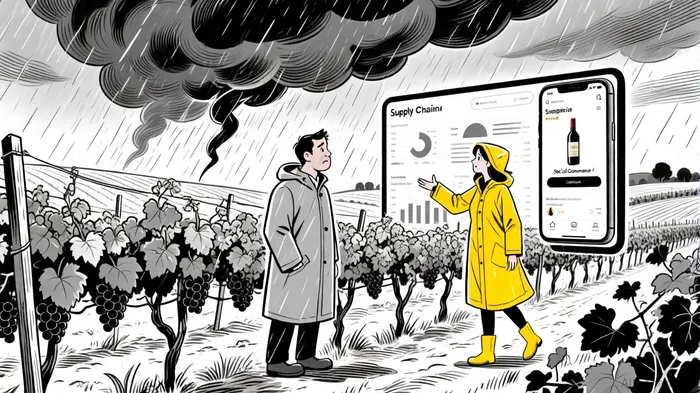
Climate change has emerged as the most pressing threat to wine production. Extreme weather events-frosts, heatwaves, and storms-have disrupted traditional harvest cycles, altering grape composition and wine quality, according to Corked News analysis. For instance, the 2025 harvest saw imbalances in sugar and acidity levels, directly impacting product consistency, as the same Corked News piece notes. Compounding these issues, rising production costs due to labor shortages and inflated packaging material prices (e.g., glass and cardboard) have squeezed margins, according to a Forbes article. That Forbes piece also explains that the glass industry, critical for wine bottling, faces bottlenecks as high capital costs limit rapid scaling of furnaces.
Logistical constraints further exacerbate the crisis. Container shortages and port delays-such as those in Los Angeles and Verona-have extended delivery times and increased costs, the Forbes article reports. A 65% shortage of commercial drivers in the EU and surging freight expenses have left wineries struggling to maintain operational efficiency, the same Forbes analysis observes. Meanwhile, supply chain visibility remains elusive, with two-thirds of producers unable to track their operations effectively, per Wine Intelligence analysis.
To mitigate these risks, the industry is turning to resilience strategies like AI-driven demand forecasting and digital twins, as noted by Global Banking and Finance. Sustainable practices, including canopy management and nighttime harvesting, are also gaining traction, as Corked News highlights. However, fragmented adoption of these technologies underscores the need for integrated risk management across the supply chain, according to a ScienceDirect review.
Demand-Side Risks: Traditional Markets in Decline
The U.S. wine sector exemplifies the sector's fragility. In 2025, the U.S. experienced its longest sustained downturn in modern history, with demand falling 8.7% in volume and 8.5% in revenue since Q2 2025, a ScienceDirect review found. This decline is driven by economic uncertainty, shifting consumer preferences toward moderation, and the rise of alternative beverages like ready-to-drink options and nonalcoholic wines, the Forbes article notes. On-premise sales have plummeted by 7.2%, as restaurants streamline wine lists to prioritize profitability, the ScienceDirect analysis reports.
Europe, too, faces headwinds. The potential for a 200% U.S. tariff on European wines has created existential uncertainty for producers in France, Italy, and Spain, Corked News reported. Retaliatory measures, such as proposed 15% EU and 10% UK tariffs on U.S. wines, threaten to further destabilize transatlantic trade, Wine Intelligence warns. Small and mid-sized European wineries, in particular, are vulnerable to these trade tensions, which disrupt export planning and investment, the Forbes article adds.
Emerging Markets: Opportunities Amid Complexity
While traditional markets struggle, emerging economies like China, India, and Brazil offer both promise and pitfalls.
China is witnessing a shift toward low-alcohol, white, and sparkling wines, driven by wellness trends, the ScienceDirect review observes. Digital platforms like Douyin and Little Red Book are expected to dominate sales by 2027, with 77% of industry professionals predicting livestreaming and social commerce will outperform traditional outlets, Wine Intelligence reports. However, a 218.91% tariff on U.S. wines in April 2025 has effectively ended the $50 million U.S.-China wine trade, Corked News notes. Meanwhile, China's 2025 accession to the Organisation of Vine and Wine (OIV) signals its growing influence in global wine governance, Wine Intelligence adds.
India's wine market is surging, with a 50.30% year-on-year increase in imports by volume in H1 2025, Wine Intelligence reports. Young urban professionals and a rising female consumer base are driving demand for premium imported labels, particularly from Australia and France, Wine Intelligence notes. Yet, regulatory fragmentation in e-commerce and global trade tensions-such as the U.S. tariff threat-pose risks, the ScienceDirect review cautions.
Brazil faces challenges stemming from its reliance on imported European wines, making it susceptible to trade policy shifts, Corked News observes. An expanding middle class is fostering interest in Western wine culture, but producers must adapt to local tastes and sustainability expectations, Corked News also notes.
Investment Implications: Balancing Risk and Resilience
For investors, the wine sector's vulnerabilities necessitate a dual focus on resilience and premiumization. Producers leveraging AI and digital twins to optimize supply chains have an advantage, the Global Banking and Finance piece argues, and those adopting sustainable practices are better positioned to weather disruptions, as Corked News highlights. In emerging markets, brands that localize storytelling and cater to health-conscious consumers-such as China's low-alcohol wine segment, noted by the ScienceDirect review-or India's premiumization trend, reported by Wine Intelligence-offer growth potential.
However, trade policy risks remain acute. The EU's efforts to diversify exports to India, Mexico, and Switzerland, noted in the Forbes article, highlight the need for geographic diversification. Conversely, investors should monitor retaliatory tariff scenarios, which could disproportionately impact premium and luxury wine segments, Wine Intelligence warns.
Conclusion
The global wine industry in 2025 is a study in contrasts: climate and trade risks collide with evolving consumer preferences and digital innovation. While traditional markets face contraction, emerging economies and premiumization trends offer avenues for growth. Investors must prioritize agility, sustainability, and market diversification to navigate this volatile landscape.







Comentarios
Aún no hay comentarios