
Global Trade Resilience and Japanese Equities: Navigating BOJ Policy and Export Sector Stability
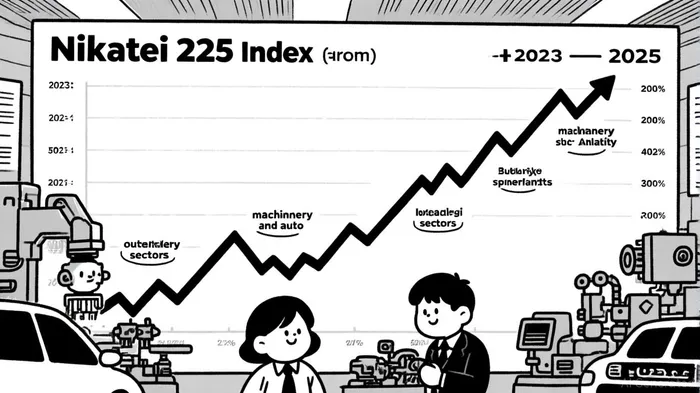
Japan's equity market is at a pivotal crossroads, where the interplay of (BOJ) policy normalization and global trade resilience is reshaping the investment landscape. With the BOJ signaling a gradual exit from ultra-loose monetary policy and Japan's strategic trade agreements (, ) fortifying export sectors, , defying political headwinds and global uncertainties[1]. Let's break it down.
BOJ Policy: A Balancing Act Between Inflation and Stability
, despite internal support for a hike, reflects its cautious approach to navigating political volatility and inflationary pressures[3]. Inflation, , which boosts import prices[2]. However, .
This policy shift has introduced a dual narrative for Japanese equities. On one hand, the BOJ's ETF sales could reduce its influence on stock prices, potentially cooling the Nikkei's recent momentum. On the other, , benefiting importers while challenging exporters. Yet, with Japan's corporate reform agenda (including improved capital allocation and dividend policies) and a return of foreign investors, the equity market is proving resilient[1].
Trade Agreements: The Unsung Hero of Export Sector Stability
While BOJ policy sets the macroeconomic stage, Japan's trade agreements are the unsung heroes of export sector stability. , shielding Japanese exporters from U.S.-China tensions and protectionist headwinds[1]. For instance, , . .
The U.S.-Japan trade deal, which lowered tariffs on Japanese autos and machinery, has further solidified this trend. According to a report by , this deal has directly supported corporate earnings, . Meanwhile, Japan's leadership in the CPTPP—particularly its push for high-standard digital trade rules—positions it as a linchpin in the Indo-Pacific's evolving trade architecture[2].
Political Risks vs. Structural Tailwinds
Political uncertainties, including the Liberal Democratic Party's leadership contest and potential fiscal stimulus, could introduce short-term volatility[3]. However, structural factors—such as , global supply chain shifts, and the BOJ's gradual normalization—suggest a long-term for Japanese equities.
Critically, the BOJ's “go-stop” policy history has taught it to avoid abrupt tightening. , the central bank is in a unique position to balance [2]. For investors, this means Japanese equities, particularly in like machinery and autos, offer a compelling mix of .
The Bottom Line: Buy the Dip, Not the Fear
Japan's equity market is no longer a “.” The BOJ's measured policy shifts, combined with the 's trade resilience, have created a virtuous cycle: stable exports, corporate reforms, and a return of . While linger, the are too strong to ignore. For those willing to look past the noise, Japanese equities—especially in machinery, auto, and tech—present a high-conviction opportunity in a world increasingly wary of volatility.







Comentarios
Aún no hay comentarios