
Global Supply Chain Resilience in the Age of Trump-Era Trade Policies: Sector-Specific Opportunities and Risks
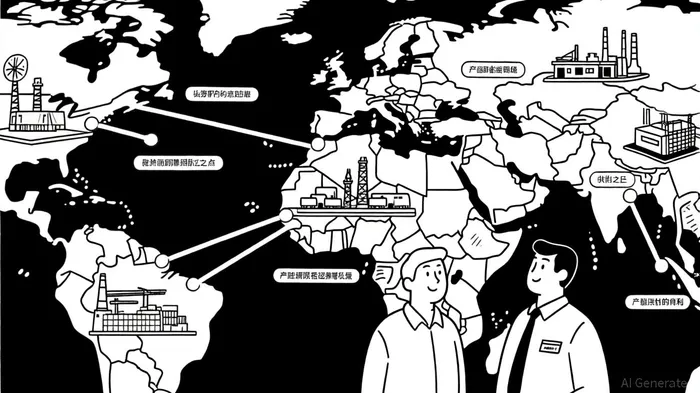
The Trump-era trade policies of 2025 have reshaped global economic dynamics, introducing volatility and uncertainty while simultaneously creating new opportunities for sectors prioritizing resilience and adaptability. As the Organization for Economic Cooperation and Development (OECD) has underscored, the delayed economic impacts of these policies—ranging from GDP growth slowdowns to supply chain fragmentation—demand a granular analysis of sector-specific risks and rewards. This article examines the evolving landscape in logistics, energy, and industrial materials, drawing on OECD insights and forward-looking trade data to identify investment opportunities amid the turbulence.
Logistics: Navigating Tariff-Driven Disruptions and Resilience Strategies
The logistics sector has borne the brunt of Trump's 2025 tariffs, which include a universal 10-20% baseline on imports and punitive 60-100% duties on Chinese goods. These measures have triggered a surge in freight activity as companies frontload shipments to avoid escalating costs. For instance, the Primary Metal Manufacturing sector saw a four-and-a-half-fold increase in imports in January 2025, reflecting anticipatory behavior[4].
However, these disruptions are catalyzing long-term shifts toward nearshoring and localized sourcing. Companies are increasingly leveraging U.S. Foreign Trade Zones (FTZs) to defer or reduce customs duties, while logistics firms are investing in domestic warehousing infrastructure to accommodate reshored production[2]. The OECD emphasizes that building resilience here requires agile policy frameworks and public-private partnerships to streamline operations[1].
A critical challenge lies in balancing cost increases with operational flexibility. Trucking companies, for example, face a $35,000-per-unit price hike for Mexican-made trucks under the new tariff regime[3]. Yet, the sector's pivot to air freight for high-value goods and the adoption of AI-driven analytics to optimize routes present innovative avenues for growth[2].
Energy: Tensions Between Fossil Fuels and Renewable Transitions
The energy sector is caught in a dual narrative: a resurgence of fossil fuel production under Trump's “national energy emergency” declaration and persistent momentum in renewable energy, driven by state-level incentives like the Inflation Reduction Act[3]. The OECD warns that tariffs on Chinese solar panels and battery components have raised production costs for renewables, making them less competitive against subsidized fossil fuels[4].
Yet, the administration's focus on domestic energy security has spurred investments in oil and gas infrastructure, with a 15% target increase in domestic fuel reserves by year-end[2]. Nuclear energy, particularly small modular reactors (SMRs), is also gaining traction as a reliable, low-emission alternative, supported by sustained federal funding[3].
Renewable energy faces headwinds, however. Rollbacks of environmental protections and offshore wind lease suspensions have created regulatory uncertainty, complicating long-term project planning[1]. Meanwhile, the energy-as-a-service (EaaS) model is emerging as a mitigant, offering flexible payment structures to reduce capital risk for clients[1].
Industrial Materials: Reshoring, Tariff Mitigation, and Supply Chain Diversification
The industrial materials sector, particularly manufacturing, has experienced a 15% cost surge due to tariffs on Chinese imports, prompting firms to diversify supply chains[1]. Reshoring efforts are evident in the automotive industry, where companies like Ford and General Motors are shifting hybrid model production to North America to avoid 25% tariffs on Japanese and Chinese imports[2].
The OECD highlights the importance of circular economy models and transparent sourcing practices to enhance resilience[1]. For example, the surge in January 2025 imports of primary metals—reaching $43.7 billion—underscores the urgency of securing alternative suppliers[5].
Investors should also note the role of digital technologies in optimizing industrial supply chains. Predictive maintenance and AI-driven resource allocation are becoming critical tools for managing volatility, particularly in energy-intensive sectors[1].
Conclusion: Strategic Investment in Resilience
The OECD's warnings about delayed economic impacts—such as the U.S. GDP growth decline from 2.8% in 2024 to 1.5% in 2026[4]—underscore the need for forward-looking strategies. Sectors that prioritize adaptability—through nearshoring, digital integration, and diversified sourcing—are best positioned to thrive.
For logistics, the shift to localized infrastructure and AI-driven analytics offers long-term gains. In energy, while fossil fuels may benefit from short-term policy tailwinds, renewables and SMRs represent durable opportunities. Industrial materials will hinge on reshoring and circular economy innovations.
As global trade dynamics evolve, investors must balance immediate risks with the potential for structural transformation. The OECD's policy toolkit for resilient supply chains[1] provides a roadmap for navigating this complex landscape, emphasizing collaboration and agility as cornerstones of success.







Comentarios
Aún no hay comentarios