
Global Soybean Market Dynamics: U.S. Harvest Efficiency and China's Trade Policy Shifts Reshape Commodity Prices and Investment Opportunities
The global soybean market in 2025 is undergoing a seismic shift driven by U.S. harvest efficiency challenges and China's evolving trade policies. These factors are not only reshaping commodity prices but also redefining investment opportunities in agriculture and trade infrastructure.
U.S. Harvest Efficiency: A Delicate Balance of Weather and Costs
The 2025 U.S. soybean harvest has been marked by a complex interplay of environmental stressors and financial pressures. Early-season flooding, late-summer droughts, and disease outbreaks such as sudden death syndrome and frogeye leaf spot have threatened yield potential, according to a Purdue Ag report. Despite projections in the USDA market outlook of a record 53.6 bushels per acre, late-season weather volatility remains a critical wildcard. Farmers are also contending with high fertilizer and chemical costs, compounding the risk of profit erosion from even minor harvest losses, as the Purdue report also noted.
Harvest efficiency has further been hampered by rapid shifts in moisture levels. Soybeans drying to 9–10% moisture have led to brittle pods and increased shattering, with agronomists warning, according to an Agrolatam report, that moisture levels below 13% could result in permanent yield losses at elevators. These operational challenges underscore the fragility of U.S. production, even as the country maintains a slight yield edge over historical averages.
China's Trade Policy Shifts: A New Era of Geopolitical Risk
China's role as the world's largest soybean importer has been upended by trade tensions. From January to August 2025, U.S. soybean exports to China plummeted to 218 million bushels-29% of total exports for the period-compared to 985 million bushels in 2024, according to an S&P Global analysis. That collapse is attributed to a 34% effective tariff rate on U.S. soybeans, combining retaliatory, VAT, and MFN duties. Brazil has capitalized on this void, exporting a record 2.474 billion bushels to China during the same period, with 76% of its soybean exports now directed to the Asian giant, as detailed in the Purdue report.
The geopolitical realignment has created a dual impact: U.S. farmers face reduced export demand and lower prices, while Brazil's dominance in global soybean trade has intensified. China's Five-Year Agricultural Plan further complicates matters, as its push for self-sufficiency and economic slowdown may temper long-term demand, per an Accio forecast.
Commodity Price Volatility and Investment Implications
The confluence of U.S. harvest inefficiencies and China's trade shifts has driven soybean price volatility. U.S. soybean prices rose 6.41% in 2025, reaching $10.62 per bushel, but this trend is tempered by global surpluses and mixed export demand, as noted by Paradigm Futures. Brazil's projected 2025/26 export volume of 105 million metric tons reinforces its pricing power, while U.S. exports are forecast to decline to 1.7 billion bushels due to reduced acreage and geopolitical risks, according to the Accio forecast.
For investors, these dynamics highlight opportunities in:
1. South American Agribusiness: Brazil's expanding soybean acreage and infrastructure investments (e.g., ports, storage facilities) position it as a key beneficiary of China's shifting demand.
2. U.S. Domestic Demand Sectors: The Renewable Volume Obligations (RVOs) proposed by the EPA are boosting soybean oil demand for biofuels, offering a buffer for domestic producers, per the AgCountry outlook.
3. Trade Infrastructure: U.S. farmers' struggles with storage capacity and export logistics present opportunities for private equity and tech-driven solutions in grain handling and supply chain optimization.
Future Outlook: Navigating Uncertainty
The soybean market's trajectory hinges on three variables:
- Weather Patterns: Drought risks in Argentina and Brazil's southern states, coupled with Midwest U.S. moisture extremes, could disrupt global supplies, according to a Commodity Board analysis.
- Trade Policy Developments: A potential new round of U.S.-China trade tensions could further disadvantage U.S. producers, while EU pesticide regulations may favor South American exports, as discussed in the Accio forecast.
- Demand Shifts: China's nitrogen loss concerns from increased domestic soybean production and its push for self-sufficiency may alter long-term import dynamics, according to a ScienceDirect study.
Investors must remain agile, balancing exposure to Brazil's growth with hedging strategies against U.S. market vulnerabilities. Diversification into soybean meal and oil derivatives, alongside investments in sustainable farming technologies, could mitigate risks while capitalizing on evolving demand.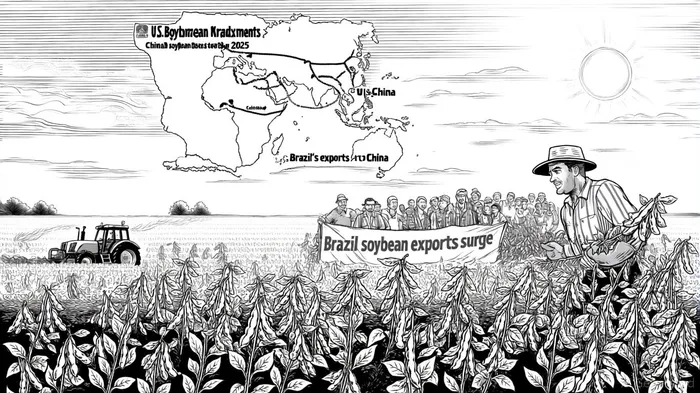







Comentarios
Aún no hay comentarios