
Global Shipping Resilience in 2025: Navigating Tariff Wars and Strategic Immunity
: Diversification and Strategic Mitigation
The 2025 tariff war, , initially disrupted supply chains and led to volatile demand. However, companies have since adopted sophisticated mitigation tactics. For instance, , according to a Commenda guide. Similarly, the use of Foreign Trade Zones (FTZs) and bonded warehouses has enabled businesses to defer customs duties, , as noted in a Tax Adviser article.
Automated tariff classification systems are now critical for compliance, , as described in the Commenda guide. These tools, combined with a focus on Free Trade Agreements (FTAs), , as highlighted in a . For example, U.S. firms leveraging the USMCA framework have shifted production to Latin America, , as reported in the Unicargo report.
: Infrastructure and Technology
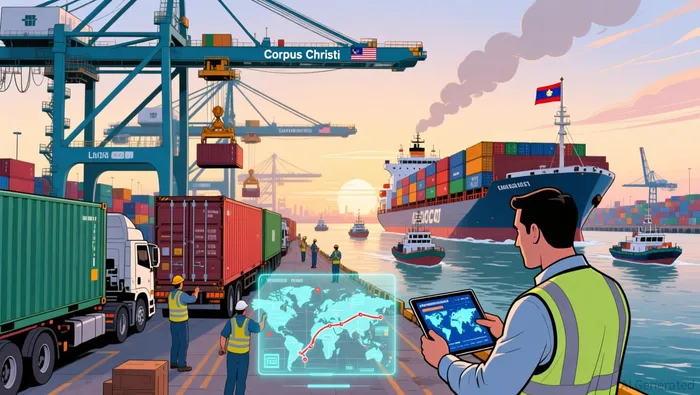
Infrastructure investments are reshaping competitive dynamics. The U.S. has allocated $625 million to upgrade the Port of Corpus Christi, , according to the Unicargo report. Such projects not only reduce costs but also position secondary ports as alternatives to overburdened East Coast terminals.
Technology is equally transformative. , , as noted in the Unicargo report. DHL's resilience, meanwhile, is tied to its agile logistics networks, , according to a MarketWatch story.
Challenges and Opportunities
Despite these strides, challenges persist. Smaller firms like DIRTT have struggled, , according to the MarketWatch story. This highlights the uneven impact of trade policies, where larger firms with diversified strategies outperform smaller, less flexible competitors.
Investors should also note the dual-edged nature of nearshoring. While it reduces tariff exposure, it requires significant capital for infrastructure and workforce retraining, as noted in the Unicargo report. For example, U.S. .
Conclusion: A Sector Poised for Long-Term Growth
The global shipping industry's resilience in 2025 is a testament to its ability to adapt to geopolitical headwinds. , according to the MarketWatch story, the sector remains a compelling investment, particularly for firms leveraging technology and strategic diversification. However, investors must remain cautious about sector-specific risks, such as the financial strain on niche players like DIRTT.
As trade wars evolve, the winners will be those companies that treat tariffs not as obstacles but as catalysts for innovation. The shipping industry's journey in 2025 offers a blueprint for how strategic foresight and technological agility can turn uncertainty into opportunity.







Comentarios
Aún no hay comentarios