
Global Shipping in the Crosswinds: How Trump’s Trade Policies Are Reshaping the Seas
The global container shipping industry is navigating uncharted watersWAT--. Drewry’s 2025 forecast of a 1% decline in global container volumes marks the third annual contraction since 1979—a stark indicator of the seismic shifts wrought by U.S. President Donald Trump’s trade policies. From tariff wars to supply chain reconfigurations, the ripple effects are reshaping markets, carriers, and investor portfolios alike. Let’s dive into the data to decode this pivotal moment.
The Trade War’s Toll on Shipping Volumes
The 1% decline isn’t merely a blip. It follows an 8.4% collapse during the 2009 financial crisis and a 0.9% drop in 2020’s pandemic. This time, the culprit is clear: Trump’s 10% blanket tariffs on global goods and 145% levies on Chinese imports. These measures, coupled with retaliatory tariffs, have created a perfect storm.
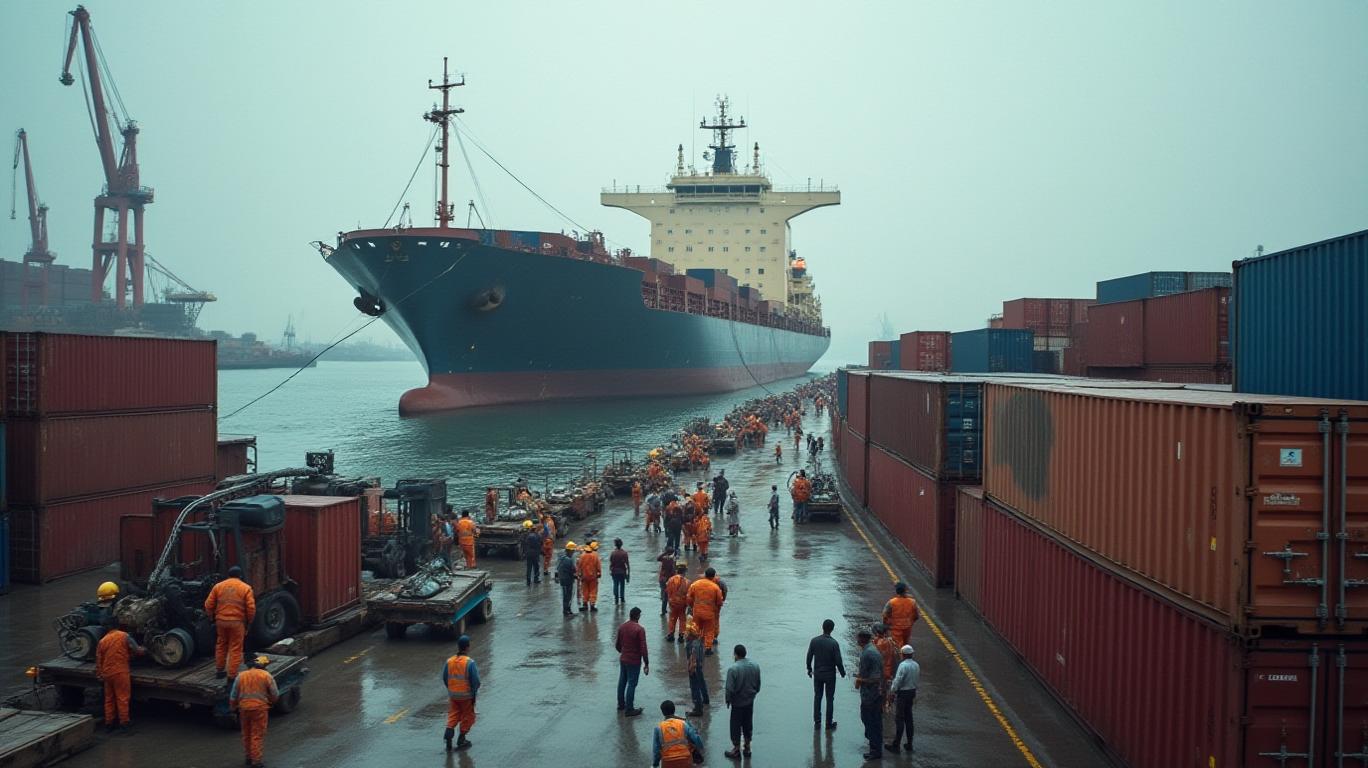
Key drivers of the decline include:
- U.S.-China Trade Collapse: Imports from China to the U.S. could plummet 40% if tariffs remain. German carrier Hapag-Lloyd reported 30% cancellations of China-U.S. shipments, a stark preview of coming disruptions.
- Regional Rebalancing: North America faces a 5.5% volume drop in 2025, with the Port of Los Angeles—the U.S.’s busiest—anticipating declines as early as May. Meanwhile, China’s economy is projected to shrink 4.8% before a fragile rebound to 1.6% growth in 2026.
Winners and Losers Among Shipping Giants
Not all carriers are equally exposed. The report reveals a stark divide based on fleet composition and geographic focus:
- Cosco (COSHK:HK): The Chinese state-owned carrier holds 53% of its fleet built in China, making it highly vulnerable to tariffs targeting Chinese-built ships. Its shares have already faced pressure, dropping 12% year-to-date as investors brace for higher costs.
- MSC (private): With just 12% of its fleet Chinese-built, MSC benefits from greater flexibility. Its independent status, however, limits its ability to share costs with alliances like the Premier Alliance or Gemini Cooperation, which dominate trans-Pacific routes.
- ZIM (ZIM:TA) and Seaboard (private): Smaller independents lack the scale to reroute efficiently, leaving them exposed to rising charter rates and logistical bottlenecks.
The Geopolitical and Economic Undercurrents
The decline isn’t isolated to shipping. The International Monetary Fund (IMF) warns of a 0.5% global GDP contraction in 2025, while the World Trade Organization (WTO) predicts a 0.2% drop in world trade. These forecasts align with Drewry’s analysis, underscoring the systemic risks of trade fragmentation.
Supply chain reconfigurations are already underway:
- Rerouting Risks: Carriers are diverting cargo through Caribbean hubs like Cartagena, Colombia, or Canadian ports—a move that adds 5–10 days to transit times and boosts costs.
- Frontloading frenzy: Shippers are rushing to move goods before Trump’s July 2025 tariff deadlines, inflating April’s spot rates to $668/FEU, a 11% spike. This volatility could strain smaller carriers reliant on short-term charters.
Investing in the New Normal
The path forward is fraught with uncertainty, but opportunities exist for nimble investors:
1. Favor carriers with non-Chinese exposure: Look to MSC or the Premier Alliance partners (CMA CGM, Evergreen) for resilience.
2. Short-term plays on congestion: Ports like Rotterdam or Los Angeles may see premium valuations as bottlenecks persist.
3. Avoid overexposure to Asia-Pacific: China’s 4.8% GDP hit and supply chain shifts could weigh on regional players like OOCL or Hyundai.
Conclusion: A New Era of Fragmentation
The 1% decline isn’t just a number—it’s a harbinger of structural shifts. With the IMF forecasting a 0.5% global GDP contraction and Drewry’s 2025 report highlighting a “short shelf-life” for policy-driven forecasts, investors must prepare for prolonged volatility.
The data paints a clear picture:
- 40% potential collapse in U.S.-China trade volumes
- 5.5% North American decline by year-end
- $668/FEU April spot rates (up 11% month-over-month)
In this fractured landscape, winners will be those who adapt. For now, the seas are turbulent—but the tide may turn for those positioned to navigate the new trade order.







Comentarios
Aún no hay comentarios