
Global Ship Lease's Dividend Attraction vs. Long-Term Fleet and Rate Risks: Rebalancing Yield-Driven Appeal with Strategic Uncertainty in a Maturing Shipping Cycle
Dividend Attraction: A Low-Payout, High-Yield Paradox
GSL's recent dividend hike to $0.625 per share, annualized, reflects confidence in its contracted cash flows. With a trailing payout ratio of 23% and a projected 2026 payout ratio of 22.3%, the company appears well-positioned to sustain its yield. Analysts have upgraded the stock to "Buy", with a consensus target price of $33.50. This optimism is underpinned by Q3 2025 results, which showed $192.67 million in revenue and $95.02 million in net income. Such earnings resilience, coupled with a disciplined capital structure, has made GSL a magnet for yield-hungry investors.
Yet, the company's dividend sustainability is not without caveats. A 23% payout ratio, while low, assumes stable earnings. However, with an average remaining charter term of just 2.1 years, excluding options, GSL faces near-term renegotiation risks. If spot rates for container vessels, a key segment of its fleet, remain depressed, as seen in Q3 2025's -3.3% year-over-year decline, future earnings could falter. This underscores the tension between short-term yield and long-term earnings visibility.
Fleet Composition and Charter Rate Exposure: Aging Assets in a Shifting Market
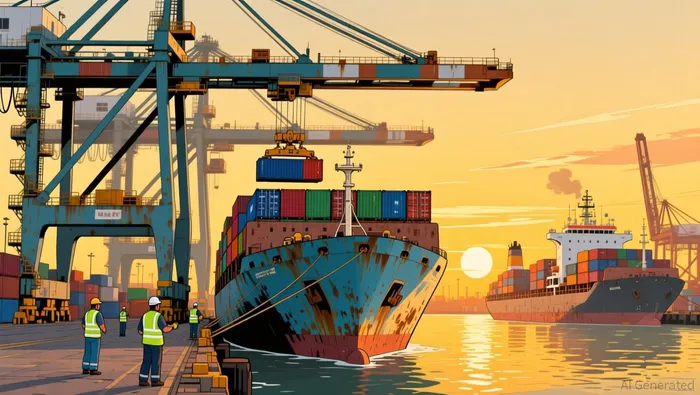
GSL's fleet of 69 vessels, with a TEU-weighted average age of 17.7 years, reflects a legacy portfolio skewed toward Post-Panamax container ships. While these vessels are integral to global trade, their age and specialization pose challenges. Older ships require higher maintenance costs and face regulatory pressures, such as emissions standards, which could erode margins.
The company's contracted revenue of $1.73 billion (excluding options) provides near-term stability. However, the brevity of its charter terms-averaging 2.1 years-means GSL must frequently re-enter a volatile market. This is particularly concerning in the container segment, where Q3 2025 saw freight rates plummet due to soft demand and U.S. tariff policies. For example, the Cass Freight Index indicates a year-over-year decline in freight demand, with no traditional peak-season rebound materializing. If GSL's expiring charters are renewed at lower rates, its earnings-and by extension, its dividend-could face downward pressure.
Shipping Cycle Maturity: A Sector in Transition
The broader shipping cycle in 2025 is marked by mixed signals. Drybulk operators like Genco Shipping & Trading are expanding fleets with long-term vessels, betting on stable demand for commodities. In contrast, the container sector is grappling with overcapacity and policy-driven headwinds. For instance, U.S. tariffs on imports have front-loaded cargo flows, leaving Q4 2025 with projected 14%-17% year-over-year declines in U.S. import volumes. This structural weakness is compounded by inventory normalization delays, which are not expected until Q1 2026.
Container vessel charter rates, a critical metric for GSL, remain under pressure. While drybulk rates for vessels like Diana Shipping's Electra hold steady at $14,000 per day, container rates have not seen similar resilience. The launch of direct China-Peru routes by MSC and Cosco highlights efforts to optimize efficiency, but these innovations may not offset broader demand declines. For GSL, which relies heavily on container ships, the risk of rate compression looms large.
Strategic Uncertainty: Balancing Yield and Long-Term Viability
GSL's current strategy hinges on its ability to leverage contracted cash flows while navigating a maturing shipping cycle. Its low payout ratio and strong Q3 earnings suggest short-term resilience, but the fleet's age and short charter terms expose it to long-term volatility. The company's focus on Post-Panamax vessels, while aligned with global trade needs, may become a liability if container rates continue to decline.
Investors must also consider the broader macroeconomic context. The shipping sector's sensitivity to trade policies, as seen in the U.S. tariff-driven cargo shifts, highlights the importance of geopolitical stability. Additionally, the push for greener shipping technologies, such as methanol-powered vessels ordered by MSC and CMA CGM, could force capital expenditures that strain margins.
Conclusion: A Yield-Driven Play with Caveats
Global Ship Lease offers an attractive dividend yield supported by a low payout ratio and strong earnings. However, its long-term appeal depends on the company's ability to adapt to a shipping cycle marked by container rate declines, aging assets, and regulatory pressures. For investors, the key is to balance the immediate allure of high yields with the strategic risks of a sector in transition. While GSL's current fundamentals justify its "Buy" rating, prudence dictates monitoring charter renewals, fleet modernization efforts, and macroeconomic shifts that could reshape the industry's landscape.







Comentarios
Aún no hay comentarios