
The Global Rise of Chinese Robotaxi Platforms and Their Disruptive Potential
Technological Advancements: The Engine of Disruption
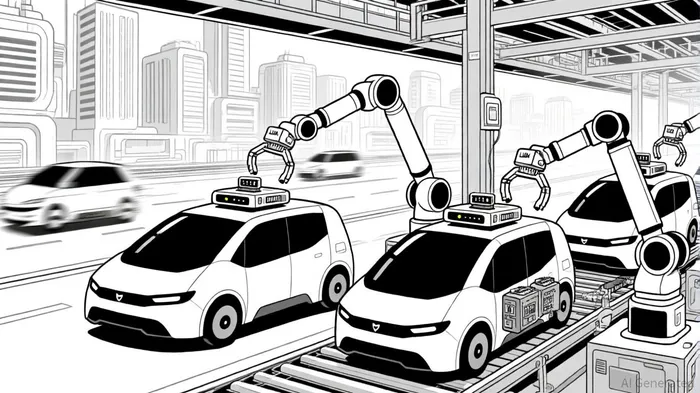
Chinese robotaxi platforms are outpacing global peers in technological innovation, particularly in sensor integration, computing power, and cost optimization. Pony.ai's collaboration with BAIC Group has resulted in the mass production of the Arcfox Alpha T5 robotaxi, equipped with nine LiDAR units, 34 sensors, and a computing platform capable of 1,016 Trillions of Operations Per Second (TOPS), according to a China Daily report. This vehicle, now in commercial operation in Shenzhen, represents a 70% reduction in autonomous system costs compared to earlier models, a critical factor for scaling driverless fleets, the article notes.
Baidu's Apollo Go, meanwhile, is deploying sixth-generation autonomous vehicles in Dubai and plans to integrate them into Uber's app across Asia, the Middle East, and eventually Europe, the China Daily report adds. These advancements underscore China's ability to combine domestic manufacturing expertise with global market access, creating a blueprint for scalable, affordable robotaxi services.
Geopolitical Strategies: Partnerships as a Global Bridge
Chinese firms are expanding their influence through strategic alliances with international automakers and mobility platforms. Pony.ai's partnership with Stellantis to deploy robotaxis in Luxembourg and other European cities exemplifies this approach, combining Stellantis' electric vehicle platforms with Pony.ai's autonomous driving software, as reported in a CBTNews article. Similarly, Baidu's collaboration with UberUBER-- to deploy robotaxis in Asia, the Middle East, and Europe leverages Uber's global network to bypass regulatory and infrastructure barriers, according to the China Daily piece.
In Southeast Asia, Grab's partnership with WeRide for autonomous shuttle services in Singapore highlights the growing reliance on Chinese technology in the region, reported in a VnExpress article. These partnerships are not merely commercial-they signal a broader geopolitical strategy to position Chinese firms as key infrastructure providers in the global mobility transition.
Regulatory Challenges and Pushback
Despite their momentum, Chinese robotaxi companies face significant regulatory hurdles. In Europe, stringent safety standards and public road testing requirements delay commercial deployments, according to a Business Standard piece. Meanwhile, U.S. tariffs on Southeast Asian exports (19% on goods from Malaysia and Thailand) could inflate costs for Chinese firms entering these markets, the Business Standard article warns. Additionally, competition for critical minerals-such as lithium and rare earths-intensifies as both the U.S. and China secure supply chains for autonomous vehicle components, the same piece notes.
However, Chinese firms are adapting. For instance, Pony.ai's focus on cost reduction and modular hardware design allows it to meet diverse regulatory demands while maintaining profitability, according to a StockTitan report. In Southeast Asia, Grab's collaboration with WeRide navigates local infrastructure gaps by deploying smaller, shuttle-based robotaxis, as noted in the VnExpress article.
Investment Implications: A New Mobility Paradigm
The disruptive potential of Chinese robotaxi platforms lies in their ability to merge technological innovation with geopolitical agility. For investors, three key themes emerge:
1. Market Expansion: Partnerships with Uber, Grab, and Stellantis provide immediate access to high-growth regions, accelerating adoption.
2. Cost Leadership: A 70% reduction in autonomous system costs positions Chinese firms to undercut Western competitors, who struggle with high R&D and regulatory expenses, the China Daily report observed.
3. Supply Chain Resilience: Domestic manufacturing and strategic mineral sourcing mitigate global supply chain risks, a critical advantage in an era of geopolitical fragmentation.
Yet risks remain. Regulatory pushback, particularly in the U.S. and Europe, could slow international expansion. Additionally, the long-term profitability of robotaxi services hinges on achieving high utilization rates-a challenge even for well-funded players.
Conclusion
Chinese robotaxi platforms are redefining the future of mobility by blending technological prowess with geopolitical strategy. As they scale globally, their ability to navigate regulatory complexities and maintain cost advantages will determine their long-term success. For investors, this sector represents a high-stakes bet on the next industrial revolution-one where the winners may not be the traditional automakers or Silicon Valley tech giants, but the Chinese firms rewriting the rules of the road.





Comentarios
Aún no hay comentarios