
Global Real Estate Opportunities Amid the Fed's Rate Cut Cycle
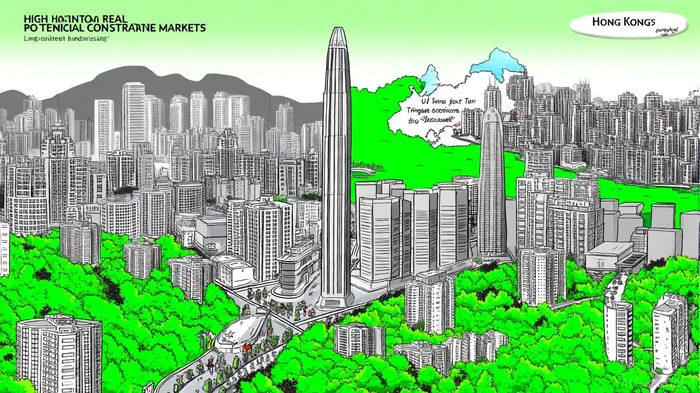
The U.S. Federal Reserve's 2025 rate cut cycle has ignited a global recalibration of capital flows, with real estate markets poised to experience divergent trajectories. While Hong Kong's constrained conditions persist as a cautionary tale, regions like Southeast Asia and Eastern Europe are emerging as fertile ground for investment, driven by urbanization, policy reforms, and demographic tailwinds. This analysis dissects the interplay between monetary policy and real estate dynamics, offering a roadmap for investors navigating this fragmented landscape.
Hong Kong: A Case of Structural Constraints
Hong Kong's real estate market remains a paradox of prosperity and pressure. With a population density of 6,900 people per square kilometer and a land area of just 1,114.57 square kilometers, the city's physical limitations are insurmountable[4]. Despite government efforts to develop satellite towns like Sha Tin and Tuen Mun, housing shortages persist, with property prices remaining among the world's highest. The aging population and low birth rate further complicate long-term planning, as demand for senior housing and healthcare infrastructure outpaces supply[4].
The Fed's rate cuts, while theoretically easing borrowing costs, may not translate into meaningful relief for Hong Kong. Capital inflows could boost liquidity, but the city's rigid land policies and regulatory environment—designed to preserve its role as a global financial hub—limit the elasticity of its real estate market[4]. Political uncertainties under the “one country, two systems” framework add another layer of risk, deterring long-term investment in a sector already strained by structural bottlenecks.
High-Potential Markets: Urbanization and Policy Tailwinds
In contrast, Southeast Asia and Eastern Europe are witnessing a real estate renaissance fueled by urbanization and proactive policy reforms.
Southeast Asia is experiencing rapid population shifts to cities, with urbanization rates exceeding 50% in countries like Vietnam and the Philippines[4]. Governments are incentivizing infrastructure development through tax breaks and streamlined regulatory frameworks, attracting both domestic and foreign capital. For instance, Vietnam's GDP growth of 6.8% in 2025[4] has spurred demand for commercial and residential properties in Hanoi and Ho Chi Minh City, while Indonesia's “Jakarta Metropolitan Expansion” project is unlocking new real estate corridors[4].
Eastern Europe is similarly benefiting from policy-driven revitalization. Nations like Poland and Romania are modernizing infrastructure to integrate into global supply chains, with GDP growth rates averaging 3.5% in 2025[4]. Urbanization is being accelerated by EU-funded projects and private-sector investments in sustainable housing, creating a virtuous cycle of economic and real estate growth[3].
The Fed's Role in Shaping Global Real Estate
The Fed's rate cuts act as a catalyst, amplifying the growth potential of markets with structural flexibility. Lower U.S. interest rates reduce the cost of capital, enabling developers in high-potential regions to secure financing for large-scale projects[3]. For example, Southeast Asia's real estate developers have leveraged U.S. dollar-denominated bonds to fund mixed-use developments, capitalizing on the liquidity surge[4].
Hong Kong, however, remains a passive beneficiary. While its financial hub status could attract some capital inflows, the city's regulatory rigidity and land scarcity prevent the Fed's easing from translating into broad-based real estate growth[4]. Instead, the rate cut cycle may exacerbate existing inequalities, as speculative demand for luxury properties outpaces affordable housing solutions.
Investment Implications
For investors, the contrast between Hong Kong and high-potential markets is stark. Southeast Asia and Eastern Europe offer scalable opportunities in sectors like logistics, healthcare, and education infrastructure, driven by demographic and policy trends[2]. Conversely, Hong Kong's market remains a niche play, suitable for short-term speculation but ill-suited for long-term value creation.
The Fed's rate cut cycle underscores the importance of geographic diversification. While global liquidity is expanding, its benefits are unevenly distributed. Investors must prioritize markets with structural adaptability—those where urbanization, policy reforms, and demographic trends align to create sustainable value.







Comentarios
Aún no hay comentarios