
Global Real Estate Leadership Shifts and Its Investment Implications
The global real estate market is undergoing a seismic shift in 2024–2025, driven by technological disruption, sustainability mandates, and evolving investor priorities. As interest rates remain elevated and geopolitical tensions persist, market leaders are redefining strategies to capitalize on high-growth sectors like data centers, logistics, and green infrastructure. This analysis explores how strategic leadership and market positioning are shaping investment outcomes, with a focus on the interplay between innovation, regulation, and capital flows.
Market Dynamics: A Fragmented but Resilient Landscape
The real estate sector is navigating a "corrugated" recovery, as described by the PwC and Urban Land Institute's Emerging Trends report. While the U.S. grapples with inflationary pressures and a struggling office sector, Europe and Asia are rebounding, with transaction volumes rising by 13.7% and 13.4%, respectively, in 2024 (the Emerging Trends report). This divergence is fueled by divergent monetary policies and regulatory frameworks. For instance, the EU's Energy Performance of Buildings Directive (EPBD), which mandates zero-emission buildings by 2030, is pushing European developers toward green construction, creating opportunities for firms specializing in retrofitting and sustainable materials, according to a Build News analysis.
Meanwhile, the U.S. remains a pivotal player despite uncertainties. The anticipated Trump administration and proposed tariffs have raised concerns about trade volatility, yet the dollar's dominance and the U.S. market's appeal as a global investment hub suggest its leadership will endure, according to a GRI Institute interview.
Strategic Leadership: Data Centers and Logistics as Growth Engines
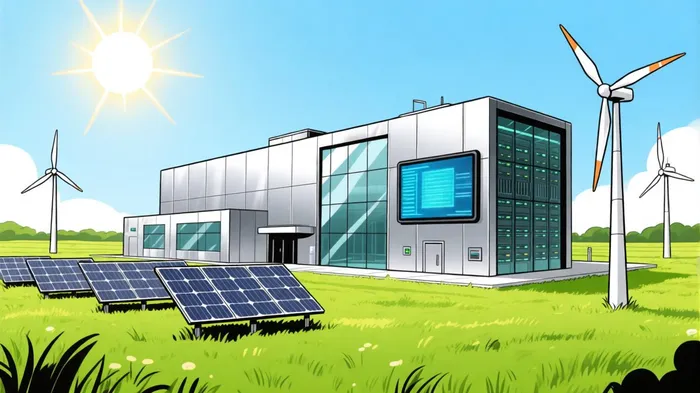
The most striking example of strategic adaptation is the surge in data center investments. According to the JLL outlook, demand for data centers is outpacing supply, driven by AI and cloud computing. Blackstone's £10 billion investment in North-East England's data infrastructure exemplifies this trend, addressing a global shortage of power and cooling capacity (as noted in the Emerging Trends report). Similarly, logistics firms like GXO and LXP IndustrialLXP-- have secured large deals in key markets, leveraging their agility to meet e-commerce and supply chain demands. GXO's leasing of 885,000 square feet in the UK underscores the sector's resilience amid macroeconomic headwinds (the Emerging Trends report).
Sustainability is another cornerstone of leadership. Link Logistics' sustainability report shows the company has integrated renewable energy and energy efficiency upgrades into its operations, reducing carbon emissions by 44,556 metric tons in 2024 alone. Such initiatives align with occupiers' ESG goals and enhance asset value, as seen in the Asia-Pacific region, where demand for green-certified logistics facilities is surging (the Emerging Trends report).
Investment Implications: High Returns, High Stakes
The data center sector, in particular, offers compelling returns. Hyperscale projects now deliver internal rates of return (IRR) between 25% and 40% over three to four years, driven by long-term leases with tech giants like Amazon and Microsoft, according to an Accordant analysis. Northern Virginia, the U.S. data center hub, saw 90% of new construction pre-leased in 2024, pushing vacancy rates below 1% (Link Logistics' sustainability report). However, investors must navigate supply constraints and power availability challenges, particularly in rural markets.
Green logistics also presents opportunities. DHL's plan to electrify 60% of its ground fleet by 2030 highlights the sector's alignment with decarbonization goals (the Accordant analysis). Developers who incorporate renewable energy and smart technologies-such as route optimization tools-are positioning themselves to meet occupier demand while enhancing operational efficiency.
Emerging Markets: The Next Frontier
India's real estate market, which attracted $11.4 billion in investments in 2024, illustrates the potential of emerging economies. Strong domestic demand and foreign participation in office and land development are driving growth, though regulatory clarity remains a hurdle (the GRI Institute interview). In Latin America, Iberian investors are targeting luxury residential and hospitality assets, despite political and currency risks (the GRI Institute interview).
Conclusion: Navigating Uncertainty with Agility
The real estate sector's future hinges on adaptability. Firms that prioritize innovation-whether through data center expansion, green logistics, or strategic land banking-will outperform peers. Investors must balance short-term gains with long-term sustainability, recognizing that AI-driven demand and regulatory shifts will continue to reshape the landscape. As JLL notes, the sector's resilience lies in its ability to "pivot to infrastructure-like returns while mitigating real estate risks" (the JLL outlook).
In this fragmented yet dynamic market, strategic leadership is no longer optional-it is the cornerstone of competitive advantage.





Comentarios
Aún no hay comentarios