
Global Rate Cut Dynamics and Emerging Markets: Rebalancing Risk and Opportunity in a Divergent Policy Landscape
The global monetary policy landscape has entered a phase of stark divergence, with central banks in advanced economies initiating rate cuts to cushion slowing growth, while emerging markets grapple with balancing inflation control and capital outflows. This divergence, driven by divergent economic fundamentals and policy priorities, is reshaping investment strategies, particularly in emerging markets. Investors must now navigate a complex interplay of rate cuts, currency volatility, and shifting risk-return profiles, demanding agile portfolio rebalancing.
Divergent Central Bank Policies: A Tale of Two Worlds
The Federal Reserve's first rate cut in September 2025-lowering the federal funds rate to 4.00–4.25%-marked a pivotal shift in response to a cooling labor market and Trump-era tariff uncertainties, according to CNBC. The Fed's projection of two additional cuts in 2025, with a long-term target of 3.25–3.50% by 2026, signals a prolonged easing cycle, per Morningstar. Meanwhile, the European Central Bank (ECB) has accelerated its rate-cutting pace, reducing key rates to 2.00% (deposit facility) by June 2025, while maintaining a cautious stance amid inflation risks, as noted in a CCN analysis. In contrast, the Bank of Japan (BOJ) has adopted a gradual normalization path, holding rates steady at 0.50% in July 2025 despite earlier hikes, reflecting its wait-and-see approach to global economic turbulence, reported by Reuters.
Emerging market central banks, however, have charted a distinct course. While India's Reserve Bank of India (RBI) paused rate cuts in October 2025, maintaining a 5.50% repo rate to monitor inflation and tax policy impacts, according to Reuters, others like Turkey and Russia executed aggressive 625 basis point cuts in July 2025 to stabilize currencies and stimulate growth, as covered by Reuters' regional roundup. This divergence underscores the asymmetric challenges faced by emerging economies: managing domestic inflation while mitigating capital flight triggered by U.S. rate cuts and dollar strength, a dynamic explored in a Kansas City Fed review.
Portfolio Rebalancing: Navigating Divergence and Volatility
The contrasting policy trajectories necessitate a recalibration of emerging market portfolios. Traditional diversification strategies are being augmented by exposure to non-correlated assets and active hedging. For instance, BlackRock's target allocation model portfolios have shifted toward U.S. mega-cap and AI-driven equities, leveraging their resilience amid Fed easing, while reducing China exposure to mitigate headline volatility. Simultaneously, investors are prioritizing short-term Treasury Inflation-Protected Securities (TIPS) and global bond diversification to hedge against inflation surprises and currency swings, according to BlackRock's Fall 2025 guide.
Currency hedging has emerged as a critical tool. For example, WisdomTree documents dynamic hedging strategies that adjust hedge ratios based on real-time dollar movements and have outperformed static 50% hedges in emerging markets, where hedge ratios climbed to 50% in early 2025 to counteract U.S. tariff-related uncertainties. This adaptability is crucial as emerging market central banks, like those in Latin America and Asia, face narrowing interest rate differentials and constrained policy space amid dollar strength, a concern raised in an IMF blog.
Case Studies: Policy Responses and Portfolio Adjustments
Emerging markets have demonstrated varied responses to global rate cuts. For example, South Africa's central bank adjusted its inflation target in 2025, aligning with a broader trend of policy frameworks that prioritize domestic stability over external pressures, as discussed in an IMF blog. In contrast, Turkey's rate cuts focused on stabilizing the lira, reflecting its unique vulnerability to capital outflows. These divergent approaches have led to heterogeneous asset performance: while Turkey's equity markets rebounded post-cuts, South Africa's bonds attracted inflows due to improved policy credibility, according to a VoxEU column.
Investors are also leveraging strategic asset allocation techniques. Constant-weighting strategies, which systematically reallocate capital as market values drift from target allocations, have gained traction in volatile emerging markets, as outlined in The Luxury Playbook's guide. For example, a 2025 portfolio might sell outperforming equities to rebalance into bonds or cash, ensuring alignment with risk tolerance. Additionally, active thematic rotations-such as pivoting toward infrastructure or green energy-allow investors to exploit market dispersion caused by policy divergence, a point emphasized in Goldman Sachs' outlook.
Future Outlook: Preparing for a Fragmented Policy Environment
Looking ahead, emerging market central banks must navigate heightened risks from narrowing rate differentials, potential capital outflows, and U.S. policy volatility. While major economies like India and Brazil are projected to maintain growth resilience, frontier markets face greater challenges due to limited financing access, as indicated by a ScienceDirect study. Investors should prioritize portfolios with:
1. Diversified income streams (e.g., alternatives, commodities) to hedge inflation and geopolitical risks, as recommended in Morgan Stanley's 2025 outlook.
2. Dynamic currency hedging to mitigate dollar-driven volatility, a strategy discussed in a MUFG analysis.
3. Active ETFs and liquid alternatives to capitalize on market inefficiencies, as outlined in a McKinsey report.
As central banks continue to diverge, the ability to adapt to shifting policy landscapes will define investment success in emerging markets.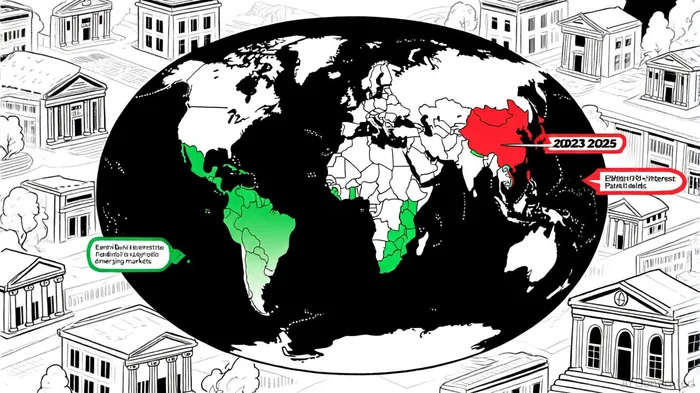





Comentarios
Aún no hay comentarios