
Global Pharmaceutical Trade Policy Risks: Geopolitical Uncertainty Reshapes Biopharma Valuations and Market Leadership
The global pharmaceutical industry is navigating a turbulent landscape shaped by escalating geopolitical tensions and protectionist trade policies. From U.S. tariffs on imported drugs to EU restrictions on Chinese medical device bidders, the sector faces unprecedented challenges that are directly influencing company valuations and shifting competitive dynamics. Investors must now weigh how these policy-driven disruptions—spanning supply chains, R&D pipelines, and pricing pressures—are redefining market leadership in biopharma.
Tariffs and Supply Chain Reconfiguration: A Double-Edged Sword
The U.S. administration's imposition of tariffs on pharmaceutical imports—initially 20–40%, with potential escalation to 200%—has sent shockwaves through the industry. According to a report by Bloomberg, these tariffs have raised input costs for biopharma firms, with direct and indirect impacts reducing core earnings per share (EPS) by 9% for U.S. companies and 6% for European counterparts [1]. For firms reliant on overseas manufacturing, such as Eli LillyLLY-- and PfizerPFE--, the cost of reshoring production is compounding operational expenses. AstraZenecaAZN-- and SanofiSNY--, meanwhile, are investing tens of billions in U.S. facilities by 2030 to mitigate long-term risks [2].
However, reshoring is not without trade-offs. Higher capital expenditures and tax burdens are squeezing returns on assets (ROAs), while nearshoring to countries like Mexico introduces new logistical complexities. Smaller generic drug manufacturers, operating on razor-thin margins, face existential threats: tariffs on APIs and finished products could force production halts or price hikes that erode consumer access [3]. This bifurcation between large-cap firms with financial flexibility and smaller players struggling to adapt is already reshaping market leadership.
Geopolitical Alliances and Innovation Sourcing: A New Competitive Edge
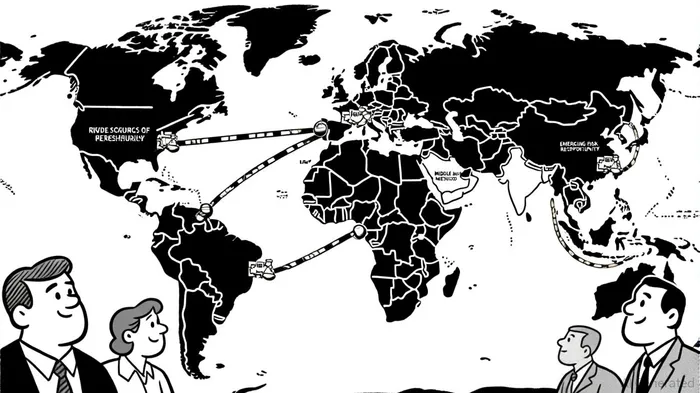
While protectionism raises costs, it also creates unexpected opportunities. Chinese biotech firms are emerging as key partners for U.S. companies seeking cost-efficient innovation. Summit Therapeutics, for instance, has leveraged Chinese-developed therapies like ivonescimab to challenge established treatments such as Merck's Keytruda [4]. Similarly, BeiGene's Brukinsa, developed in China, has outperformed Western counterparts in blood cancer treatments, demonstrating the quality of Asian R&D pipelines [5].
This trend is accelerating as global supply chains fragment. One-third of in-licensed molecules now originate from China, a shift driven by faster clinical trial timelines and lower development costs [6]. Yet, this reliance is not without risk. Proposed U.S. legislation like the Biosecure Act threatens to restrict access to Chinese contractors, forcing firms to balance innovation gains against geopolitical volatility [7].
Regulatory Pressures and Pricing Power: The Inflation Reduction Act's Shadow
The U.S. Inflation Reduction Act (IRA), which mandates price negotiations for Medicare drugs, has added another layer of complexity. As noted by Reuters, companies must now absorb cost increases from tariffs while navigating downward pricing pressures in public programs [8]. This dual squeeze is particularly acute for firms with near-term patent expirations, prompting a surge in late-stage asset acquisitions. M&A activity, though down in 2024, is expected to rebound in 2025 as companies seek to replenish pipelines and offset revenue losses [9].
Meanwhile, the EU's restrictions on Chinese medical device bidders—capping Chinese component usage at 50% for contracts over €5 million—highlight the growing emphasis on economic reciprocity [10]. While these measures aim to level the playing field, they also limit access to cost-effective suppliers, further straining margins.
Strategic Adaptation: The Path Forward for Investors
Biopharma firms are responding to these pressures with a mix of resilience and reinvention. Digital tools like AI-driven R&D and supply chain scenario modeling are becoming table stakes for competitiveness [11]. Companies that successfully integrate localized production with global innovation—such as those leveraging Chinese molecules while reshoring critical manufacturing—will likely outperform peers. Conversely, firms slow to adapt may see their valuations lag as capital flows to more agile competitors.
Conclusion: Navigating a Fractured Landscape
The interplay of tariffs, regulatory shifts, and geopolitical realignments is creating a "new normal" for the biopharma sector. While large firms with diversified supply chains and robust balance sheets are better positioned to weather these storms, smaller innovators face heightened scrutiny and capital constraints. For investors, the key lies in identifying companies that can harmonize global innovation with localized resilience—those that treat geopolitical uncertainty not as a threat, but as a catalyst for strategic reinvention.





Comentarios
Aún no hay comentarios