
Global Oil Market Imbalances: Navigating Supply-Driven Risks in a Fractured Energy Landscape
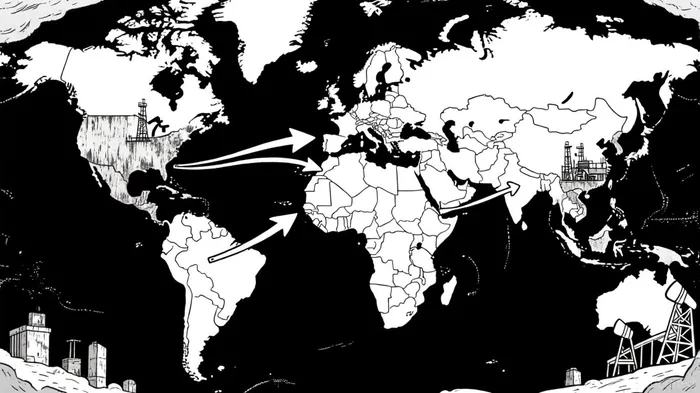
The global oil market in 2025 is a theater of contradictions. On one hand, JPMorgan's analysis warns of a widening supply-demand imbalance, forecasting a deficit of 1.1 million barrels per day this year that could balloon to 7.1 million by 2030[2]. This shortfall, driven by OPEC+ production cuts and aging oilfields in key producers like Saudi Arabia, has created a fragile equilibrium where even minor disruptions could send prices spiraling. On the other hand, macroeconomic headwinds—including trade policy shifts and slowing demand in emerging markets—have forced JPMorganJPM-- to revise its Brent price forecasts downward to $66 in 2025 and $58 in 2026[3]. For energy equities and commodity-linked assets, this duality presents a high-stakes chess game: investors must weigh the risks of a potential “energy supercycle” against the drag of a decelerating global economy.
Supply Constraints: The OPEC+ Tightrope
JPMorgan's EMEA energy equity research head, Christyan Malek, has sounded the alarm on a looming supply crisis. With global oil production constrained by OPEC+ discipline and the natural decline of mature fields, the firm predicts Brent prices could surge to $150 per barrel by 2026[2]. This scenario hinges on two critical factors: the lack of new upstream investment and the persistence of geopolitical tensions in key export corridors. For example, Saudi Arabia's production capacity, while still formidable, is increasingly reliant on costly tertiary recovery techniques to offset natural depletion rates[2]. Meanwhile, non-OPEC+ producers, including the U.S. shale sector, face regulatory and capital hurdles that limit their ability to scale output rapidly.
Yet the International Energy Agency (IEA) offers a more nuanced view. While acknowledging the 2.7 million barrels per day of incremental supply expected from OPEC+ and non-OPEC+ producers in 2025, the IEA notes that demand growth remains “modest,” tempering the risk of a severe price spike[4]. This divergence between JPMorgan and the IEA underscores the uncertainty investors face: is the market on the brink of a supercycle, or is it being held in check by structural demand-side adjustments?
Macroeconomic Headwinds: Trade Wars and Central Bank Policies
The specter of a resurgent Trump administration looms large over 2025. Proposed trade tariffs, if implemented, could reduce global GDP growth by 50 basis points and slash oil demand by 0.5 million barrels per day[1]. For energy equities, this represents a significant tail risk, particularly for exporters reliant on Asian and European markets. The ripple effects of protectionist policies could also disrupt supply chains for critical minerals—such as lithium and cobalt—used in the energy transition, further complicating the outlook for commodity-linked assets[5].
Conversely, central bank policies may provide a counterbalance. Anticipated rate cuts in 2025 are expected to boost capital markets activity, potentially fueling IPOs in the energy sector[1]. However, this optimism is tempered by the reality that energy investment, while still robust at $1.5 trillion annually, is growing at a slower pace than in previous years[1]. The sector's ability to attract capital will depend on its capacity to demonstrate resilience against both macroeconomic volatility and the transition to low-carbon energy systems.
The Energy Transition: A Double-Edged Sword
The energy transition is reshaping oil markets in unexpected ways. While long-term demand for crude is projected to decline, the IEA acknowledges that power infrastructure strains from AI-driven data centers and industrial electrification could temporarily boost energy consumption[2]. This creates a paradox: decarbonization efforts require massive investments in grid infrastructure and renewable technologies, yet these same initiatives may inadvertently prolong oil's relevance by increasing electricity demand in sectors previously insulated from fossil fuels[2].
For investors, the transition also introduces new asset classes—such as critical minerals and hydrogen—to an already volatile portfolio. JPMorgan's bullish stance on these sectors[5] contrasts with the risks posed by underinvestment in traditional energy infrastructure, which could lead to price spikes and regulatory backlash.
Investment Implications: Hedging in a Fractured Market
The path forward for energy equities and commodity-linked assets requires a nuanced strategy. For oil producers, the key lies in balancing short-term margin preservation with long-term transition readiness. Firms with diversified portfolios—spanning conventional oil, renewables, and critical minerals—are best positioned to navigate the dual risks of price volatility and regulatory shifts.
On the commodity side, investors should monitor the interplay between OPEC+ policy and U.S. shale output. A sudden relaxation of production cuts could push prices below $50 per barrel, testing the viability of high-cost producers[3]. Conversely, a return to tighter markets—triggered by geopolitical shocks or underinvestment—could reignite a supercycle, benefiting upstream and midstream players with strong balance sheets.
Finally, the energy transition remains a wildcard. While renewable infrastructure and grid modernization offer long-term growth, they also expose investors to near-term bottlenecks in mineral supply chains and technology deployment[5]. A diversified approach—combining exposure to both traditional and emerging energy assets—may be the most prudent path in this fragmented landscape.





Comentarios
Aún no hay comentarios