
Global Monetary Policy Normalization: Why "Debasement" May Be an Oversimplified Narrative
The narrative of "monetary debasement"-the idea that global financial systems are eroding due to prolonged low interest rates, excessive liquidity, and fiat currency devaluation-has gained traction in recent years. However, a closer examination of central bank actions and evolving policy frameworks reveals a more nuanced reality. From 2020 to 2025, global monetary policy normalization has been a deliberate and multifaceted effort to balance inflation control, financial stability, and economic growth. This analysis argues that the "debasement" narrative oversimplifies the complexity of central bank strategies and ignores the structural adaptations occurring in response to post-pandemic economic challenges.
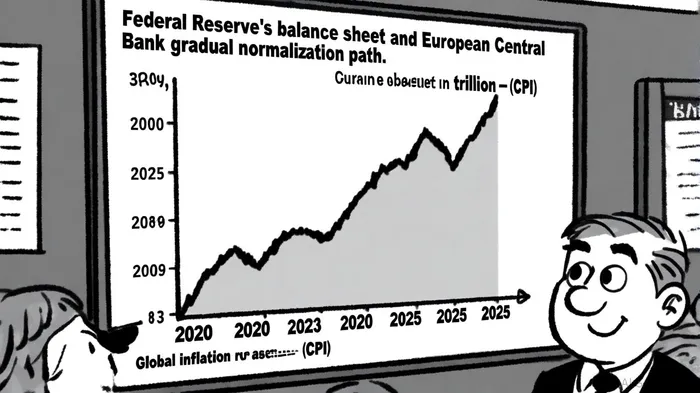
The Mechanics of Policy Normalization: Inflation Targeting and Quantitative Tightening
Central banks have prioritized inflation targeting and quantitative tightening (QT) as tools to counteract inflationary pressures while avoiding systemic risks. The U.S. Federal Reserve, for instance, reduced its balance sheet from a peak of $8.9 trillion in 2020 to $7.4 trillion by early 2024 through QT, allowing maturing securities to roll off without reinvestment, according to Descending Carefully. This contraction in liquidity has raised bond yields and borrowing costs, curbing inflationary impulses while testing the resilience of financial markets. Similarly, the European Central Bank (ECB) updated its monetary policy strategy in 2025 to address evolving economic conditions, emphasizing flexibility in achieving inflation targets while safeguarding financial stability, as outlined in the ECB strategy assessment.
These efforts reflect a shift from the unconventional interventions of the post-pandemic era to more conventional frameworks. For example, the Fed adjusted reinvestment caps to slow QT's pace in mid-2024, reducing the monthly Treasury securities cap from $60 billion to $25 billion to avoid destabilizing interbank lending markets, as described in the Fed's policy normalization guidance. Such adjustments highlight central banks' cautious approach to normalization, balancing the need to combat inflation with the risks of abrupt policy shifts.
Challenging the Debasement Narrative: Policy Divergence and Structural Adaptations
The "debasement" narrative often assumes a monolithic global economy, but regional divergences complicate this view. While the U.S. has experienced resilient growth and sticky inflation, Europe faces deflationary pressures, prompting the ECB to consider more aggressive easing measures, according to Global Markets Brace for Fed Easing. This divergence underscores the limitations of a one-size-fits-all narrative. Central banks are not passively eroding currency value; they are actively recalibrating policies to address heterogeneous economic conditions.
Moreover, inflation targeting frameworks have evolved to incorporate broader objectives. Central banks now adopt stricter numerical inflation targets but extend the time horizons for achieving them, allowing flexibility to address employment and financial stability. The ECB assessment underscores this broader remit and the trade-offs involved in implementation. For instance, the Fed's emphasis on maintaining "sufficient reserves" to support monetary policy while avoiding excessive liquidity reflects a nuanced approach to balancing price stability and systemic risk, a point also noted in MarketMinute's discussion of global markets.
Global Implications: Spillovers and Systemic Resilience
The normalization process has also revealed the interconnectedness of global financial systems. U.S. monetary policy adjustments, such as rate hikes, have triggered capital flows and exchange rate adjustments that ripple across emerging markets. However, central banks in these economies are increasingly adopting tools to mitigate spillovers. For example, China has used targeted liquidity injections to offset the impact of U.S. QT, demonstrating a capacity to adapt to external shocks, as discussed in MarketMinute.
Critics of the "debasement" narrative argue that it overlooks the resilience of traditional investment models. While assets like BitcoinBTC-- have gained traction as hedges against currency erosion, central banks' actions-such as the Fed's gradual QT and inflation-targeting adjustments-suggest a commitment to maintaining confidence in fiat currencies. The Fed's operating losses due to the IORB-market yield gap ($191.9 billion by 2024) further illustrate the financial constraints central banks face in sustaining unconventional policies, as noted in Descending Carefully.
Conclusion: A Nuanced Path Forward
The "debasement" narrative risks oversimplifying the deliberate and adaptive strategies central banks have employed since 2020. Policy normalization, driven by inflation targeting and QT, reflects a commitment to balancing growth, stability, and price control in a complex global economy. While challenges persist-such as financial fragility and regional divergences-the evidence suggests that central banks are not passively eroding currency value but actively navigating a path toward equilibrium. Investors should focus on the structural adaptations and policy divergences shaping global markets rather than relying on binary narratives of debasement or stability.






Comentarios
Aún no hay comentarios