
Global Monetary Crossroads: BoE Eases, Fed Waits Amid Trade Storms
The global economy in May 2025 found itself at a pivotal juncture, with the Bank of England (BoE) and the U.S. Federal Reserve (Fed) charting divergent paths to navigate trade-driven uncertainties. While the BoE slashed rates to 4.25%, marking its fourth cut since August 2024, the Fed held its benchmark rate at 4.25%-4.5% amid conflicting inflation and growth signals. This divergence underscores a central truth: in an era of trade wars and geopolitical tensions, central banks are now as much geopolitical actors as monetary engineers.
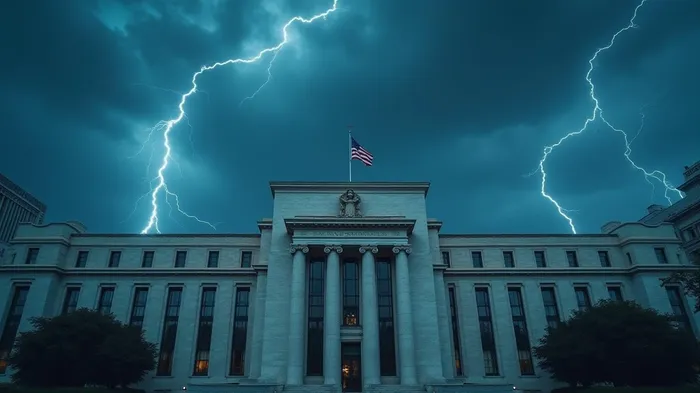
The BoE’s Proactive Play: Cutting Through Trade Clouds
The BoE’s decision to lower rates by 25 basis points was a preemptive strike against the demand shock posed by U.S. tariffs. With inflation at 2.6%—comfortably within its 2% target—the BoE prioritized growth over price stability. Oxford Economics noted this reflects a “new demand-driven mandate,” with policymakers fearing Trump’s tariffs on UK exports (e.g., 10% baseline tariffs) could derail economic momentum. The Monetary Policy Committee (MPC) voted 5-4 to cut, with dissenters arguing for a wait-and-see approach.
The rationale is clear: the UK economy is uniquely exposed to trade friction. If tariffs persist, consumer spending—a key growth engine—could stagnate. The BoE’s move aims to cushion households and businesses via cheaper borrowing costs. Analysts project rates could fall further to 3.5% by early 2026 if inflation remains benign.
The Fed’s Delicate Balance: Data Over Politics
The Fed’s decision to stand pat was a masterclass in data dependency. Despite U.S. GDP contracting by 0.3% in Q1 2025 (due to tariff-induced inventory distortions), the labor market remains resilient: 177,000 jobs added in April and a 4.2% unemployment rate. Fed Chair Powell emphasized “heightened uncertainty” but stressed no immediate rate cuts unless inflation or employment signals weaken.
Crucially, the Fed’s calculus hinges on tariffs’ dual-edged impact: while they risk stoking inflation (via import costs), they also dampen growth by crimping trade. This “stagflationary” dilemma—last seen in the 1980s—explains the Fed’s caution. The central bank’s next move likely hinges on May’s Consumer Price Index (CPI) report and June’s employment data.
Market Implications: A Split Road Ahead
The divergence has already reshaped financial markets. UK gilts surged as BoE cuts reignited bond buying, while U.S. equities rose modestly on Fed’s “wait-and-see” stance. However, risks loom large:
- Equities: Trade-sensitive sectors (autos, industrials) may underperform unless tariffs ease.
- Currencies: The pound could weaken further if UK inflation rebounds, while the dollar faces Fed rate-cut bets.
- Bonds: BoE easing supports UK bonds, but Fed hesitancy keeps U.S. yields volatile.
Investors should also monitor geopolitical developments. A potential U.S.-UK trade deal—which the BoE cited as a “silver lining”—could reduce tariff pressures, altering the policy calculus.
Conclusion: Navigating the New Monetary Divide
The BoE and Fed’s divergent paths reflect a critical truth: central banks are now navigating not just economic data, but geopolitical headwinds. The BoE’s proactive stance aims to offset trade-related demand shocks, while the Fed’s caution reflects the U.S. economy’s dual mandate tension.
Investors must prepare for volatility. The BoE’s rate cuts suggest a preference for growth over inflation control, which could fuel equities but pressure the pound. Meanwhile, the Fed’s wait-and-see approach leaves room for a July rate cut if data weakens—a scenario priced at 65% by markets.
In this environment, diversification is key. Equity investors might tilt toward sectors insulated from trade wars (tech, healthcare), while bond investors should favor short-term Treasuries until the Fed’s path crystallizes. Ultimately, the global economy’s trajectory will hinge on whether central banks’ divergent strategies can stabilize growth—or if trade conflicts will force even tougher choices.
The storm clouds linger, but central banks are now the world’s first responders.





Comentarios
Aún no hay comentarios