
Global Medical REIT's Strategic Refinancing: A Blueprint for Risk Mitigation and Long-Term Stability in Healthcare Real Estate
In an era of economic uncertainty and rising interest rates, Global Medical REIT Inc.GMRE-- (NYSE: GMRE) has demonstrated a proactive approach to balance sheet management through strategic refinancing and credit facility maturity extensions. These moves not only address immediate liquidity risks but also align with the long-term stability of the healthcare real estate sector, which is poised to benefit from demographic tailwinds and structural demand drivers.
Proactive Debt Restructuring: Extending Maturities to Reduce Short-Term Pressure
According to a report by Financial Times, Global Medical REITGMRE-- recently amended and restated its credit facility, extending the maturity of its $400 million revolving credit facility to October 2029, with two optional six-month extensions available. This action, coupled with the restructuring of its $350 million Term Loan A into three tranches maturing in October 2029, October 2030, and April 2031, has significantly increased the company's weighted average debt term from 1.3 years to 4.4 years. Such an extension reduces the risk of near-term refinancing needs, which is critical in a high-interest-rate environment where short-term borrowing costs can spike unpredictably.
The company also hedged its interest rate exposure by entering into $350 million of forward-starting interest rate swaps, locking in effective rates ranging from 4.75% to 4.84% for the Term Loan A tranches. These swaps, combined with the removal of a prior 0.10% SOFR credit spread adjustment, provide greater predictability in interest expenses. By extending maturities and hedging rates, GMREGMRE-- has effectively insulated itself from the volatility of the current credit market while maintaining flexibility to capitalize on future opportunities.
Aligning with Industry Tailwinds: Demographics and Demand Drivers
The healthcare real estate sector is uniquely positioned to benefit from long-term structural trends. Data from CBRE's 2025 U.S. Healthcare Real Estate Outlook reveals that the aging population-projected to reach 20% of the U.S. population by 2030-is driving robust demand for senior housing and medical office buildings (MOBs). As the senior cohort accounts for 37% of national healthcare spending despite comprising only 17% of the population in 2024, the need for purpose-built healthcare facilities is accelerating.
Medical office buildings, in particular, are gaining traction as outpatient care becomes the norm. Technological advancements enabling less invasive procedures and a shift toward cost-effective care models have reduced vacancy rates and increased asking rents for MOBs, even amid new construction. For a REIT like GMRE, which owns a portfolio of healthcare-anchored properties, this trend ensures a stable and growing tenant base.
Similarly, the senior housing market is experiencing a surge in demand. As noted by MMCginvest, the U.S. will require hundreds of thousands of new senior housing units by 2030 to accommodate the aging population, with the 80+ demographic expected to grow by over 4 million between 2025 and 2030. This creates a durable asset class for investors, as senior housing facilities are less cyclical than other real estate sectors and offer consistent cash flows through long-term leases.
Strategic Positioning for Long-Term Stability
Global Medical REIT's refinancing strategy exemplifies how a healthcare-focused REIT can leverage industry-specific tailwinds to enhance asset stability. By extending debt maturities, the company reduces the risk of refinancing during periods of market stress, ensuring that its capital structure remains aligned with the long-term nature of its assets. This is particularly important in healthcare real estate, where tenant leases often span multiple years and cash flows are less sensitive to economic downturns compared to other sectors.
Moreover, the company's use of interest rate swaps and its decision to remove the SOFR credit spread adjustment demonstrate a disciplined approach to managing interest rate risk. These actions, combined with the retention of an accordion feature allowing for up to $500 million in additional borrowing, provide GMRE with the flexibility to pursue accretive acquisitions or debt repayments as market conditions evolve.
Conclusion: A Model for Resilience in a Shifting Landscape
Global Medical REIT's recent refinancing activities underscore its commitment to risk mitigation and long-term value creation. By extending debt maturities, hedging interest rate exposure, and aligning its capital structure with the structural growth drivers of the healthcare real estate sector, GMRE has positioned itself to navigate macroeconomic headwinds while capitalizing on the sector's resilience. As demographic trends continue to fuel demand for senior housing and medical office buildings, investors can take confidence in GMRE's proactive balance sheet management as a blueprint for sustained stability. 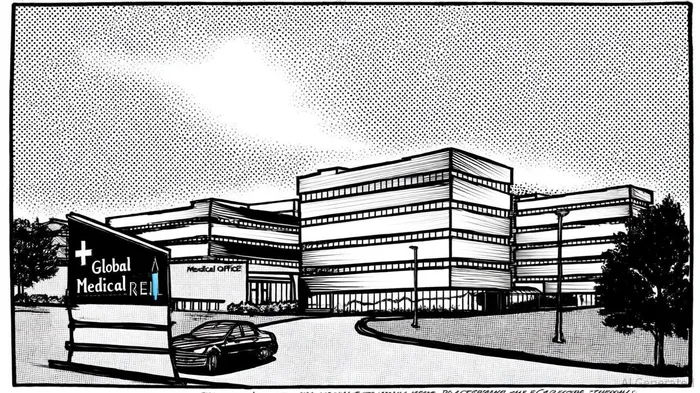





Comentarios
Aún no hay comentarios