
The Global LNG Infrastructure Boom: Strategic Entry Points in 2025
GTT's 2025 Surge: A Catalyst for Long-Term Outperformance
According to a report by , GTT's consolidated revenue for the first nine months of 2025 reached €599.6 million, reflecting a 29% year-over-year increase. This growth was fueled by its core newbuilds business, which generated €558.3 million-a 30.2% rise compared to 2024. The company's digital segment also saw a remarkable 83.4% revenue jump to €19.9 million, largely attributed to the July 2025 acquisition of Danelec, a provider of digital solutions for maritime operations. This acquisition not only expanded GTT's technological footprint but also underscored its commitment to integrating digital tools into LNG logistics, a critical differentiator in an industry increasingly reliant on data-driven efficiency.
The surge in demand for LNG carriers is another key driver. As stated by , GTT secured 19 LNG carrier orders between January and September 2025, including six ultra-large vessels (271,000 cbm) contracted with Chinese shipbuilder Hudong-Zhonghua. These deliveries, scheduled between 2027 and 2031, highlight GTT's ability to secure long-term contracts amid a global energy transition that prioritizes LNG as a transitional fuel. The company has raised its full-year revenue guidance to €790-820 million, signaling confidence in sustained demand.
Innovation at the Forefront: GTT's Containment Technologies and Energy Transition Role
GTT's leadership in LNG infrastructure is underpinned by its technological prowess. In September 2025, the company launched GTT CubiqTM, a novel LNG tank design tailored for container ships, enabling the transport of LNG as a dual-fuel solution. This innovation aligns with the International Maritime Organization's (IMO) 2030 decarbonization targets, as shipping companies seek to reduce emissions by adopting LNG as a cleaner alternative to heavy fuel oil.
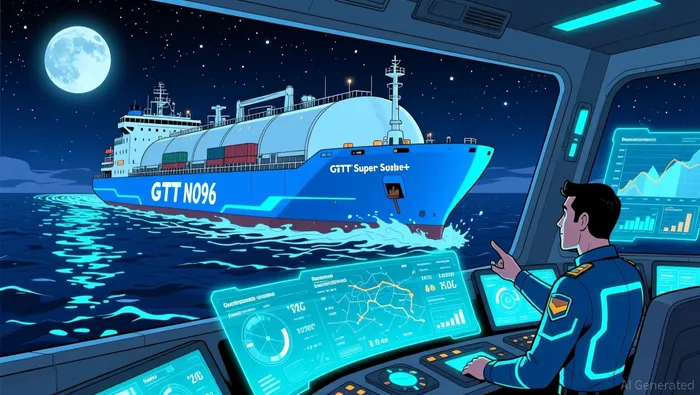
Additionally, GTT's advanced membrane containment systems-such as NO96 Super+ and Mark III- remain the industry standard for large-scale LNG carriers. These systems minimize boil-off and enhance cargo capacity, addressing operational inefficiencies that have historically plagued the sector. The company's recent contract to design a Floating LNG (FLNG) unit with a 238,700 m³ capacity further cements its role in enabling decentralized LNG production and export, a trend gaining traction in regions with stranded gas reserves.
Digital Maritime Innovation: A New Frontier
The Danelec acquisition has amplified GTT's digital capabilities, integrating real-time monitoring systems and predictive maintenance tools into its LNG logistics ecosystem. These technologies reduce downtime, optimize fuel consumption, and enhance safety-critical factors in an industry where operational costs and regulatory compliance are paramount. As digital maritime solutions become table stakes for competitiveness, GTT's early mover advantage positions it to capture a growing share of the market.
Strategic Entry Points for Investors
The LNG infrastructure boom presents a unique window for investors to align with both macroeconomic tailwinds and technological innovation. GTT's 29% revenue growth, coupled with its 19 LNG carrier orders and digital advancements, suggests a company well-positioned to outperform in a sector poised for multi-year expansion. With global LNG demand projected to grow by 40% by 2030, and energy transition policies accelerating the adoption of cleaner fuels, GTT's dual focus on physical infrastructure and digital transformation offers a compelling value proposition.
For those seeking exposure to the energy transition, GTT represents a strategic entry point. Its ability to innovate in containment technologies, secure long-term contracts, and leverage digital tools to enhance operational efficiency makes it a standout in an industry at the crossroads of tradition and transformation.







Comentarios
Aún no hay comentarios