
Global Growth Stalls: China's G20 Plea Sparks Investment Opportunities
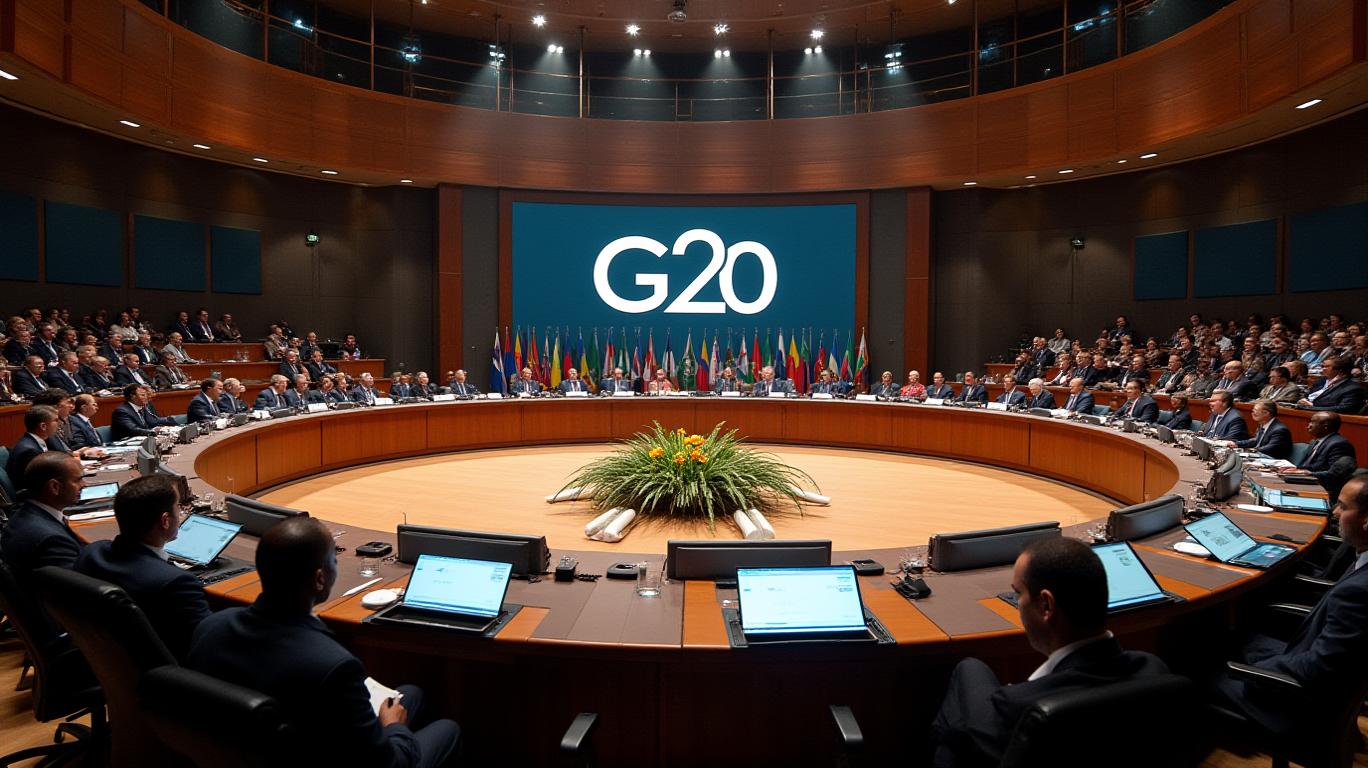
The 2025 G20 summit in Johannesburg has underscored a critical global dilemma: economic growth remains stubbornly insufficient, and the world’s largest economies are at odds over how to address it. China’s recent intervention at a G20 meeting, where Finance Minister Lan Foan warned of the dangers of tariff wars and urged multilateral cooperation, has reignited debates about where investors should focus their capital. With trade tensions flaring and debt crises looming, the path forward hinges on resolving systemic challenges—or capitalizing on them.
The Growth Deficit: A Systemic Crisis
China’s warning is backed by data. The International Monetary Fund (IMF) recently revised its 2025 global growth forecast downward to 2.8%, with advanced economies stagnating at 1.4% and emerging markets limping along at 4.2%. For China, the world’s second-largest economy, growth is projected to slow to 4%—a marked decline from its 5.2% pace in 2023. This deceleration, attributed partly to trade disputes and capital flight, has forced Beijing to prioritize stability over expansion.
Lan Foan’s G20 address highlighted three key risks:
1. Trade Wars as a Growth Killer: Tariffs and sanctions are distorting global supply chains, raising costs for businesses and consumers.
2. Debt Crises in the Global South: Over $12 trillion in developing-world debt is now at risk of default, with 60% of low-income nations in or near distress.
3. Africa’s Development Divide: Despite its resource wealth, Africa’s GDP per capita remains just $2,300, lagging behind every other region.
The minister’s solution? Strengthen multilateral institutions like the G20, reform the Common Framework for debt relief, and pool resources to fund African infrastructure and tech innovation.
Investment Themes Emerging from the G20 Agenda
- Emerging Markets: A Bargain for the Bold
With developed markets stuck in low-growth traps, investors are turning to emerging economies. South Africa’s G20 presidency has prioritized Africa’s needs, aligning with China’s Belt and RoadROAD-- Initiative (BRI) investments in infrastructure. Sectors like renewable energy, digital banking, and agriculture could see surges in capital.
The iShares MSCI Emerging Markets ETF (EEM) has outperformed the S&P 500 by 12% YTD in 2025, driven by gains in African tech stocks and Indonesian infrastructure bonds.
Debt Relief Plays: Profiting from Crisis
The IMF and World Bank’s Debt Service Suspension Initiative (DSSI) has been criticized as insufficient. However, investors can profit from distressed debt restructuring via funds like the PIMCO Global Advantage Fund (PAAGX), which focuses on undervalued sovereign bonds in Africa and Latin America.Tech for Sustainability: AI and Green Energy
South Africa’s G20 focus on AI and climate resilience has opened doors for companies like Siemens Energy (SI) and Tesla (TSLA), which are expanding solar and battery storage projects in Africa. Meanwhile, AI-driven logistics platforms like Flexport (FLEX) are reducing trade friction costs.
Risks and Opportunities in Trade Tensions
While Lan Foan called for dialogue over unilateral measures, the U.S.-China trade war shows no signs of easing. Tariffs on $360 billion in Chinese goods remain in place, and semiconductor sanctions continue to disrupt global supply chains. Investors must weigh these risks against the potential for a “trade thaw.”
A breakthrough in U.S.-China talks could boost the MSCI China Index (MCHI), which has underperformed the Nasdaq by 18% since 2023.
Conclusion: A New Paradigm for Growth
The G20’s 2025 agenda is a stark reminder that no single nation can solve the world’s economic woes. China’s plea for cooperation, coupled with South Africa’s focus on African development, points to two clear investment strategies:
Allocate to Africa: The continent’s $4 trillion GDP represents a demographic dividend. Sectors like fintech (Flutterwave, Interswitch) and green energy (Nigeria’s solar parks, Kenya’s geothermal projects) offer asymmetric upside.
Bet on Multilateralism: Funds focused on emerging markets and debt restructuring, along with companies enabling trade efficiency, will thrive if G20 nations can reduce friction.
The data is clear: global growth is stuck, but the solutions—and opportunities—are within reach. Investors who align with the G20’s priorities now may be rewarded when the next cycle turns.
Final Stat: If the G20’s debt relief and infrastructure plans are fully funded, Africa’s GDP could grow by an extra 1.5% annually by 2030—a $600 billion boost. The time to act is now.







Comentarios
Aún no hay comentarios