
Global Economic Cohesion and Resilience: Strategic Asset Allocation in Defense, Infrastructure, and Cross-Border Trade Enablers
In an era marked by geopolitical fragmentation and supply chain vulnerabilities, the imperative for Western economic unity has never been more urgent. Jamie Dimon, CEO of JPMorgan ChaseJPM--, has sounded a clarion call for democratic nations to align their economic strategies with national security imperatives, warning that "the West risks losing its cohesion if we continue to prioritize short-term gains over long-term stability" [1]. His remarks, delivered at the 2025 World Economic Forum, underscore a growing consensus among global leaders that economic resilience is inseparable from strategic asset allocation in defense, infrastructure, and cross-border trade enablers.
The Fragility of Western Unity: A Call for Strategic Alignment
Dimon's concerns about Western fragmentation stem from escalating tensions over trade policies and military spending. He has criticized aggressive U.S. tariff tactics as counterproductive, arguing that they risk alienating key allies and eroding the collective strength of democratic economies [2]. "History teaches us that divided democracies are vulnerable," Dimon cautioned in his 2025 shareholder letter, referencing the pre-World War I and pre-World War II eras as cautionary tales of geopolitical misalignment [3]. His mentorship philosophy-rooted in humility, hard work, and collaboration-further reinforces the need for leaders to prioritize unity over individualism. "Success is earned through collective effort," he emphasized, advocating for policies that "level the playing field" for underrepresented communities [4].
JPMorgan's $1.5 Trillion Bet: Defense, Infrastructure, and Trade as Pillars of Resilience
JPMorgan Chase's strategic asset allocation initiatives exemplify Dimon's vision for economic cohesion. The bank's $1.5 trillion "Security and Resiliency Initiative" (2023–2033) targets three critical sectors:
1. Defense and Aerospace: Investments in autonomous systems, secure communications, and next-gen connectivity aim to bolster U.S. and allied defense capabilities. A $10 billion allocation to companies involved in rare earth element extraction and refining directly addresses China's dominance in this sector [5].
2. Infrastructure and Advanced Manufacturing: The firm is financing projects under the Inflation Reduction Act and CHIPS and Science Act, focusing on critical minerals, energy systems, and AI-driven manufacturing. This aligns with federal goals to reduce reliance on foreign supply chains [6].
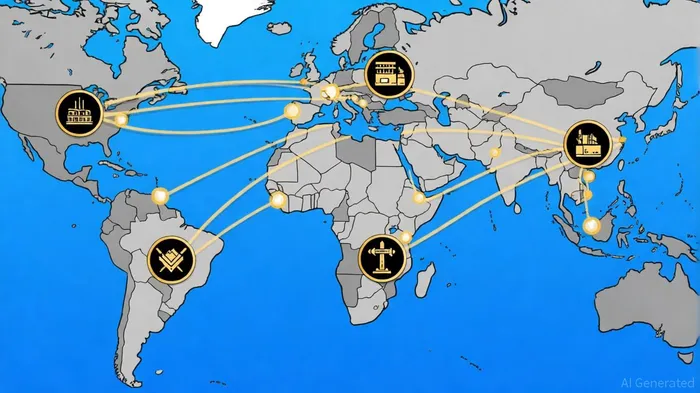
3. Cross-Border Trade Enablers: JPMorganJPM-- is prioritizing partnerships with European and Indo-Pacific allies to strengthen trade corridors, ensuring that economic interdependence remains a tool for stability rather than a source of vulnerability [7].
The Role of Mentorship in Building Resilient Economies
Dimon's leadership philosophy offers a blueprint for fostering the collaboration needed to execute such ambitious strategies. He emphasizes the importance of "staying true to oneself while embracing diverse perspectives," a principle that mirrors the need for democratic nations to balance sovereignty with collective action [8]. His advocacy for equal opportunity also resonates in the context of global economic resilience: "We cannot build a secure future without ensuring that all nations and communities have the tools to thrive," he stated in a 2024 interview [9]. This ethos is reflected in JPMorgan's advisory councils, which include experts from both corporate and public sectors to guide long-term investment decisions [10].
Risks and Opportunities in a Fragmented World
While the strategic alignment of economic and security goals presents significant opportunities, challenges remain. Critics argue that heavy reliance on tariffs and protectionist measures could exacerbate inflation and strain alliances. Dimon acknowledges these risks but insists that "the cost of inaction is far greater." His call for a "reimagined NATO of economics"-where democratic nations pool resources to secure supply chains and technological leadership-offers a compelling vision for the future [11].
Conclusion: A Path Forward
The convergence of Dimon's mentorship principles and JPMorgan's strategic investments highlights a critical truth: economic resilience in the 21st century demands both visionary leadership and coordinated action. As global supply chains evolve and geopolitical tensions persist, the West's ability to unite around shared economic goals will determine its capacity to compete-and survive-in an increasingly fragmented world.





Comentarios
Aún no hay comentarios