
The Global Defense of Fed Independence and Its Implications for Dollar Dominance
The U.S. dollar's status as the world's primary reserve currency has long been underpinned by the Federal Reserve's institutional independence. This autonomy, enshrined since the 1951 Treasury-Federal Reserve Accord, allows the Fed to prioritize long-term economic stability over short-term political pressures. However, recent geopolitical tensions and domestic political dynamics have tested this foundational principle, raising critical questions about the dollar's resilience in a shifting global landscape.
The Political Risks to Fed Independence
The most visible challenge to the Fed's independence emerged during the Trump administration, where public clashes between President Donald Trump and Federal Reserve Chair Jerome Powell underscored the fragility of this separation. Trump's repeated demands for rate cuts and his vocal criticism of Powell's inflation-fighting stance created market uncertainty, with investors fearing a precedent of political interference in monetary policy. Such interference, as historical examples like Turkey's inflation crisis under Recep Tayyip Erdoğan demonstrate, can erode credibility and destabilize economies.
The international financial community has rallied to defend the Fed's autonomy. Central bankers and institutional investors have emphasized that political overreach risks triggering capital flight, higher borrowing costs, and a loss of confidence in U.S. monetary policy. This global consensus reflects an understanding that the Fed's independence is not just a domestic safeguard but a pillar of international financial stability. 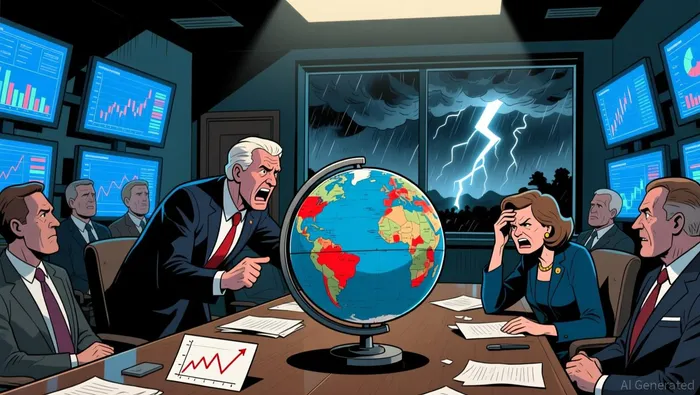
Investor Confidence and the Dollar's Global Role
Investor sentiment in 2024–2025 reveals a nuanced picture. While fixed income managers anticipate Fed rate cuts of up to 200 basis points by year-end 2025, concerns persist about the central bank's ability to control inflation amid political headwinds. Gold prices have surged as a hedge against perceived risks of political interference, signaling a growing appetite for alternative safe-haven assets.
The dollar's share in global foreign exchange reserves has also declined, from 58% in 2024 to 56.9% in Q3 2025-the lowest since 1994- reflecting broader diversification efforts by central banks. While this decline is gradual, it is driven by structural factors: U.S. fiscal sustainability concerns, including Moody's 2025 downgrade of U.S. sovereign debt, and geopolitical tensions such as dollar "weaponization" through sanctions. Countries like China and Japan have increased allocations to non-traditional reserve currencies and gold, signaling a shift away from dollar dependency.
The Long-Term Implications for Dollar Dominance
The dollar's enduring strength lies in its role as a global trade and financial infrastructure backbone. It remains the dominant currency in trade invoicing, particularly in the Americas, and retains a 96% market share in its region. However, structural shifts-such as rising tariffs, which could weaken the dollar's role if they exceed 26%, and the rise of multipolar monetary systems- pose long-term risks.







Comentarios
Aún no hay comentarios