
Global Cybersecurity Equities: A Resilient Investment Amid Escalating Threats and Digital Transformation
The global cybersecurity sector is undergoing a seismic shift, driven by a confluence of digital transformation, geopolitical instability, and the relentless evolution of cyber threats. As enterprises and governments grapple with increasingly sophisticated attacks, the market for cybersecurity solutions is expanding at an unprecedented pace. For investors, this presents a compelling opportunity to capitalize on a sector poised for long-term resilience, provided they align their strategies with the most promising technological and regulatory trends.
Market Growth and Key Drivers
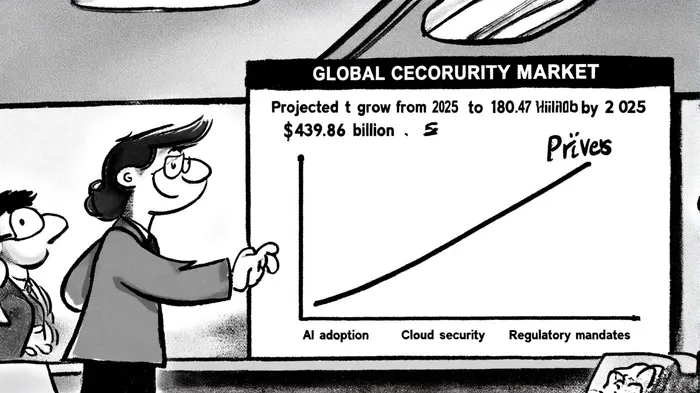
The cybersecurity market's trajectory is nothing short of explosive. According to a report by Business Research Insights, the global market was valued at $180.47 billion in 2025 and is projected to surge to $439.86 billion by 2035, growing at a compound annual growth rate (CAGR) of 9.3% [1]. This acceleration is fueled by three primary forces:
- Digital Transformation: The adoption of cloud computing and IoT has expanded the attack surface for cybercriminals. As of 2025, 47% of organizations have transitioned to cloud-based security solutions, while 42% are integrating AI-driven tools to detect threats in real time [1].
- Ransomware and Phishing: Cyberattacks are becoming both more frequent and more damaging. A staggering 68% of attacks now target enterprises, with phishing accounting for 54% of breaches [1].
- Regulatory Pressure: Governments are mandating stricter cybersecurity standards. The EU's NIS2 Directive and the U.S. Cybersecurity Strategy 2025 are compelling organizations to treat cybersecurity as a board-level priority, not just an IT concern [1].
Geopolitical Risks and Market Resilience
Geopolitical tensions are amplifying the urgency for robust cybersecurity measures. The World Economic Forum's Global Cybersecurity Outlook 2025 notes that nearly 60% of organizations are adjusting their cyber strategies in response to geopolitical risks, with cyber espionage and intellectual property theft cited as top concerns [2]. For instance, the ongoing conflict in Ukraine has exposed vulnerabilities in critical infrastructure, particularly in energy and telecommunications, prompting a global reevaluation of operational technology (OT) security [3].
Moreover, the rise of generative AI is reshaping the threat landscape. Cybercriminals are leveraging AI to craft hyper-realistic phishing emails and deepfake-based fraud, while defenders are adopting AI to predict and neutralize threats. According to the WEF, 73% of enterprise security operations centers (SOCs) now use AI-based tools for real-time anomaly detection [2]. This dual-edged sword underscores the importance of investing in companies that offer AI-powered, adaptive solutions.
Enterprise Demand for Advanced Solutions
Enterprises are increasingly prioritizing cybersecurity as a strategic imperative. The demand for cloud security, in particular, is surging, with the segment projected to grow 27% year-over-year in 2025 [4]. Similarly, AI-driven threat detection is enabling faster identification of zero-day vulnerabilities, a critical advantage in an era where 54% of large organizations cite third-party supply chain risks as a major concern [3].
The disparity in cyber resilience between small and large organizations is also notable. While 35% of small firms report inadequate defenses, large enterprises are investing heavily in scalable, AI-driven platforms. This trend is likely to drive market consolidation, favoring cybersecurity firms with proven track records in enterprise-grade solutions [2].
Investment Implications
For investors, the key to navigating this dynamic sector lies in identifying companies that align with the following criteria:
- AI and Machine Learning Integration: Firms like ZscalerZS-- and CrowdStrikeCRWD-- are leading the charge in AI-powered threat detection, offering predictive capabilities that are essential in countering AI-driven attacks.
- Regulatory Alignment: Companies that help organizations comply with evolving mandates—such as NIS2 and GDPR—will benefit from sustained demand.
- Global Reach: As emerging markets invest in cybersecurity (projected to account for 40% of global spending by 2030 [4]), firms with strong international footprints will gain a competitive edge.
Conclusion
The global cybersecurity sector is not merely reacting to threats—it is proactively reshaping the digital landscape. With geopolitical tensions, AI advancements, and regulatory demands converging, the market is primed for sustained growth. Investors who focus on companies at the forefront of AI-driven security, cloud resilience, and regulatory compliance will be well-positioned to capitalize on this transformative era.







Comentarios
Aún no hay comentarios