
Global Crypto Regulation in 2025: Navigating Risks and Opportunities Amid Fugitive Group Crackdowns
In 2025, the global cryptocurrency landscape has been reshaped by unprecedented regulatory actions targeting transnational criminal networks. The U.S. and UK's coordinated seizure of 127,271 Bitcoin-valued at over $14 billion-from the Cambodia-based Prince Group marks a watershed moment in the fight against crypto-enabled financial crime[1]. This operation, coupled with sanctions on 146 individuals and entities linked to the group, underscores a paradigm shift in how governments are addressing illicit crypto activities. For investors, this case offers critical insights into the evolving risks and opportunities within a rapidly maturing regulatory environment.
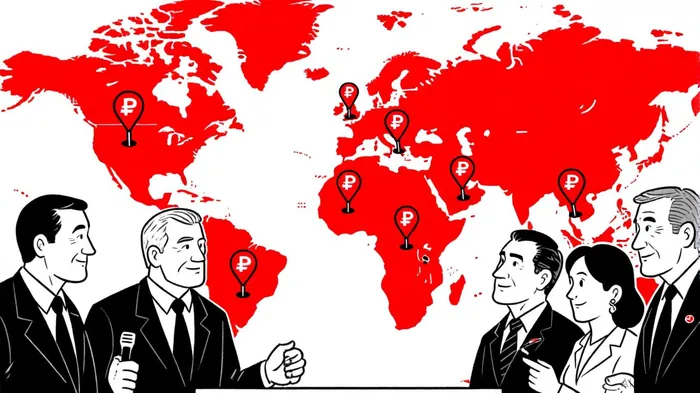
Regulatory Actions: A New Era of Enforcement
The Prince Group's alleged involvement in "pig-butchering" scams, human trafficking, and money laundering has drawn global scrutiny[2]. The U.S. Department of Justice (DOJ) and UK authorities have leveraged advanced blockchain analytics to trace illicit flows, freezing assets and blocking access to the U.S. financial system for key actors[5]. For instance, the Cambodian financial institution Huione Group, which laundered $4 billion for the Prince Group, was sanctioned for its role in facilitating these crimes[2].
These actions align with broader regulatory trends. In 2025, the U.S. and EU have mandated stricter Know-Your-Customer (KYC) and Anti-Money Laundering (AML) protocols for crypto platforms, while the UK has introduced real-time transaction monitoring requirements[4]. Such measures aim to close loopholes exploited by criminal networks, but they also signal heightened compliance costs for legitimate businesses.
Market Impact: Stability and Investor Confidence
The Prince Group's takedown has had a dual effect on markets. While Bitcoin's price remained stable at $112,327 during the announcement[3], the symbolic victory for regulators has bolstered investor confidence in the sector's long-term viability. According to a report by CoinLaw, 72% of institutional investors now view robust regulatory frameworks as a positive catalyst for crypto adoption[4].
However, the crackdown also highlights systemic risks. Smaller crypto firms lacking compliance infrastructure face existential threats, while investors must navigate geopolitical uncertainties. For example, the Prince Group's ties to Palau and Singapore-where its chairman was awarded "Entrepreneur of the Year"-raise questions about regulatory arbitrage and jurisdictional conflicts[6].
Opportunities in Compliance and Innovation
The Prince Group case has accelerated demand for blockchain analytics and compliance technologies. Companies like Elliptic and Chainalysis have reported a 40% year-over-year increase in enterprise clients seeking AML solutions[4]. Investors eyeing this sector should focus on firms with proven track records in tracing illicit flows, as well as those developing AI-driven compliance tools.
Moreover, the seizure of 127,000 BTC has sparked debates about how governments manage confiscated crypto assets. U.S. Senator Cynthia Lummis has proposed legislation to integrate such assets into national reserves, potentially creating new revenue streams for governments and legitimizing crypto as a strategic asset[2].
Conclusion: Balancing Risk and Reward
The Prince Group's downfall illustrates both the vulnerabilities and resilience of the crypto ecosystem. For investors, the key takeaway is clear: regulatory alignment is no longer optional. While fugitive groups pose significant risks, the resulting enforcement actions are driving innovation and transparency. Those who position themselves at the intersection of compliance, technology, and policy-rather than in the shadows of illicit networks-stand to benefit most from this new era.






Comentarios
Aún no hay comentarios