
How S&P Global and Chainlink Are Reshaping DeFi Safety and Scalability with Real-Time Stablecoin Risk Assessments on Coinbase Base
The decentralized finance (DeFi) ecosystem has long grappled with a critical challenge: how to assess and manage the risks of stablecoins, the lifeblood of crypto markets. In 2025, a groundbreaking collaboration between S&P Global Ratings and ChainlinkLINK-- has begun to address this gap, delivering institutional-grade risk assessments directly to smart contracts via Chainlink's DataLink service. This innovation, initially deployed on Coinbase's Base LayerLAYER-- 2 network, is redefining DeFi safety and scalability by embedding real-time transparency into stablecoin usage.
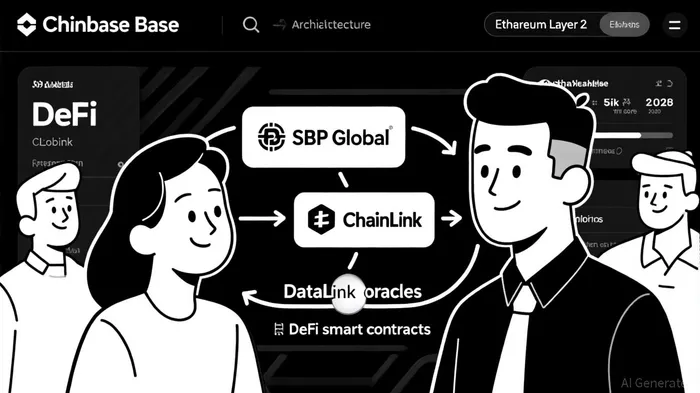
Bridging Traditional Finance and DeFi with On-Chain Risk Assessments
S&P Global's Stablecoin Stability Assessments (SSAs) now score stablecoins on a 1-to-5 scale, where 1 represents "very strong" stability and 5 indicates "weak" resilience. These scores evaluate factors such as asset quality, governance frameworks, liquidity, and regulatory compliance [2]. For example, major stablecoins like USDTUSDT--, USDCUSDC--, and Sky Protocol's USDS/DAI are currently under evaluation [3]. By publishing these assessments on-chain via Chainlink's DataLink, S&P Global enables DeFi protocols to access risk data in real time without manual updates or off-chain intermediaries [4].
This integration is particularly transformative for Base, Coinbase's EthereumETH-- Layer 2 network. Base's low fees and high throughput make it an ideal platform for scaling DeFi applications, while S&P's risk scores add a layer of institutional-grade due diligence. As of October 2025, the stablecoin market has surged to $305 billion in capitalization, driven by growing institutional adoption and regulatory clarity [5]. The GENIUS Act, a U.S. federal framework for stablecoins, has further accelerated this trend by providing a clear regulatory pathway for institutional participants [6].
Automating Risk Management in DeFi Protocols
The technical architecture of this collaboration is equally compelling. Chainlink's DataLink service acts as a bridge between S&P's traditional financial data and blockchain networks. DeFi protocols can now integrate these risk scores into smart contracts to automate decisions such as collateral adjustments, lending parameters, and user notifications [7]. For instance, a lending platform might dynamically reduce exposure to a stablecoin with a declining SSA score, mitigating potential losses from liquidity shocks or governance failures.
This automation is critical for addressing historical vulnerabilities in DeFi, such as smart contract risks and opaque collateral structures. By embedding real-time risk metrics into workflows, protocols can align with institutional standards while maintaining decentralized governance. As one analyst notes, "This is the first time DeFi has access to a risk assessment framework that mirrors traditional finance's credit rating systems" [8].
Market Impact and Future Outlook
The collaboration's impact is already evident in Base's ecosystem. Protocols leveraging S&P's SSAs report a 20% reduction in manual risk management overhead, according to internal metrics shared by Chainlink [9]. Meanwhile, the stablecoin market's projected growth to $1.2 trillion by 2028-driven by policy support and tokenized asset adoption-underscores the urgency of scalable risk tools [10].
For investors, this development signals a maturing DeFi landscape. Platforms that integrate S&P/Chainlink's tools are better positioned to attract institutional capital, which prioritizes transparency and compliance. CoinbaseCOIN--, as the host of Base, stands to benefit from increased transaction volume and developer activity on its network. However, risks remain: the SSAs are not formal credit ratings, and their adoption depends on market trust in S&P's methodology [11].
Conclusion
The S&P Global and Chainlink partnership marks a pivotal step in bridging traditional finance and DeFi. By bringing real-time stablecoin risk assessments on-chain, they empower protocols to automate decision-making, reduce systemic risks, and scale safely. As the stablecoin market continues to grow, these tools will likely become foundational for institutional participation in DeFi-a trend that investors cannot afford to ignore.





Comentarios
Aún no hay comentarios