
Global Blockchain Infrastructure Development: Capitalizing on the UN's 2026 Digital Governance Initiative
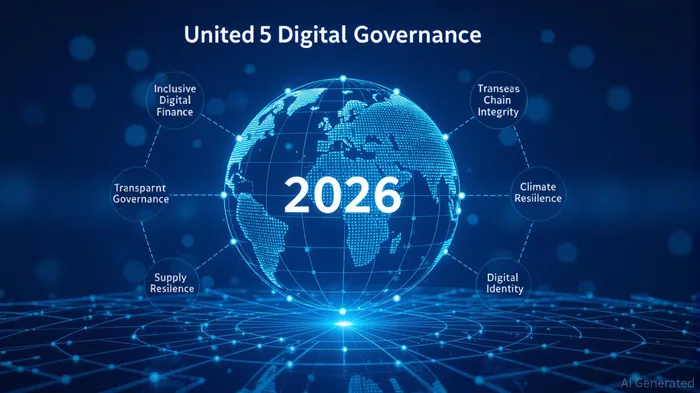
The United Nations' 2026 digital governance initiative represents a pivotal shift in how blockchain technology is being leveraged to address global challenges. At the heart of this effort is the Government Blockchain Academy (GBA), a collaborative program between the United Nations Development Programme (UNDP) and the Exponential Science Foundation. This initiative aims to equip public officials with the tools and expertise to implement blockchain and AI solutions in governance, finance, and climate action, positioning it as a cornerstone for investors seeking to capitalize on the next wave of digital infrastructure development.
The Government Blockchain Academy: A Strategic Catalyst
The GBA, set to launch in 2026, is designed to bridge the gap between experimental blockchain projects and scalable, real-world applications. By focusing on five strategic pillars—Inclusive Digital Finance, Transparent Governance, Supply Chain Integrity, Climate Resilience, and Digital Identity Solutions—the academy addresses critical areas where blockchain can enhance transparency, efficiency, and inclusivity in public administration [1]. For instance, digital identity systems can empower marginalized populations with verifiable credentials, while blockchain-based supply chain solutions can reduce corruption and improve resource distribution in developing economies [2].
The academy's blended learning model, combining in-person workshops, online courses, and leadership forums, ensures that governments can tailor solutions to their specific needs. This approach builds on the success of the UNDP's 2023 partnership with the AlgorandALGO-- Foundation, which trained over 22,000 staff members in blockchain applications [3]. By 2026, the GBA aims to expand this capacity-building effort globally, with preparatory work and stakeholder engagement already underway in 2025 [4].
The SDG Blockchain Accelerator: Funding Innovation for Global Impact
Complementing the GBA is the SDG Blockchain Accelerator, a multi-year initiative launched by the Blockchain for Good Alliance (BGA), UNDP, and EMURGO Labs. This program provides funding, mentorship, and technical resources to blockchain projects aligned with the Sustainable Development Goals (SDGs). For example, it supports the development of decentralized platforms for climate finance and digital identity systems that align with SDG 13 (Climate Action) and SDG 10 (Reduced Inequalities) [5].
The accelerator's structure includes two annual cohorts, each running for four months, with co-funding support of up to $1.5 million in post-accelerator grants for selected projects [6]. This funding mechanism not only validates the viability of blockchain solutions but also creates a pipeline for scalable, SDG-aligned innovations. Investors can capitalize on this by supporting startups and protocols that align with the accelerator's focus areas, such as cross-chain interoperability tools or AI-driven analytics for climate resilience.
Investment Opportunities in Blockchain Infrastructure
The UN's 2026 initiative underscores a growing demand for blockchain infrastructure in public governance. Key investment opportunities include:
1. Protocol Developers: Platforms that enable scalable, interoperable blockchain solutions for government use cases, such as digital identity or supply chain management.
2. AI-Blockchain Integration: Startups leveraging AI to optimize blockchain applications, such as predictive analytics for climate resilience or fraud detection in public procurement.
3. Decentralized Finance (DeFi) Platforms: Projects that facilitate inclusive financial services in regions with weak banking infrastructure, aligning with the GBA's focus on Inclusive Digital Finance.
4. Climate Tech Blockchain Solutions: Protocols that tokenize carbon credits or track emissions data, supporting SDG 13 and the Climate Resilience pillar.
Challenges and Considerations
While the UN's initiative presents significant opportunities, investors must navigate challenges such as regulatory fragmentation, technological adoption rates, and the need for cross-sector collaboration. For example, blockchain solutions for digital identity may face resistance in regions with strict data privacy laws. Additionally, the success of the GBA and SDG Accelerator depends on sustained funding and political will, which could vary across countries.
Conclusion
The UN's 2026 digital governance initiative, anchored by the GBA and SDG Blockchain Accelerator, is reshaping the landscape of blockchain infrastructure. By investing in protocols, platforms, and solutions that align with these initiatives, stakeholders can position themselves at the forefront of a global movement toward transparent, inclusive governance. As the formal launch of the GBA approaches at TOKEN2049 in October 2025, the time to act is now—leveraging the UN's vision to drive both social impact and financial returns.






Comentarios
Aún no hay comentarios