
Global Banking Consolidation and Cross-Border Payment Innovation: Strategic Partnerships Reshaping European Financial Institutions
The European banking sector is undergoing a seismic transformation, driven by a dual imperative: to consolidate for scale and to innovate in cross-border payments. As of Q3 2025, record $31 billion in bank deals in 2024 have set the stage for a wave of mergers, with institutions like UBSUBS--, UniCredit, and BBVA leading the charge, according to an ECB blog. Simultaneously, cross-border payment systems are being reimagined through strategic partnerships, regulatory shifts, and technological advancements. For investors, this confluence of consolidation and innovation presents both opportunities and risks, demanding a nuanced understanding of the forces at play.
The Consolidation Imperative: Scale, Profitability, and Regulatory Dynamics
European banks are consolidating to counteract the dual pressures of post-pandemic economic uncertainty and the rise of fintech competitors. The end of the zero-interest-rate era has improved profitability, with interest-based earnings rising and providing capital for acquisitions, as noted by the ECB blog. For example, UBS's landmark acquisition of Credit Suisse in July 2024 not only eliminated a systemic risk but also created a Swiss banking giant with enhanced cross-border capabilities, according to Global Finance. Similarly, UniCredit's 28% stake in Commerzbank underscores a strategic push to dominate Germany's fragmented market, as Global Finance reports.
However, consolidation is not without friction. National governments often intervene to protect domestic banking ecosystems, as seen in Italy's restrictions on the UniCredit/Banco BPM deal and Spain's operational limits on the BBVA/Sabadell merger, according to Antitrust Politics. The European Commission has challenged such actions, warning of market fragmentation. For investors, this tension between national sovereignty and pan-European integration introduces regulatory uncertainty, though the ECB's recent easing of merger scrutiny suggests a gradual shift toward pro-consolidation policies (Antitrust Politics notes).
Cross-Border Payment Innovation: Fintechs, Standards, and Real-Time Systems
While consolidation addresses scale, innovation in cross-border payments is redefining competitiveness. European banks are partnering with fintechs to leverage technologies like blockchain, digital wallets, and real-time payment systems. For instance, the ECB found that 62% of banks are collaborating with fintechs to modernize cross-border offerings, driven by the need to reduce costs and improve speed. The ECB and Swiss National Bank's (SNB) collaboration to interconnect TIPS and SIC systems exemplifies this trend, aiming to enable faster, cheaper euro-Swiss franc transactions, according to the Cryptonomist.
Regulatory frameworks are also evolving. The Instant Payments Regulation (IPR), adopted in March 2024, allows fintechs direct access to EU payment systems, bypassing traditional intermediaries, the ECB blog explains. This shift has spurred competition, with digital wallets gaining traction in developing markets-projected to grow from 605 million users in 2025 to 950 million by 2029, per the ECB blog. For European banks, partnerships with fintechs like Adyen and Revolut are critical to maintaining relevance, as the European Financial Review explains; these firms offer scalable, compliant platforms for cross-border transactions.
Strategic Partnerships: A Double-Edged Sword
The rise of fintech-bank collaborations is reshaping the cross-border payments landscape. By 2024, European fintech investment reached €7.6 billion through 814 transactions, reflecting sustained investor confidence, the European Financial Review reports. These partnerships enable banks to offer cutting-edge solutions without overhauling legacy systems. For example, real-time payments (RTP) are gaining momentum, with the UK's Faster Payments Service processing 4.5 billion transactions in 2023, as reported by Antitrust Politics.
Yet challenges persist. Regulatory fragmentation, cybersecurity risks, and uneven adoption of digital wallets in certain regions hinder progress, the ECB blog warns. Moreover, European banks face stiff competition from U.S. and Chinese institutions, which boast superior digital infrastructure and global reach, Global Finance argues. For investors, the key is to identify banks that balance strategic acquisitions with robust fintech partnerships, ensuring both scale and agility.
Investment Implications and Future Outlook
The cross-border payments market, valued at $194.6 trillion in 2024, is projected to grow to $320 trillion by 2032, according to the European Financial Review. This growth, coupled with consolidation trends, positions European banks as attractive long-term investments-provided they navigate regulatory and geopolitical risks. Institutions that successfully integrate fintech innovations, adopt ISO 20022 standards, and secure cross-border partnerships (e.g., the ECB–SNB collaboration) will likely outperform peers, as the Cryptonomist observes.
However, caution is warranted. The European banking sector's CET1 ratio of 16.27% at year-end 2024 indicates strong capital buffers, the Cryptonomist reports, but rising interest rates and geopolitical tensions could strain balance sheets. Investors should prioritize banks with diversified revenue streams, robust digital ecosystems, and clear consolidation strategies.
Conclusion
European banking consolidation and cross-border payment innovation are inextricably linked, with strategic partnerships serving as the bridge between traditional institutions and the digital future. While regulatory hurdles and competition remain, the sector's resilience-evidenced by strong capital ratios and a wave of mergers-suggests a path toward sustainable growth. For investors, the challenge lies in identifying banks that can harmonize scale with innovation, ensuring they remain competitive in an increasingly digitized global economy.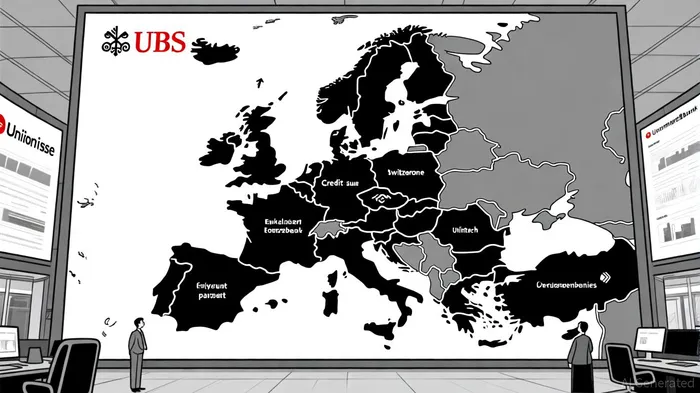







Comentarios
Aún no hay comentarios