
Global Aviation Cybersecurity Resilience: Strategic Investments in Defensive Technologies for Critical Infrastructure
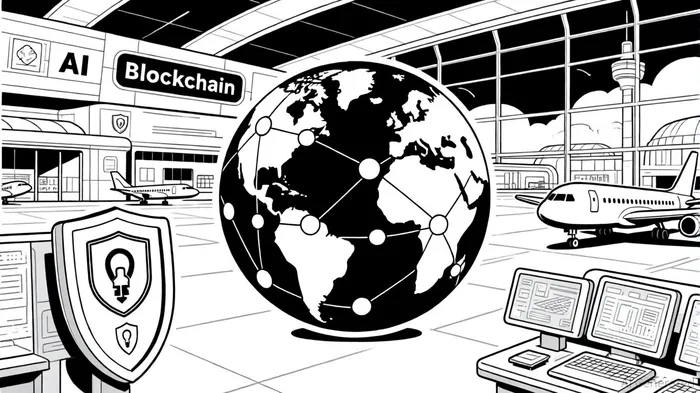
The aviation sector's transformation into a hyper-connected digital ecosystem has created both opportunities and vulnerabilities. As cyber threats grow in frequency, sophistication, and global reach, strategic investments in defensive technologies have become imperative for safeguarding critical infrastructure. According to a report by Axis Intelligence, the aviation and defense cybersecurity market is projected to surge from USD 89.3 billion in 2025 to USD 300.6 billion by 2034, driven by a 131% increase in cyberattacks between 2022 and 2023 [1]. This exponential growth underscores a paradigm shift: cybersecurity is no longer a reactive measure but a core pillar of operational resilience.
The Escalating Threat Landscape
The aviation industry's reliance on interconnected systems—from air traffic control to passenger data management—has expanded its attack surface. Data from Thales reveals a 600% year-on-year rise in cyberattacks in 2024, with 27 major incidents attributed to 22 ransomware groups between January 2024 and April 2025 [2]. High-profile breaches, such as Qantas Airways' exposure of 5.7 million customer records and the $10 million ransomware demand at Kuala Lumpur International Airport, highlight the financial and reputational risks of inadequate defenses [3]. Meanwhile, geopolitical tensions and AI-powered cyber tools are enabling adversaries to exploit vulnerabilities at unprecedented speeds.
Technological Innovations as Strategic Investments
To counter these threats, airlines and airports are prioritizing advanced defensive technologies. AI-driven threat detection, for instance, is being adopted by 82% of airlines to analyze network activity in real time, identifying anomalies and mitigating breaches before they escalate [4]. Blockchain technology is also gaining traction for securing data integrity, as seen in SkyHigh Airlines' implementation of blockchain-based storage to protect sensitive operational data [5]. Similarly, zero-trust architectures—emphasizing strict identity verification and continuous authentication—are becoming standard, with 72% of North American airlines planning to increase cybersecurity budgets by at least 15% in 2025 [6].
Investments in infrastructure resilience are equally critical. The U.S. Federal Aviation Administration (FAA) has allocated $3.8 million to AI-powered cybersecurity research, though recent proposals to cut these programs have raised concerns about long-term preparedness [7]. Conversely, international collaborations, such as the Transportation Security Administration's (TSA) Aviation Cyber Initiative (ACI), are fostering global capacity-building. For example, the Idaho National Laboratory's training programs in Europe and Ukraine have equipped professionals with skills to defend against industrial control system threats [8].
Regulatory and Human-Centric Challenges
While technology is pivotal, regulatory frameworks and human factors remain equally vital. The FAA Reauthorization Act of 2024 mandates a National Airspace System Cyber Threat Management Process, while the International Civil Aviation Organization (ICAO) is introducing stricter global standards [9]. However, implementation gaps persist. A SITA report notes that 65% of airlines are expanding AI initiatives for automation, yet insider threats—exacerbated by social engineering attacks—remain a critical vulnerability [10]. The dismissal of dozens of employees at Beirut Rafic Hariri International Airport for suspected ties to smuggling activities further illustrates the need for robust personnel vetting and training [11].
Strategic Opportunities for Investors
The convergence of technological innovation, regulatory evolution, and geopolitical dynamics presents compelling investment opportunities. Sectors to watch include:
1. AI and Machine Learning: Firms developing predictive threat detection tools, such as those used by AeroFleet Airlines' Aviation Cybersecurity Unit (ACU), are well-positioned to benefit from the 45% of airlines prioritizing AI as their top investment [12].
2. Zero-Trust Architecture Providers: As 87% of airlines implement security operations centers (SOCs), vendors offering identity verification and network segmentation solutions will see sustained demand [13].
3. International Cybersecurity Initiatives: Government-funded programs, like Canada's $10.3 million Cyber Security Cooperation Program, signal growing public-private partnerships that could stabilize long-term returns [14].
Conclusion
The aviation industry's journey toward cybersecurity resilience is a testament to the interplay of innovation, regulation, and global collaboration. While challenges such as budget cuts to critical research programs and human vulnerabilities persist, the strategic adoption of AI, blockchain, and zero-trust models offers a roadmap for mitigating risks. For investors, the key lies in aligning with technologies and policies that address both immediate threats and the evolving nature of cyber warfare. As the sector's cybersecurity market balloons toward $300 billion by 2034, proactive investments in defensive infrastructure will not only safeguard critical systems but also yield substantial financial returns.







Comentarios
Aún no hay comentarios