
Global Atomic's C$20M Bought Deal: Strategic Financing for Nuclear Innovation
The nuclear energy renaissance of 2025 has redefined the global energy landscape, with uranium demand surging amid decarbonization goals, energy security concerns, and technological advancements like small modular reactors (SMRs). Against this backdrop, Global Atomic Corporation's recent C$20 million bought deal represents a pivotal strategic move to position itself at the forefront of this transformation. By securing critical funding for its flagship Dasa Uranium Project in Niger, the company is aligning its growth trajectory with the accelerating demand for uranium, while addressing supply chain bottlenecks that threaten to constrain the industry's expansion.
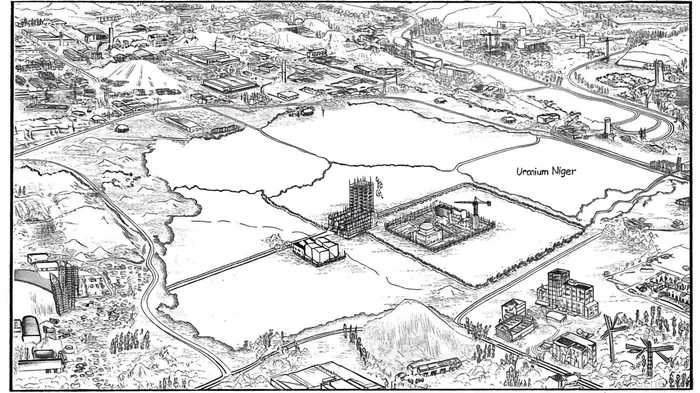
Strategic Allocation: Fueling the Dasa Uranium Project
Global Atomic's C$20 million financing, announced on October 15, 2025, involves the issuance of 32,259,000 units at C$0.62 each, with warrants exercisable at C$0.80 within 36 months, according to a Global Atomic press release. The proceeds will directly advance the Dasa Project, a high-grade uranium mine in Niger, and cover operational expenses. This project, which is on track for first production in Q4 2025, has already seen significant progress, including underground development, processing plant earthworks, and near-completion of worker accommodations as shown in the company's Q2 2025 results.
The timing of this fundraising is critical. As of Q2 2025, Global Atomic had raised C$24.8 million through an oversubscribed public offering to bridge funding gaps until a $295 million debt facility from a U.S. development bank is finalized, as noted in the press release. The new C$20 million infusion provides additional liquidity, ensuring uninterrupted progress while the company navigates regulatory and financial approvals for the larger loan. This layered approach-combining equity, debt, and potential joint ventures-demonstrates a disciplined strategy to mitigate risk in a volatile market.
Nuclear Renaissance: A Tailwind for Uranium Producers
The broader industry context underscores the wisdom of Global Atomic's move. Uranium prices have surged from $18/lb in 2016 to $80-90/lb in 2025, driven by U.S. policy shifts under the Trump administration, which prioritize nuclear energy for national security and energy independence, according to the same press release. The World Nuclear Association projects global uranium demand to reach 390 million pounds by 2040, with an upper-case scenario of 530 million pounds, fueled by nuclear capacity expansions in China, India, and the U.S., as summarized in recent Uranium demand forecasts.
However, supply remains a challenge. Despite a 12.4% increase in global uranium production in 2024, bottlenecks in conversion and enrichment persist, and prices must rise closer to $130-$150/lb to justify new projects, according to that analysis. Global Atomic's Dasa Project, with its low-cost, high-grade profile, is uniquely positioned to meet this demand. The project's projected production costs are among the lowest in the industry, offering a compelling value proposition as utilities seek secure, long-term uranium supplies, as described in the company's Q2 results.
Risk Mitigation and Market Positioning
The company's financing strategy also reflects awareness of market volatility. For instance, the recent drop in uranium spot prices from $91 to $76 in late 2024-triggered by the liquidation of funds like Kazakh-based ANU-highlights the need for financial resilience, as noted in the Sprott outlook. By securing multiple funding sources, including the U.S. development bank loan and potential joint ventures, Global Atomic reduces exposure to price fluctuations while maintaining operational flexibility.
Moreover, the Nigerien government's full support for the Dasa Project adds a layer of geopolitical stability. As a key uranium-producing nation, Niger's alignment with Global Atomic's goals ensures regulatory and logistical advantages, further de-risking the project, as reported by NucNet. This is particularly important in an era where supply chain security is a top priority for Western nations seeking to reduce reliance on Russian and Kazakh uranium.
Conclusion: A Catalyst for Long-Term Growth
Global Atomic's C$20 million bought deal is more than a financing event-it is a strategic catalyst for capitalizing on the nuclear renaissance. By accelerating the Dasa Project's timeline and securing diversified funding, the company is positioning itself to benefit from the projected uranium price increase and the industry's structural shift toward secure, low-cost production. As the U.S., China, and India expand their nuclear fleets, and SMRs gain traction, Global Atomic's disciplined approach to capital allocation and risk management offers a compelling case for investors seeking exposure to the energy transition.







Comentarios
Aún no hay comentarios