
Global Agricultural Trade Wars: Winners and Losers in a Fractured Market
The global agricultural sector in 2025 is navigating a complex web of trade tensions, shifting supply chains, and corporate realignments. From U.S.-China fertilizer disputes to Southeast Asia's emergence as a trade hub, the industry is witnessing stark divergences between winners and losers. Agribusiness giants, fertilizer firms, and regional exporters are recalibrating strategies to mitigate risks or exploit new opportunities, with financial performance and market positioning serving as key indicators of their success.
Losers: Agribusinesses Caught in Crossfire
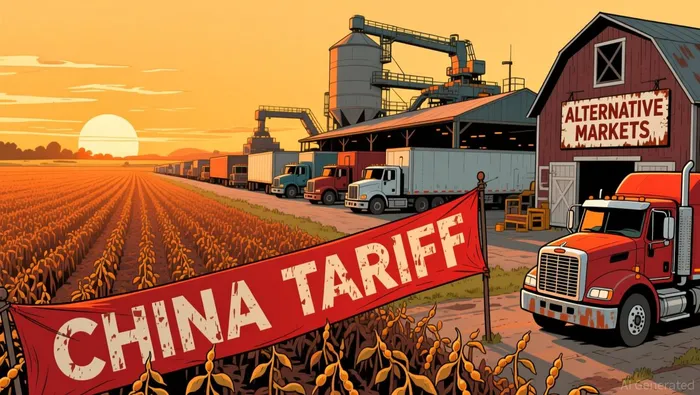
The U.S. agricultural sector has borne the brunt of escalating trade tensions with China. According to a report by , U.S. agricultural exports to China declined sharply in 2025, with soybeans and other commodities facing steep tariffs. This has forced American farmers to seek alternative markets, though Southeast Asia's growing demand has not yet offset the losses. Similarly, Brazil-once a dominant player in China's soybean imports-saw , though it experienced a mid-year rebound. These shifts highlight the vulnerability of export-dependent economies to geopolitical volatility.
 The European Union is also grappling with trade pressures. under the new U.S.-EU trade framework has raised costs for high-value agricultural exports like wine and olive oil. Compounding this, the EU's December 2025 anti-deforestation regulations have imposed stricter compliance burdens on agricultural firms, particularly those sourcing from Southeast Asia. These dual challenges are forcing EU agribusinesses to adopt costly price adjustments and explore long-term investments in U.S.-based production.
Winners: Strategic Adaptation and Regional Resilience
While some firms struggle, others are capitalizing on market realignments. in Q2 2025, driven by increased production and margin expansion. The company's focus on sustainable crop nutrition-aligned with global decarbonization goals-has insulated it from some trade-related volatility. Similarly, Cargill's 2025 Annual Report underscores its emphasis on supply chain resilience and innovation, positioning it to navigate climate and market pressures.
Regional exporters in Southeast Asia are emerging as key beneficiaries. . trade with OECD countries since 2015, with to the U.S. in September 2025. This growth is fueled by U.S. efforts to diversify away from China, as well as Southeast Asian firms' ability to offer competitive pricing and sustainable practices. For instance, fertilizer companies in the region are attracting investment by relocating production to avoid U.S.-China tariffs and leverage lower operational costs.
Strategic Shifts: Diversification and Sustainability
Corporate strategies in 2025 increasingly prioritize diversification and sustainability. Yara's investment in reflects a broader industry trend toward aligning with global climate goals. Meanwhile, Cargill's focus on connecting farmers to customers through resilient supply chains highlights the importance of adaptability in fragmented markets.
For regional players, the "China + 1" strategy is gaining traction. As U.S. tariffs push multinational corporations to nearshore operations, Southeast Asia and Latin America are absorbing displaced production. China itself is redirecting exports to the EU and ASEAN, with . This realignment underscores the fluidity of global supply chains and the need for firms to remain agile.
Investment Implications
The 2025 trade landscape offers both risks and opportunities. Firms with diversified supply chains, like Yara and Cargill, are better positioned to withstand volatility. Conversely, those reliant on single markets-such as U.S. soybean producers-face heightened exposure. Southeast Asian agribusinesses, meanwhile, represent a compelling long-term bet, given their strategic location and policy support.
For investors, the key lies in identifying companies that balance short-term resilience with long-term sustainability. As trade wars reshape global markets, strategic positioning-not just scale-will determine which firms thrive.







Comentarios
Aún no hay comentarios