
Glencore Weighs Becoming Next Commodity Giant to Quit London
Generado por agente de IAHarrison Brooks
miércoles, 19 de febrero de 2025, 4:30 am ET2 min de lectura
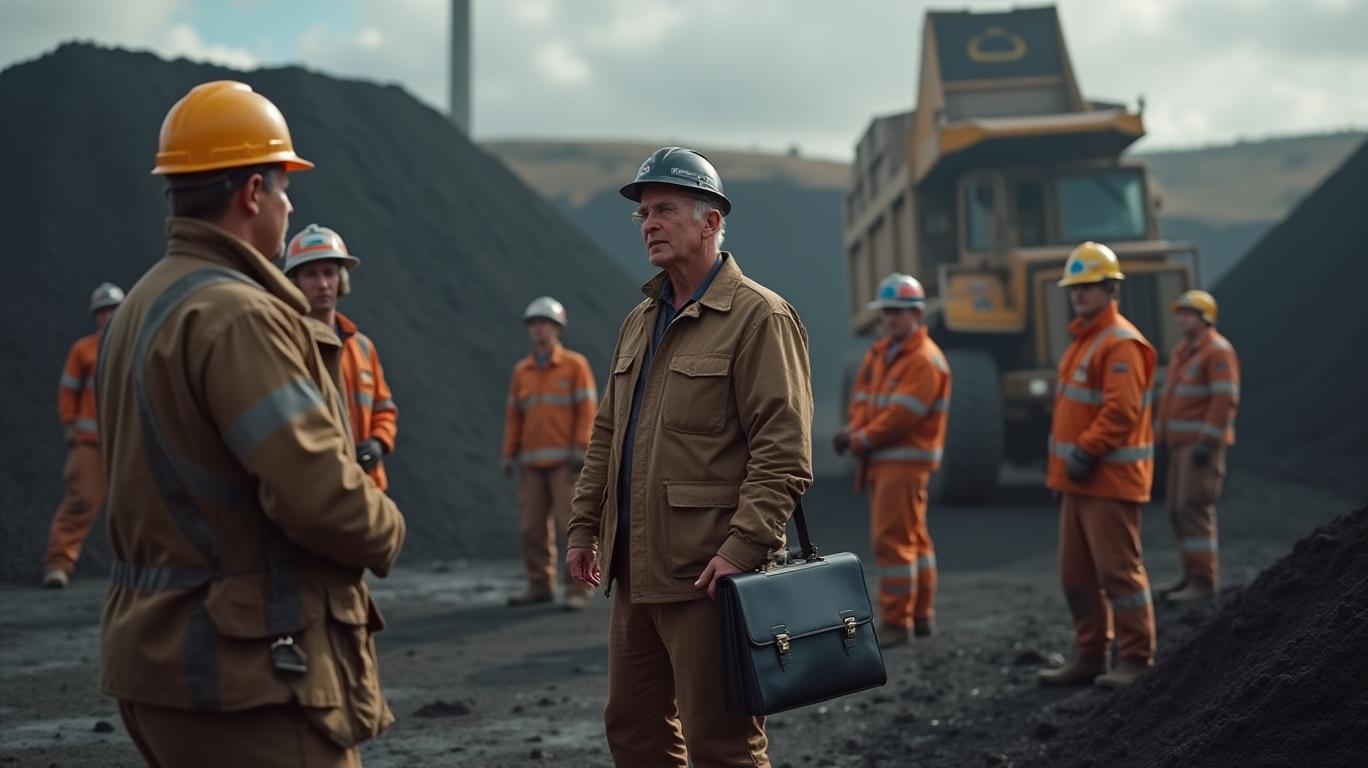
Glencore, the world's largest commodities trader and miner, is considering listing its new coal business in New York, Toronto, and Johannesburg, potentially signaling a departure from the London Stock Exchange (LSE). This move comes as the company seeks to balance its commitment to the energy transition with the financial benefits of its coal operations. Here, we explore the potential benefits and drawbacks of this decision and its implications for the LSE.
Glencore's coal business has been a significant driver of its profits, particularly in recent years. In 2021, the company generated $17.9 billion in profits, with coal contributing a substantial portion. However, the company has faced increasing pressure from investors and environmental groups to reduce its coal exposure and focus on cleaner energy sources. This tension has led Glencore to contemplate spinning off its coal business, with the new entity listing in multiple exchanges.
Potential Benefits:
1. Access to larger capital markets: Listing in New York, Toronto, and Johannesburg would provide Glencore with access to larger capital markets, potentially attracting more investors and increasing liquidity.
2. Diversification of investor base: By listing in multiple exchanges, Glencore can diversify its investor base, reducing its reliance on a single market and potentially mitigating risks associated with regional economic conditions or regulatory changes.
3. Potential higher valuation: According to Glencore's CEO Gary Nagle, there is a strong appetite in the US market for a business of this size and scale, which could lead to a better valuation for the new coal company.
Potential Drawbacks:
1. Reputation risk: Listing in New York, Toronto, and Johannesburg may expose Glencore to increased scrutiny and criticism from environmental groups and investors concerned about climate change, as these exchanges have a larger presence of socially responsible investors.
2. Potential regulatory hurdles: Listing in multiple jurisdictions may subject Glencore to additional regulatory requirements and oversight, which could increase compliance costs and complexity.
3. Potential dilution of shareholder value: While the new coal company may attract more investors, the dilution of shareholder value could lead to a decrease in the value of existing shares, potentially offsetting the benefits of a higher valuation for the new company.
Impact on the London Stock Exchange:
Glencore's potential departure from the LSE could have implications for the exchange's reputation and competitiveness as a global financial hub for commodity trading and mining companies. The loss of a major player like Glencore could lead to a loss of liquidity and trading volume, potentially impacting the LSE's status as a major global exchange for these sectors. Additionally, Glencore's decision to list its coal business in New York, rather than London, could be perceived as a vote of no confidence in the LSE's ability to support the growth and development of commodity trading and mining companies, potentially damaging the LSE's reputation and making it less attractive to other companies considering listings.
In conclusion, Glencore's potential departure from the LSE highlights the challenges faced by commodity trading and mining companies in balancing their commitment to the energy transition with the financial benefits of their coal operations. While listing in New York, Toronto, and Johannesburg may offer potential benefits, such as access to larger capital markets and a diversified investor base, it also presents risks, such as reputation damage and potential regulatory hurdles. The LSE, in turn, must address the implications of Glencore's potential departure and work to maintain its competitiveness as a global financial hub for commodity trading and mining companies.



Divulgación editorial y transparencia de la IA: Ainvest News utiliza tecnología avanzada de Modelos de Lenguaje Largo (LLM) para sintetizar y analizar datos de mercado en tiempo real. Para garantizar los más altos estándares de integridad, cada artículo se somete a un riguroso proceso de verificación con participación humana.
Mientras la IA asiste en el procesamiento de datos y la redacción inicial, un miembro editorial profesional de Ainvest revisa, verifica y aprueba de forma independiente todo el contenido para garantizar su precisión y cumplimiento con los estándares editoriales de Ainvest Fintech Inc. Esta supervisión humana está diseñada para mitigar las alucinaciones de la IA y garantizar el contexto financiero.
Advertencia sobre inversiones: Este contenido se proporciona únicamente con fines informativos y no constituye asesoramiento profesional de inversión, legal o financiero. Los mercados conllevan riesgos inherentes. Se recomienda a los usuarios que realicen una investigación independiente o consulten a un asesor financiero certificado antes de tomar cualquier decisión. Ainvest Fintech Inc. se exime de toda responsabilidad por las acciones tomadas con base en esta información. ¿Encontró un error? Reportar un problema




Comentarios
Aún no hay comentarios