
GLD Price Soars: Geopolitical Tensions and Central Bank Demand Fuel Gold's Resurgence as a Safe-Haven Asset
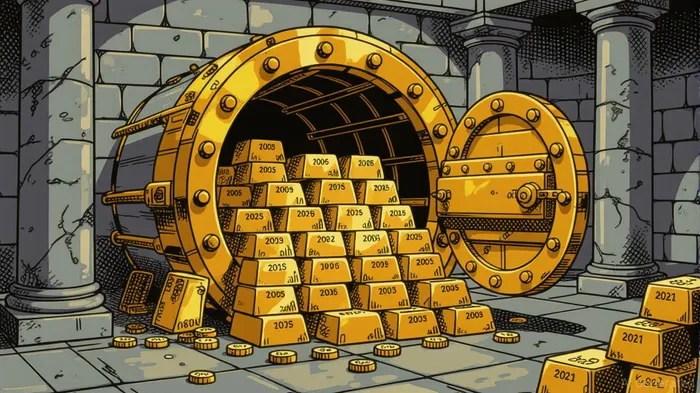
The world is on fire—literally and figuratively. From the Russia-Ukraine war to U.S.-China trade frictions and regional hotspots like the Middle East, geopolitical tensions have turned gold into the ultimate safe-haven asset. And if you're not paying attention to the gold market, you're missing one of the most compelling investment stories of 2025.
Let's start with the numbers. The price of gold has surged to record highs, hitting $3,500 per ounce in April 2025 and flirting with $3,600 in recent weeks. This isn't just a short-term spike—it's a structural shift driven by two forces: central bank demand and geopolitical instability.
Central Banks: The Unsung Heroes of Gold's Rally
Central banks are buying gold like it's going out of style. In Q2 2025, they added 166 tonnes to their reserves, a 33% drop from Q1 but still 41% higher than the 2010–2021 average. That's not a slowdown—it's a marathon. Poland alone added 19 tonnes, Azerbaijan 16, and Turkey 11. Even China, the quiet giant, continued its steady accumulation, bringing its total holdings to 2,299 tonnes.
Why? Because gold is the ultimate insurance policy. When the U.S. dollar weakens, when sanctions threaten financial systems, and when inflation erodes fiat currencies, central banks turn to gold. It's a non-volatile, non-sanctionable asset that can't be printed into oblivion. The World Gold Council's 2025 survey says it all: 95% of central banks expect to increase gold reserves over the next year. That's not a market correction—it's a revolution.
Geopolitical Tensions: The Catalyst for Gold's Resurgence
Gold thrives in chaos. The Russia-Ukraine war has kept energy prices volatile, while U.S.-China competition has frayed global supply chains. Add in the rise of de-dollarization—nations like India and Turkey are swapping U.S. Treasuries for gold—and you've got a perfect storm for gold's dominance.
Here's the kicker: Gold isn't just a hedge against inflation anymore. It's a hedge against systemic collapse. When the U.S. dollar's hegemony wavers, and when trade wars threaten to unravel globalization, gold becomes the last refuge. J.P. Morgan Research projects gold could hit $4,000 per ounce by mid-2026. That's not a prediction—it's a probability.
Why GLDGLD-- Is Your Ticket to Gold's Next Leg Higher
For investors, the easiest way to play this trend is through the SPDR Gold Shares ETF (GLD). GLD tracks the price of gold and has outperformed the S&P 500 by a mile in 2025. With geopolitical tensions showing no signs of abating and central banks doubling down on gold, GLD is a no-brainer for those seeking downside protection and upside potential.
But don't just take it from me. The data tells the story:
- Central bank demand is structural, not cyclical.
- Gold's share of global reserves now exceeds U.S. Treasuries for the first time in 30 years.
- ETF inflows into gold have hit levels not seen since the 2010s.
The Bottom Line: Buy Gold, Buy GLD
If you're still holding cash or sitting on the sidelines, you're making a mistake. Gold is no longer a niche play—it's a core holding in any risk-managed portfolio. And with GLD offering direct exposure to the gold price, now is the time to act.
Remember: In a world of uncertainty, gold is the one asset that never lies. And right now, it's telling you to get bullish.





Comentarios
Aún no hay comentarios