
O-I Glass: A Strategic Turnaround Story in the Glass Packaging Sector
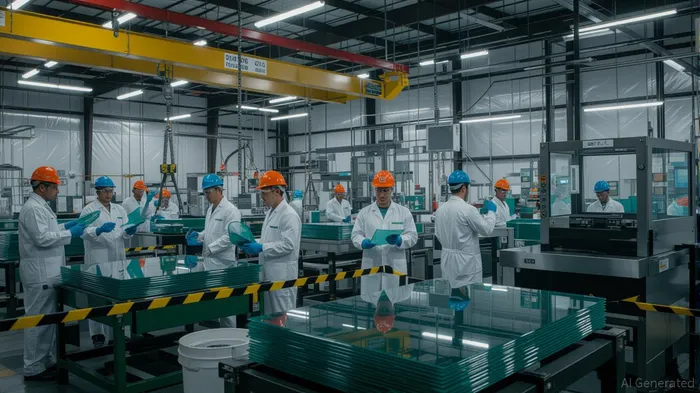
The glass packaging industry is undergoing a quiet revolution, driven by sustainability mandates, shifting consumer preferences, and the relentless pressure to optimize capital efficiency. At the heart of this transformation lies O-I GlassOI-- Inc. (NYSE: OI), the world's largest glass container manufacturer, which is navigating a pivotal inflection pointIPCX--. After halting its ambitious MAGMA project—a capital-intensive venture aimed at next-generation glass production—the company has pivoted toward a disciplined, cost-driven strategy. This shift, combined with its “Fit to Win” restructuring program, positions O-I as a compelling case study in capital-efficient turnaround for value-driven investors.
The MAGMA Exit: A Prudent Step Toward Pragmatism
O-I's decision to terminate the MAGMA project in Q2 2025 marked a strategic recalibration. While the technology had demonstrated technical promise, the company concluded that it lacked a viable pathway to the desired economic returns. This move, though initially met with a 7.53% post-earnings stock drop, reflects a stark departure from speculative overreach. By reallocating resources from a high-risk, high-cost innovation to a proven operational optimization model, O-I has prioritized short- and medium-term profitability over long-term R&D gambles.
The reconfiguration of the Bowling Green facility into a “best-cost, premium-focused” operation is a masterstroke. The U.S. spirits market, where glass packaging commands premium margins due to brand equity and consumer perception, is projected to grow at a 4% CAGR through 2034. By focusing on this segment, O-I is aligning its capital allocation with high-margin opportunities while leveraging its existing regional supply chain advantages (85% of sales and supply within 300 miles of its plants).
Fit to Win: The Engine of Margin Expansion
The “Fit to Win” initiative, now in its third year, has delivered $145 million in cost savings in the first half of 2025 alone. This program, structured in two phases, is a blueprint for capital-efficient restructuring:
- Phase A focuses on SG&A rationalization and network optimization, with $61 million in savings already realized.
- Phase B targets end-to-end value chain efficiency, including the Total Organization Effectiveness (TOE) program, which has been rolled out to 15 facilities.
The results are tangible. O-I's adjusted EPS guidance for 2025 has been raised to $1.30–$1.55, a 60–90% improvement over 2024. Free cash flow is expected to range between $150–$200 million in 2025, reversing the negative $128 million reported in 2024. These metrics underscore the program's effectiveness in driving margin expansion, even as the company navigates a 9% decline in European shipments and macroeconomic headwinds.
Capital Efficiency vs. Financial Risks: A Balancing Act
O-I's debt-to-equity ratio of 4.5 and an Altman Z-Score of 1.2 place it in a precarious financial position. However, the company's restructuring charges—$108 million in Q2 2025, with an additional $45 million expected in Q3—signal a commitment to addressing these risks. The $140–$150 million in annual cash restructuring costs are being offset by the $650 million in cumulative savings projected through 2027.
The key question for investors is whether O-I can sustain its cost discipline while scaling its premium strategy. The company's focus on “Best at Both” operations—combining high premium output with low operating costs—suggests a long-term playbook to outperform peers. For context, Crown HoldingsCCK-- (CCK) reported $2.1 billion in trailing EBITDA in Q2 2025, but O-I's strategic pivot to premium glass packaging offers a higher-margin alternative to can-based competitors.
Investment Thesis: A Transformational Play for Value Investors
O-I's post-MAGMA strategy is a textbook example of capital-efficient restructuring. By exiting unprofitable projects, accelerating cost savings, and targeting high-growth segments, the company is building a margin expansion story that resonates with value investors. The risks—high debt, operational challenges in Europe, and the need to execute on $650 million in cumulative savings—are real but manageable.
For investors with a 3–5 year horizon, O-I offers a compelling risk-reward profile. The stock's 33.6% year-to-date gain suggests market recognition of the turnaround, but the current valuation (trading at 10x forward earnings) remains undemanding relative to peers. The company's focus on premium glass packaging, a sector growing at 4% annually, provides a durable tailwind.
Conclusion: A Glass Half Full
O-I Glass is not a glamour stock, but its strategic pivot from speculative innovation to disciplined execution is a rare breed in industrial manufacturing. The company's ability to raise guidance in a soft demand environment, coupled with its focus on premium margins and operational excellence, positions it as a transformational play. For value investors seeking capital-efficient turnarounds with margin expansion potential, O-I's post-MAGMA strategy is worth a closer look.





Comentarios
Aún no hay comentarios