
Glass House Brands' Strategic Refinancing: Lower Costs, Insider Backing, and a Path to Liquidity
The cannabis sector is no stranger to volatility, but Glass House Brands (GLASF) has taken a bold step to fortify its financial position and align stakeholder interests. On July 16, 2025, the company announced a transformative recapitalization through its Series E Preferred Stock offering—a move that slashes dividend costs, secures $14.7 million in new capital, and locks in insider support. This refinancing isn't merely a balance-sheet tweak; it's a strategic pivot toward growth, liquidity, and shareholder value creation.
The Cost-Cutting Catalyst: Dividend Reduction from 22.5% to 12%
Glass House Brands' refinancing hinges on a dramatic reduction in its preferred stock dividend burden. Previously, Series B and C holders demanded a combined 22.5% annual cost (10% cash dividends plus a 12.5% paid-in-kind component). The new Series E Preferred Stock now carries a flat 12% dividend, paid quarterly. This cut—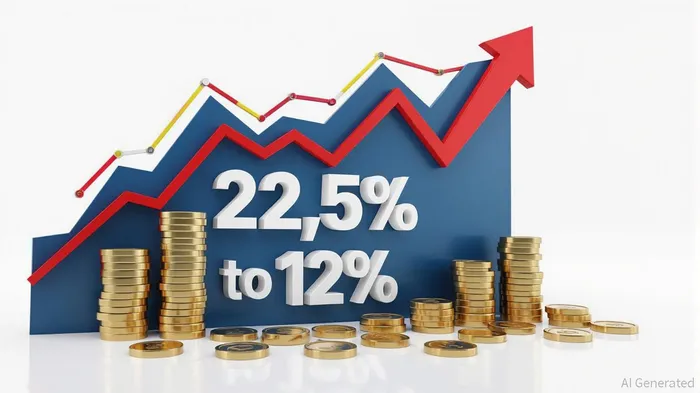 —frees up millions in cash flow for reinvestment in operations, R&D, or M&A. For a sector where capital efficiency is critical, this reduction positions GLASF to outpace rivals constrained by high financial costs.
75% Existing Investor Conversion: A Vote of Confidence
The most striking aspect of this recap is the participation of existing preferred shareholders. A staggering 75% of Series B and C holders opted to exchange their shares into the new Series E Preferred Stock. This collective decision signals that a majority of the company's long-term debt holders believe in GLASF's trajectory. Meanwhile, non-participating investors were redeemed in full, effectively pruning the shareholder base to retain only those aligned with the company's vision.
New Capital and Insider Skin in the Game: $12.9M Backing
The $14.7 million infusion from new investors is a strong tailwind for growth, but the real story lies with insiders. Directors, officers, and major shareholders committed $12.9 million (16.6% of the total) to the Series E offering, opting to swap existing holdings and purchase additional shares. This isn't passive holding—it's active bet-making. Insiders' skin-in-the-game sends a powerful message: they're not just talking about growth; they're financially invested in it.
Unlocking Value Through Conversion and Redemption Terms
The Series E Preferred Stock's structure offers two pathways to value realization: conversion and redemption.
- Conversion Terms:
- Convertible into a new Class B common stock at $9.00 per share.
- Ultimately exchangeable on a one-for-one basis into GLASF's publicly traded Equity Shares.
This two-step conversion ensures holders can access liquidity as GLASF's equity gains traction.
- Redemption Triggers:
- The company can redeem Series E Preferred Stock in five years if three conditions are met:
- Equity Shares' 60-day VWAP reaches $12.00.
- Average daily trading volume exceeds 1 million shares.
- Equity Shares list on a major U.S. exchange.
Meeting these milestones would allow GLASF to buy back preferred shares at par plus accrued dividends—a win-win if equity value has grown.
Strategic Positioning: Growth and Liquidity Milestones
This refinancing isn't just about survival; it's about scaling. By lowering costs and securing capital, GLASF can:
- Expand its California footprint: As one of the most regulated and lucrative cannabis markets, California offers untapped opportunities for vertically integrated players.
- Pursue accretive acquisitions: A healthier balance sheet could fuel M&A to consolidate regional competitors or enter new verticals.
- Achieve redemption triggers: The $12.00 stock price and trading volume targets are ambitious but achievable if GLASF executes its growth strategy.
Risks and Considerations
- Regulatory hurdles: Cannabis remains a Schedule I drug federally, limiting access to traditional banking and interstate commerce.
- Market competition: The sector is crowded, and execution missteps could dilute margins.
- Equity dilution: Conversion of preferred shares into common stock could pressure short-term valuations.
Investment Thesis: Act Now, or Risk Missing the Lift-off
GLASF's refinancing is a masterclass in capital restructuring. By slashing dividend costs, securing insider backing, and setting clear redemption goals, the company has laid the groundwork for a liquidity-driven turnaround. Investors should note three key catalysts:
- Near-term: The immediate cash flow boost from reduced dividends.
- Mid-term: New capital deployed into growth initiatives.
- Long-term: Potential redemption of preferred shares at a premium, unlocking value for all stakeholders.
For contrarian investors willing to bet on a cannabis leader with a disciplined capital strategy, GLASF presents a compelling risk/reward profile. Monitor the stock's approach to the $12.00 threshold and trading volume trends—these metrics will signal whether redemption conditions are within reach.
In a sector notorious for boom-and-bust cycles, Glass House Brands has engineered a refinancing that's part cost-cutting, part confidence-building, and wholly strategic. This isn't just about surviving the next quarter—it's about building a sustainable, scalable cannabis powerhouse. The question isn't whether GLASF can grow, but whether investors will board the train before it leaves the station.
Actionable Takeaway: Consider initiating a position in GLASF, with a focus on the preferred stock's conversion/redemption terms and equity upside. Set price targets aligned with the $12.00 redemption trigger and monitor trading volume closely.







Comentarios
Aún no hay comentarios