
GigaCloud's Strategic Position in the B2B E-commerce Market: Assessing Growth Potential Through Investor Engagement and Global Expansion
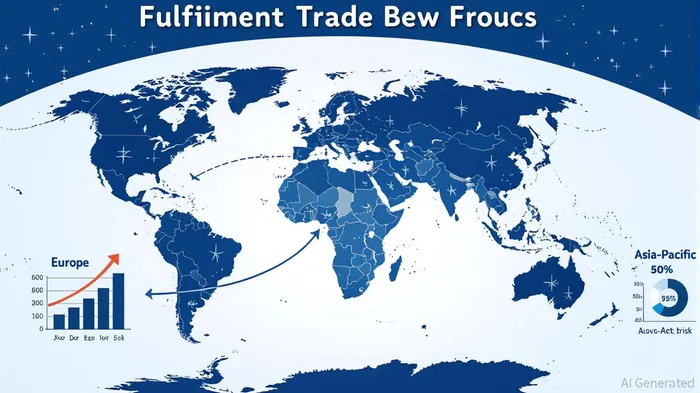
In the rapidly evolving B2B e-commerce landscape, GigaCloud Technology IncGCT--. (GCT) has emerged as a formidable player, leveraging strategic investor engagement and global infrastructure expansion to solidify its market position. As the company navigates challenges like U.S.-China trade tensions and shifting consumer demands, its ability to scale operations in high-growth regions and maintain robust financial performance positions it as a compelling case study for investors.
Investor Engagement: A Catalyst for Visibility and Growth
GigaCloud's proactive participation in key investor events underscores its commitment to transparency and market visibility. The company's Q2 2025 earnings call on August 7, 2025, delivered record revenue of $322.6 million and net income of $34.6 million, outpacing expectations[3]. This was followed by its appearance at the Sidoti Small Cap Virtual Conference on September 17–18, where CFO Erica Wei highlighted the firm's strategic priorities[2]. Such events not only provide critical updates on financial health but also signal confidence to institutional investors, a factor that could drive further capital inflows. Analysts project 3.1 EPS for 2025, aligning with GigaCloud's guidance of $295M–$310M in Q3 revenue[5], suggesting strong alignment between management and market expectations.
Global Expansion: Europe as a Strategic Pillar
GigaCloud's geographic diversification has been a cornerstone of its growth strategy. Europe, in particular, has become a strategic pillar, contributing 25% of global revenue in Q2 2025[1]. The region's Gross Merchandise Value (GMV) surged 59% year-over-year, driven by a 24.9% increase in active third-party (3P) sellers and a 50.9% rise in active buyers[4]. To support this momentum, GigaCloudGCT-- has expanded its European logistics network, including a new 409,300-square-foot fulfillment center in Germany[6]. This infrastructure not only reduces shipping times and costs but also enhances cross-border transaction capabilities, critical for a B2B platform connecting Asian manufacturers with European resellers[1].
Asia-Pacific Ambitions and Cross-Border Logistics
Beyond Europe, GigaCloud is eyeing the Asia-Pacific region, where it aims to increase its market share from 12% to 25% by 2025[6]. The company has launched regional data centers in Singapore and Sydney to bolster service capabilities[6], while its existing fulfillment network spans 39 facilities across five countries, covering over 11.2 million square feet[6]. This logistical footprint enables efficient handling of bulky goods, a niche in the B2B sector where GigaCloud's Supplier Fulfilled Retailing (SFR) model offers a competitive edge[4]. The Asia-Pacific market, projected to reach $543 billion by 2025, represents a high-growth opportunity[6], particularly as the company's GMV in the region grew 31% year-over-year[4].
Strategic Innovation: SFR and Branding-as-a-Service
GigaCloud's technological differentiation lies in its SFR model, which allows suppliers to manage inventory and fulfillment while leveraging the company's global delivery network[4]. This approach mitigates risks for sellers and enhances operational efficiency, a critical factor in maintaining 13.6% net margins—well above industry averages[1]. Complementing this is the “Branding-as-a-Service” initiative, designed to help sellers differentiate in crowded markets[6]. These innovations, coupled with strategic acquisitions like the Noble House portfolio[4], position GigaCloud to capture a larger share of the B2B e-commerce value chain.
Risks and Mitigants
Despite its strengths, GigaCloud faces headwinds, including margin pressures from U.S. market softness and geopolitical uncertainties. However, its disciplined execution—such as SKU rationalization under the Noble House portfolio[4]—and a focus on non-U.S. markets provide a buffer. The company's exploration of M&A opportunities in Europe and technologies for brick-and-mortar integration[6] further underscores its agility in addressing challenges.
Conclusion: A High-Growth Play in B2B E-commerce
GigaCloud's strategic positioning—marked by investor transparency, global infrastructure expansion, and innovative business models—positions it as a leader in the B2B e-commerce sector. With Europe as a growth engine and Asia-Pacific as a future frontier, the company's ability to scale while maintaining profitability makes it a compelling investment. As it navigates macroeconomic headwinds, its focus on cross-border logistics and technological differentiation will be critical to sustaining its trajectory.







Comentarios
Aún no hay comentarios