
Ghana's Security Crossroads: How Regional Tensions Fuel Defense Sector Growth in Africa
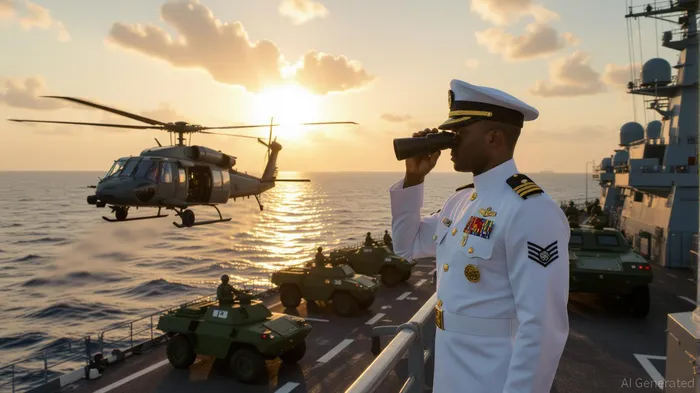
Africa's defense sector is undergoing a quiet but significant transformation, driven by a confluence of geopolitical instability, economic fragility, and the growing influence of transnational threats. Nowhere is this shift more evident than in Ghana, a West African nation grappling with a perfect storm of political uncertainty, economic decline, and security challenges. For investors, the implications are clear: regional instability is creating a tailwind for defense spending, and Ghana's strategic position in the Gulf of Guinea makes it a critical node in a broader regional security architecture.
The Perfect Storm: Political, Economic, and Security Challenges
Ghana's recent political landscape has been marked by volatility. The 2024 election of President John Mahama, following a decade of governance under Nana Akufo-Addo, underscores a public demand for reform amid a deepening economic crisis. The country's 2022 IMF bailout, coupled with rising poverty and inflation, has eroded trust in institutions. This environment has fueled social unrest, with protests and strikes becoming increasingly common. Meanwhile, security threats are evolving. Farmer-herder conflicts, illegal mining (galamsey), and cross-border criminal networks are destabilizing communities, particularly in the northwest. These issues are compounded by the spillover effects of jihadist activity in the Sahel, with groups like JNIM and ISGS expanding their reach into West Africa.
The military's growing role in domestic affairs—such as the 2021 invasion of Parliament and recent reports of soldiers firing at voting stations—has further eroded public confidence. Corruption and human rights abuses within security forces have weakened their effectiveness, creating a vacuum that criminal and extremist actors exploit. This dynamic is not unique to Ghana but is part of a broader trend across Africa, where weak governance and resource constraints leave nations vulnerable to both internal and external threats.
Defense Spending on the Rise: A $509 Million Opportunity
Ghana's defense budget, currently valued at $317 million (2024), is projected to grow at a compound annual growth rate (CAGR) of 11.3% through 2029, reaching $509.6 million. This surge is driven by three key factors:
1. Regional Instability: The Sahel's descent into chaos, including military coups in Niger and Mali, has forced Ghana to prioritize border security and intelligence-sharing.
2. Maritime Threats: Piracy in the Gulf of Guinea, which cost the region $2.5 billion in lost oil revenue in 2023, has elevated naval modernization to a top priority.
3. Domestic Security Gaps: The need to address galamsey-related violence, farmer-herder disputes, and organized crime is pushing the government to invest in armored vehicles, tactical communication systems, and unmanned aerial vehicles (UAVs).
The procurement pipeline is already taking shape. The EU's 2024 donation of 100 armored vehicles to Ghana's military highlights the urgency of land-based security. Meanwhile, contracts for military fixed-wing aircraft (led by EmbraerERJ-- and AERO Vodochody) and naval combatants (including light frigates) are expected to dominate spending. Tactical communication systems, supplied by Israeli firm Elbit SystemsESLT--, will also see heavy investment, as will cybersecurity infrastructure to counter digital threats.
Who Benefits? A Look at Key Players
Ghana's defense modernization is creating opportunities for both global and regional defense contractors. Here's a breakdown of the key players:
- AERO Vodochody (Czech Republic): A leading supplier of military aircraft, including the L-159 ALCA, which is likely to feature in Ghana's air force modernization.
- Embraer (Brazil): The Brazilian firm's fixed-wing aircraft, such as the EMB-314 Super Tucano, are well-suited for counterinsurgency operations in the region.
- Elbit Systems (Israel): A dominant force in tactical communication systems and defense electronics, with a strong track record in African markets.
- IVECO (Italy): The Italian manufacturer's armored vehicles, including the CBRN-protected models, are in high demand for border security and counterterrorism.
- Ukrspecsystems (Ukraine): Despite geopolitical tensions, Ukrainian firms remain competitive in niche markets like specialized military equipment.
For investors, these firms represent a mix of established players and emerging opportunities. However, the risks are non-trivial. Ghana's procurement process is plagued by corruption and lack of transparency, with single-sourced contracts often criticized for bypassing competitive bidding. The 2025 Blekusu Coastal Protection Project, a $317 million single-sourced initiative, has already drawn scrutiny for its opaque execution.
Strategic Considerations for Investors
The defense sector in Africa is not without its challenges. Political instability, economic volatility, and governance issues can derail even the most well-intentioned contracts. However, for those willing to navigate these risks, the rewards are substantial. Ghana's strategic location in the Gulf of Guinea—home to 15% of Africa's oil reserves—makes it a linchpin for regional security. Its participation in ECOWAS peacekeeping missions further amplifies its importance.
Investors should focus on two areas:
1. Regional Defense Contractors: Companies with a proven track record in West Africa, such as Elbit Systems and IVECO, are well-positioned to benefit from Ghana's procurement boom.
2. Cybersecurity and Maritime Security Firms: As Ghana prioritizes digital infrastructure and naval capabilities, firms specializing in these areas (e.g., Sophos, HPE) will see increased demand.
Conclusion: A High-Risk, High-Reward Proposition
Ghana's defense sector is at a crossroads. The country's leaders face a daunting task: balancing the need for security with the imperative to restore public trust in institutions. For investors, the path forward is clear but fraught with challenges. The key lies in identifying firms that can navigate the complex political and economic landscape while delivering tangible value.
As regional instability persists and Ghana's defense budget expands, the defense sector will remain a critical area of focus. For those with the patience and insight to spot opportunities in this volatile environment, the rewards could be significant. But as always, due diligence is paramountPARA--. In a world where geopolitical risks are increasingly intertwined with economic outcomes, the ability to anticipate and adapt is the hallmark of a successful investor.







Comentarios
Aún no hay comentarios