
Ghana's Legalization of Cryptocurrency and the Rise of Fintech Opportunities
Ghana's bold move to legalize cryptocurrency trading in 2025 marks a pivotal moment in Africa's digital finance landscape. By passing the Virtual Asset Service Providers (VASP) Bill, the country has transformed a once-unregulated market into a structured ecosystem poised to attract global investment and innovation. 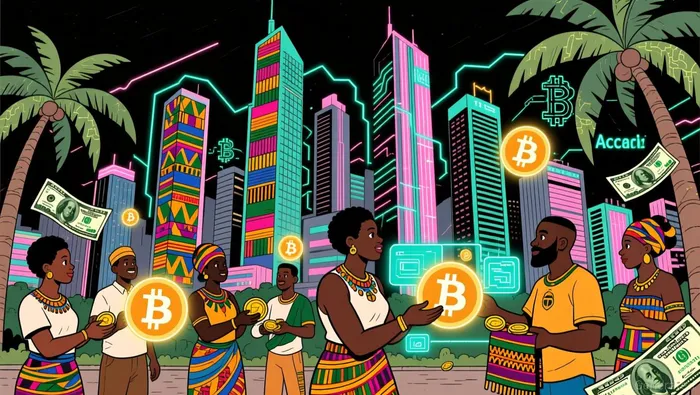 With 3 million Ghanaians-17% of the adult population-engaging in crypto transactions totaling $3 billion in 2024 alone, the regulatory shift under Bank of Ghana Governor Dr. Johnson Asiama is not just a response to demand but a strategic leap to position Ghana as a fintech leader in the region according to analysis.
A Regulated Framework for Stability and Growth
The VASP Bill establishes a dual licensing system, requiring crypto exchanges, wallet providers, and custody services to operate under the oversight of both the Bank of Ghana and the Securities and Exchange Commission. This framework aligns with global Anti-Money Laundering (AML) and Counter-Terrorist Financing (CFT) standards, ensuring compliance with FATF guidelines. By creating the Virtual Assets Regulatory Office (VARO), Ghana has institutionalized oversight, reducing risks of fraud and financial crime while fostering trust among investors according to official sources.
Critically, the Bank of Ghana announced its intent to fully regulate virtual assets by September 2025, a timeline that reflects urgency to capitalize on the market's momentum. This proactive approach contrasts with the "wait-and-see" strategies of neighboring countries, enabling Ghana to attract early-stage fintech startups and institutional capital. For instance, partnerships like Onafriq and Circle's use of USDCUSDC-- for cross-border payments highlight the potential for stablecoins to drive financial inclusion and remittance efficiency.
Fintech Opportunities: Innovation Meets Infrastructure
The VASP Bill's emphasis on consumer protection and innovation has unlocked new avenues for fintech startups. Tokenized assets, decentralized finance (DeFi) platforms, and blockchain-based identity solutions are now viable within a regulated environment. Startups leveraging Ghana's youthful, tech-savvy demographic-over 60% of whom are under 35-can tap into a market where mobile-based crypto adoption has surged due to inflation and currency volatility.
Moreover, the Fintech and Innovation Office (FIO) continues to support experimentation through regulatory sandboxes according to industry reports, allowing startups to test products without immediate compliance burdens. This hybrid model balances innovation with risk management, a critical factor for investors seeking scalable solutions. For example, Ghana's regulatory alignment with Kenya and Nigeria suggests a regional network effect, where cross-border fintech collaborations could amplify market reach.
Investment Inflows and Regional Momentum
Ghana's crypto ecosystem is no longer a niche market. Regional data reveals that Sub-Saharan Africa's on-chain value inflows grew by 52% between July 2024 and June 2025, reaching $205 billion. While Ghana's specific figures remain unquantified, its $3 billion in 2024 transactions and impending institutional-grade regulations position it to capture a significant share of this growth.
The Bank of Ghana's December 2025 deadline for full regulation is expected to attract institutional investors wary of unregulated markets. By enforcing AML/KYC protocols and creating a legal foundation for crypto custody, Ghana reduces the risks associated with speculative capital while encouraging long-term investment. This is particularly relevant for global players seeking emerging markets with clear regulatory pathways-a rarity in the crypto space.
Strategic Entry Points for Investors
For investors, Ghana's ecosystem offers three key entry points:
1. Infrastructure Providers: Firms building secure, compliant crypto exchanges or custody solutions will benefit from the mandatory licensing regime according to industry analysis.
2. DeFi and Tokenization Platforms: With 17% of Ghanaians already using crypto, decentralized lending and asset tokenization could disrupt traditional banking.
3. Cross-Border Payment Partnerships: Stablecoin networks like USDC, already operational in Ghana, present opportunities to reduce remittance costs and expand financial access.
However, risks remain. Regulatory enforcement must keep pace with innovation, and macroeconomic volatility-such as inflation or currency devaluation-could impact user adoption. Investors should prioritize partners with strong local expertise and regulatory alignment.
Conclusion: A New Frontier in African Fintech
Ghana's legalization of cryptocurrency is more than a regulatory milestone-it's a blueprint for how emerging markets can harness digital assets to drive financial inclusion and economic resilience. By balancing oversight with innovation, the country has created a fertile ground for fintech growth. For investors, the window to enter a regulated, high-growth ecosystem is now open. As global capital increasingly seeks emerging markets with clear governance, Ghana's strategic pivot positions it as a linchpin in Africa's digital finance revolution.





Comentarios
Aún no hay comentarios