
Ghana's Crypto Legalization: A Strategic Gateway to Africa's Fastest-Growing Digital Economy
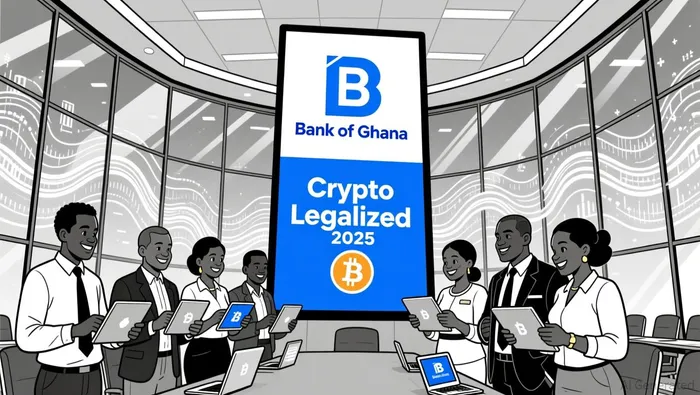
Ghana's decision to legalize and regulate cryptocurrencies in 2025 marks a pivotal moment in Africa's digital economy. By passing the Virtual Asset Service Providers (VASP) Bill in December 2025, the country has transformed its crypto landscape from an unregulated frontier into a structured ecosystem ripe for institutional investment. This shift, driven by the Bank of Ghana (BoG) and aligned with global anti-money laundering (AML) standards, positions Ghana as a strategic hub for capitalizing on Africa's surging digital finance revolution.
A Regulatory Framework Built for Growth
The VASP Bill, now law, grants the BoG authority to license and supervise virtual asset service providers (VASPs), including exchanges, custodians, and lending platforms. This framework mirrors international best practices while addressing local needs. For instance, the establishment of VARO within the BoG ensures oversight of crypto activities, balancing innovation with consumer protection. The law also mandates compliance with AML and KYC protocols, a critical step in attracting institutional capital that prioritizes risk mitigation.
Institutional investors are particularly incentivized by the introduction of a 15% capital gains tax on crypto profits, which formalizes the sector's integration into Ghana's tax system. This move not only legitimizes crypto as a viable asset class but also creates a predictable revenue stream for the government, further stabilizing the economic environment for foreign and domestic investors.
Institutional Opportunities in Regulated Crypto Infrastructure
The BoG's regulatory push has unlocked multiple avenues for institutional investment:
Licensed VASPs as Core Infrastructure
The BoG has mandated that all VASPs register by August 2025, with full licensing expected by mid-2026. This creates a pipeline of investable assets for institutional players seeking to back compliant platforms. For example, Ghana's fintech ecosystem is already seeing partnerships like Fortek's collaboration with Codebase to develop the Digibanc platform, which leverages blockchain for digital banking solutions. Such projects align with the BoG's goal of expanding financial inclusion while adhering to regulatory guardrails.Fintech-Blockchain Synergies
Ghana's crypto adoption-nearly 3 million users conducting $3 billion in transactions annually has spurred demand for infrastructure that bridges traditional finance and digital assets. The BoG's exploration of a central bank digital currency (e-Cedi) and blockchain-based identity verification systems opens opportunities for institutional investors to fund or partner with fintechs building interoperable solutions.Cross-Border Collaboration and Tax Compliance
The Ghana Revenue Authority's (GRA) role in taxing crypto gains ensures transparency, a key concern for institutional investors. By aligning with the Financial Action Task Force (FATF) guidelines, Ghana reduces the risk of being greylisted, making it an attractive destination for global capital seeking compliant markets.
Strategic Positioning in Africa's Digital Economy
Ghana's regulatory clarity contrasts sharply with the crypto ambiguity in many African nations. By legalizing crypto trading and establishing a robust licensing regime, the country is attracting attention from global asset managers and venture capital firms. For instance, the BoG's collaboration with SEC and FIC ensures joint oversight of trading, custody, and tokenization activities, creating a multi-layered regulatory environment that mirrors advanced markets.
Moreover, Ghana's crypto adoption rate-ranking among the top five in Sub-Saharan Africa highlights its potential as a regional testbed for scalable digital finance models. Institutions investing in Ghana's regulated infrastructure can leverage this early-mover advantage to expand into neighboring markets with less mature regulatory frameworks.
Risks and Mitigations
While the opportunities are compelling, institutional investors must navigate challenges such as enforcement capacity and cross-border coordination. The decentralized nature of crypto requires technical expertise and international cooperation, areas where Ghana's VARO and BoG are actively building capabilities. Additionally, the 15% capital gains tax may initially deter speculative investors, but it reinforces long-term stability-a net positive for institutional portfolios.
Conclusion
Ghana's crypto legalization is more than a regulatory milestone; it's a strategic gateway for institutional capital to tap into Africa's fastest-growing digital economy. By combining legal certainty, AML compliance, and a thriving fintech ecosystem, the country offers a blueprint for responsible innovation. For investors, the key lies in targeting licensed VASPs, blockchain-enabled fintech partnerships, and infrastructure projects that align with Ghana's vision of a digitally inclusive future.







Comentarios
Aún no hay comentarios