
Germany's Resurging Private Sector: A Strategic Opportunity in Services-Driven Growth
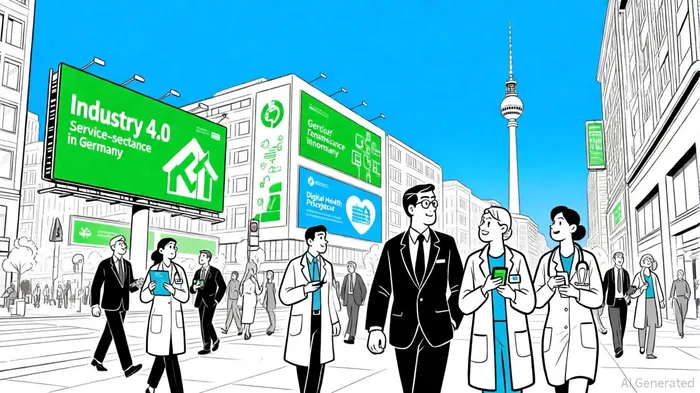
Germany's economy is undergoing a seismic shift. For decades, the country's manufacturing prowess—embodied by its legendary —anchored its global competitiveness. But today, the service sector is surging as a new engine of growth. , the writing is on the wall: investors must pivot their focus to the service-oriented SMEs driving this transformation.
The Case for Services: Outperforming Manufacturing
The service sector's resilience isn't just a blip. According to a Reuters analysis, Germany's services sector now outpaces its industrial segment in growth potential, . This gap represents untapped opportunity. , the first expansion in four months[2], signaling a rebound in new business and employment. While challenges like subdued demand persist, the sector's agility—particularly among SMEs—is outpacing the rigid structures of traditional manufacturing.
Policy Tailwinds: The
Germany's 2025 Coalition Agreement is turbocharging this shift. The government is slashing bureaucratic hurdles, streamlining GDPR compliance for SMEs, and introducing a “one-stop shop” digital platform for administrative services[1]. These reforms reduce compliance costs by up to 7% of working time[3], freeing SMEs to innovate. For investors, this means lower operational friction and higher scalability for service firms.
High-Conviction Sectors: , , and
Digital Health. Startups like Ada Health ($167 million raised) and HelloBetter . , these firms are prime candidates for explosive growth.
Green Tech, driven by Germany's 2045 climate neutrality goal. Startups like Noah Labs (€3 million in seed funding for AI telemonitoring) and AERA Health . Government programs like the Social Climate Fund (€5.3 billion) and .
Industry 4.0, . SMEs adopting IoT, automation, . Partnerships like Siemens-Merck's smart factory collaboration[3] underscore the sector's momentum.
Enablers: Funding, Infrastructure, and Innovation Hubs
Germany's ecosystem for SMEs is unparalleled. The , while the INVEST Grant , de-risking high-growth ventures[1]. Infrastructure investments—like nationwide fiber-optic networks and satellite-driven rural connectivity[1]—are further fueling digital adoption. Innovation hubs in Berlin, Munich, and Stuttgart are attracting talent and capital, creating a flywheel effect for service-sector startups[2].
The Investment Thesis
Here's the bottom line: Germany's service-oriented SMEs are uniquely positioned to capitalize on structural shifts in digitalization, sustainability, and policy support. While manufacturing struggles with global headwinds, the service sector is gaining momentum. For investors, this means backing companies like Ada Health, HelloBetter, and Noah Labs, which combine cutting-edge innovation with government-backed scalability. The 2025 Coalition Agreement's focus on reducing red tape and fostering digital sovereignty[1] ensures these firms can thrive without the regulatory drag that has historically stifled growth.
This is not a speculative bet—it's a calculated play on a nation redefining its economic future. The time to act is now.







Comentarios
Aún no hay comentarios