
Germany's Q2 GDP Growth: Navigating Resilience and Structural Challenges in a Fragile Recovery
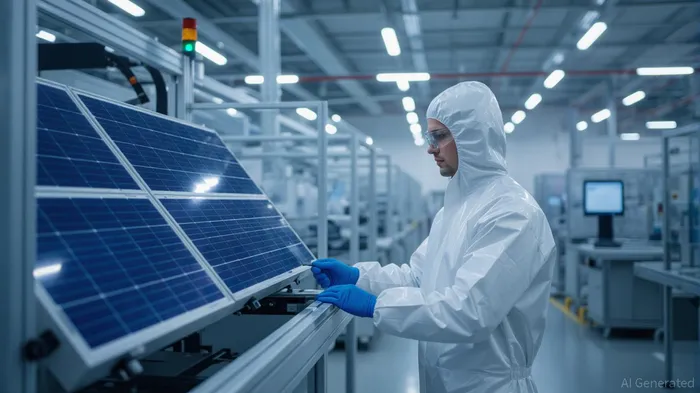
Germany's Q2 2025 GDP growth of 0.4% quarter-on-quarter (QoQ) and 0.4% annual growth may seem modest, but it marks a critical inflection point in a seven-quarter recession that has tested the resilience of Europe's largest economy. While the economy contracted by 0.1% in Q2 compared to Q1, the annual figure outperformed expectations, signaling that the worst of the downturn may be easing. For investors, this duality—fragility and nascent recovery—demands a nuanced approach, balancing optimism with caution.
Structural Challenges and the Seven-Quarter Recession
Germany's prolonged economic stagnation, spanning from Q4 2023 to Q2 2025, reflects a confluence of cyclical and structural headwinds. The manufacturing sector, once the backbone of the German economy, has faced a perfect storm: energy costs that remain 40% above pre-pandemic levels, U.S. tariff threats, and a global shift in demand toward China and emerging markets. The construction industry, meanwhile, has been crippled by high interest rates and material costs, with residential output contracting by 3.8% in 2024. Even the services sector, a traditional soft-landing cushion, has struggled with trade tensions and labor shortages, with 28% of companies reporting unfilled vacancies in early 2025.
Resilient Sectors: Export-Driven Manufacturing and Services
Despite these challenges, two sectors stand out as potential havens for investors: export-oriented manufacturing and services tied to domestic demand.
- Export-Driven Manufacturing
The machinery and automotive sectors, pillars of German industry, showed surprising resilience in Q2 2025. A 1.2% monthly rebound in industrial output in May 2025, driven by fabricated metal products (+18.2%) and transport equipment (+6.8%), highlights Germany's enduring competitiveness in high-value goods. Export orders from non-Eurozone markets, particularly the U.S. and Asia, surged by 9.0%, suggesting that German manufacturers can still capture global demand despite energy cost disadvantages.
However, this resilience is not without risks. Energy-intensive industries like chemical production and fertilizers remain vulnerable, with companies like the Piesteritz nitrogen plant scaling back operations due to unprofitable energy costs. For investors, the key is to focus on firms with diversified export portfolios and exposure to green technologies—such as Trumpf and MAN Energy Solutions—which are better positioned to navigate the energy transition.
- Services: Domestic Demand and Tourism
The services sector, including retail and tourism, expanded moderately in Q2 2025, buoyed by pent-up domestic demand and a rebound in international travel. Germany's low unemployment rate (3.6% in 2025) and modest wage growth have supported consumer spending, while public services and healthcare showed robust growth. This segment offers a counterweight to the struggles of manufacturing and construction, with companies in logistics, hospitality, and digital services likely to benefit from the gradual normalization of economic activity.
Strategic Entry Points and Long-Term Risks
For investors, the path forward involves identifying sectors with durable competitive advantages while hedging against structural risks:
Energy Transition and Infrastructure
Germany's €18.5 billion annual subsidies for renewable energy and grid upgrades present opportunities in offshore wind (e.g., Amprion's BalWin1 project) and battery storage. However, the immediate challenge of high energy costs remains, with grid fees and taxes still burdening manufacturers. Investors should prioritize companies involved in grid modernization and energy efficiency solutions.Labor Shortages and Automation
With 28% of German firms reporting unfilled roles, automation and AI-driven productivity tools are critical. Firms in industrial robotics and software-as-a-service (SaaS) for manufacturing are well-positioned to address this gap.Policy Uncertainty
The recent snap elections and coalition government's focus on short-term relief (e.g., 46-billion-euro tax package) introduce volatility. Investors should monitor fiscal policy shifts and their impact on corporate tax incentives and infrastructure spending.
Conclusion: A Calculated Approach to Recovery
Germany's Q2 GDP growth is a fragile but meaningful signal that the economy is stabilizing. While the seven-quarter recession has eroded momentum, the resilience of export-driven manufacturing and services offers a roadmap for strategic investment. Investors should focus on sectors with structural tailwinds—such as green manufacturing and domestic services—while hedging against energy costs and policy risks. The road to recovery will be long, but for those with a long-term horizon, Germany's industrial base and innovative sectors remain a compelling case for cautious optimism.







Comentarios
Aún no hay comentarios