
Germany's Political Volatility and Merz's Chancellorship: A Risky Gamble for Investors
The political turmoil surrounding Friedrich Merz’s narrow path to becoming Germany’s chancellor in May 2025 underscores a fragile political landscape with significant implications for investors. After a historic first-round failure to secure a parliamentary majority—a first in post-war German history—the coalition government’s survival now hinges on uneasy compromises. For markets, this instability raises questions about policy continuity, economic reforms, and Germany’s role as Europe’s economic engine.
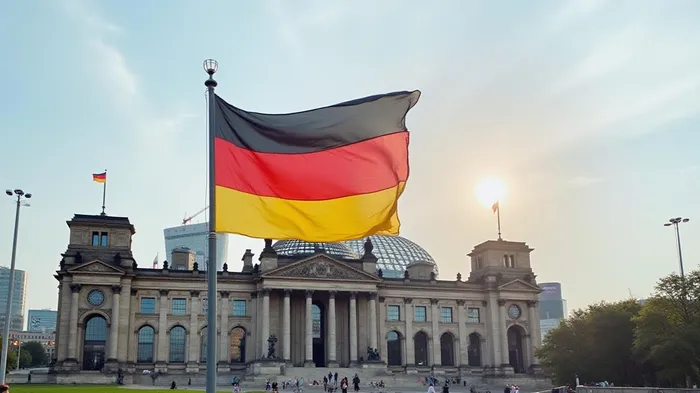
The Election Debacle: A Fractured Coalition
Merz’s CDU/CSU-SPD coalition, though holding 328 seats, faced immediate fissures. In the first round of voting on May 6, MerzTOMZ-- secured only 310 votes, 6 short of the required majority. While the second round narrowly passed with 325 votes, the delay revealed deep divisions. Analysts noted that the SPD’s reluctance to fully commit to Merz’s agenda—such as corporate tax cuts and energy subsidies—highlighted internal distrust.
The coalition’s fragility is further evident in the SPD’s weakened electoral base (16.4% in February’s vote) and the far-right Alternative for Germany (AfD)’s rise to second-largest party. This shift has intensified scrutiny of Merz’s ability to govern, as even minor policy disputes could unravel the coalition.
Economic Policies Under Pressure
Merz’s economic agenda—centered on tax cuts, energy price controls, and infrastructure investment—now faces hurdles. The initial market reaction to the first-round failure was stark: the DAX plummeted 1.8%, reflecting investor anxiety over leadership uncertainty. While Merz’s eventual victory stabilized markets temporarily, the coalition’s internal tensions could delay critical reforms.
For instance, corporate tax cuts, a cornerstone of his plan to boost competitiveness, may be diluted if SPD lawmakers demand trade-offs. Meanwhile, Germany’s energy sector, already grappling with inflationary pressures, could see prolonged uncertainty if subsidies are delayed.
International and Domestic Risks
Geopolitically, Merz’s abrasive leadership style and criticism of U.S. policies complicate transatlantic relations. As Germany prepares for G7 and NATO summits, his ability to navigate U.S. protectionism while maintaining European unity remains untested. Domestically, the AfD’s resurgence poses a dual threat: its influence could further polarize policy debates, and its classification as a “right-wing extremist” group may divert political capital from economic reforms.
Investment Implications: Navigating the Uncertainty
Investors should remain cautious but opportunistic. Sectors tied to Merz’s agenda—such as renewable energy, manufacturing, and infrastructure—could see short-term gains if policies proceed. However, prolonged political instability may pressure sectors reliant on government spending, like healthcare and public services.
The DAX’s post-vote volatility signals broader market skepticism. While the index recovered slightly after Merz’s second-round victory, its year-to-date performance (down 4.2% as of May 2025) reflects lingering doubts about Germany’s economic trajectory. Investors might consider hedging with defensive stocks or German government bonds, which have seen yields dip to 1.2%—a sign of flight-to-safety demand.
Conclusion: A Fragile Foundation for Growth
Merz’s chancellorship offers a cautionary tale for investors. With a coalition holding the thinnest majority in German history, even minor disagreements could disrupt policy implementation. The DAX’s May 6 drop—a 1.8% plunge—underscores markets’ sensitivity to political instability, while the SPD’s weakened position and the AfD’s rise amplify risks to long-term governance.
For now, sectors aligned with Merz’s agenda may see fleeting opportunities, but sustained growth requires coalition cohesion. As Volker Resing, author of a Merz biography, noted, “Everything is wide open” until stability is restored. Until then, investors are advised to prioritize flexibility and risk mitigation in German equities, keeping a watchful eye on coalition dynamics and the DAX’s volatility.
In a landscape where political fractures could easily deepen, Germany’s economic future remains as uncertain as its political present.







Comentarios
Aún no hay comentarios