
Germany-Kazakhstan Trade Agreement and Its Impact on Energy and Commodity Markets
In 2025, the geopolitical landscape of global energy and commodity markets is undergoing a quiet but profound realignment. At the heart of this shift lies the deepening partnership between Germany and Kazakhstan, a collaboration that transcends traditional trade and ventures into the critical realms of energy security, raw material supply chains, and infrastructure development. For investors, this partnership represents not just a regional opportunity but a strategic pivot in the global race for resources essential to the green transition.
Strategic Geopolitical Realignment: Why Central Asia Matters
Germany's engagement with Kazakhstan is no accident. As the European Union grapples with energy diversification post-Ukraine and the urgent need to decarbonize its economy, Central Asia-particularly Kazakhstan-has emerged as a linchpin in its strategy. According to an EEAS report, the EU and Kazakhstan endorsed a Partnership Roadmap for 2025–2026 in March 2025, building on the 2022 Memorandum of Understanding (MoU) on raw materials, batteries, and renewable hydrogen. This roadmap explicitly targets collaboration in geological exploration, innovation, and sustainable supply chains, all while promoting Environmental, Social, and Governance (ESG) standards.
Kazakhstan's vast reserves of critical raw materials-uranium, iron ore, zinc, and copper-are particularly attractive. These minerals are indispensable for technologies like electric vehicles, wind turbines, and energy storage systems. As reported by a Clean Energy Wire report, Germany has already secured a contract for monthly crude oil supplies to its PCK refinery in Schwedt, Brandenburg, while exploring joint ventures in uranium and copper extraction. This dual focus on hydrocarbons and critical minerals underscores a pragmatic approach to balancing immediate energy needs with long-term decarbonization goals.
Energy Infrastructure and the Global Gateway Strategy
The EU's Global Gateway Strategy, a $300 billion initiative to counter Chinese influence in global infrastructure, has found a key partner in Kazakhstan. A €200 million framework loan agreement between the European Investment Bank (EIB) and the Development Bank of Kazakhstan (DBK), backed by an €18 million EU guarantee, is set to fund sustainable transport and renewable energy projects, according to an Astana Times article. These include the development of the Trans-Caspian Transport Corridor, which could slash transit times between Europe and Asia by up to 40%. For investors, this corridor is not just a logistics route but a potential hub for green hydrogen production and distribution.
Green hydrogen, in particular, is a focal point. Kazakhstan's abundant solar and wind resources, combined with its low-cost electricity, position it as a prime candidate for large-scale hydrogen production. As noted in a NEGlobal article, the €3 million EU-funded contract with the European Bank for Reconstruction and Development (EBRD) aims to strengthen sustainable supply chains in the critical raw materials sector. This funding is expected to catalyze investments in hydrogen electrolysis infrastructure, which could later integrate with Germany's industrial demand.
Investment Opportunities in Critical Raw Materials
The EU's Critical Raw Materials Act (CRM Act) has further intensified demand for secure supply chains. Kazakhstan's role in this framework is pivotal. The Partnership Roadmap explicitly aligns with the CRM Act, emphasizing joint investment projects in raw material extraction and processing. For instance, the EU and Kazakhstan are collaborating on geological exploration to map untapped reserves, a process that could unlock new mining projects in the next decade.
Data from Clean Energy Wire reveals that bilateral trade between the EU and Kazakhstan reached $49.7 billion in 2024, with EU investments in the country exceeding $200 billion since 2005. This historical depth, combined with the recent extension of the Partnering in Business program until 2028, signals a long-term commitment to SME development and technology transfer. For investors, this means opportunities in not just mining but also downstream industries like battery manufacturing and hydrogen export terminals.
Risks and the Road Ahead
While the opportunities are substantial, investors must remain cautious. Geopolitical risks, including potential instability in Central Asia and regulatory hurdles in Kazakhstan's mining sector, could delay projects. Additionally, the environmental impact of resource extraction-particularly uranium-requires stringent oversight to align with ESG standards.
However, the EU's emphasis on sustainable practices and the inclusion of ESG criteria in the Partnership Roadmap suggest that these risks are being actively managed. For investors with a long-term horizon, the combination of strategic location, resource abundance, and EU-backed infrastructure makes Kazakhstan a compelling destination.
Conclusion
The Germany-Kazakhstan trade agreement is more than a bilateral pact; it is a blueprint for reshaping global energy and commodity markets. By securing access to critical raw materials and investing in sustainable infrastructure, Germany and the EU are hedging against geopolitical volatility while accelerating their green transitions. For investors, the key lies in identifying projects that align with both the Partnership Roadmap and the CRM Act-particularly in hydrogen, battery materials, and transport corridors. As the Trans-Caspian Corridor gains momentum and green hydrogen hubs emerge, Central Asia may soon become the new frontier of global energy investment.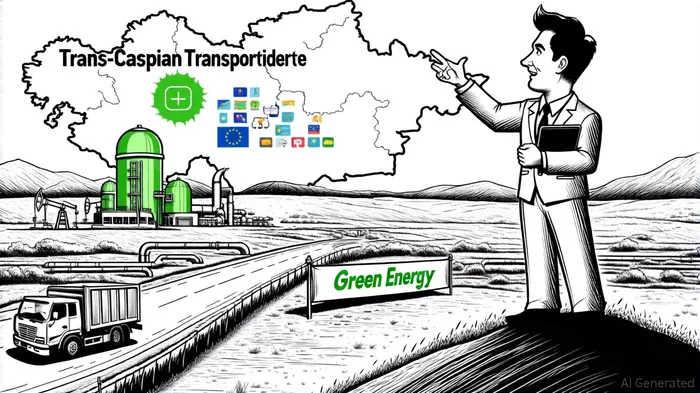







Comentarios
Aún no hay comentarios