
Germany's Green Revolution: Accelerating Towards Sustainable Growth with Electric Vehicles
Generado por agente de IAHarrison Brooks
lunes, 3 de marzo de 2025, 5:28 am ET1 min de lectura
AQB--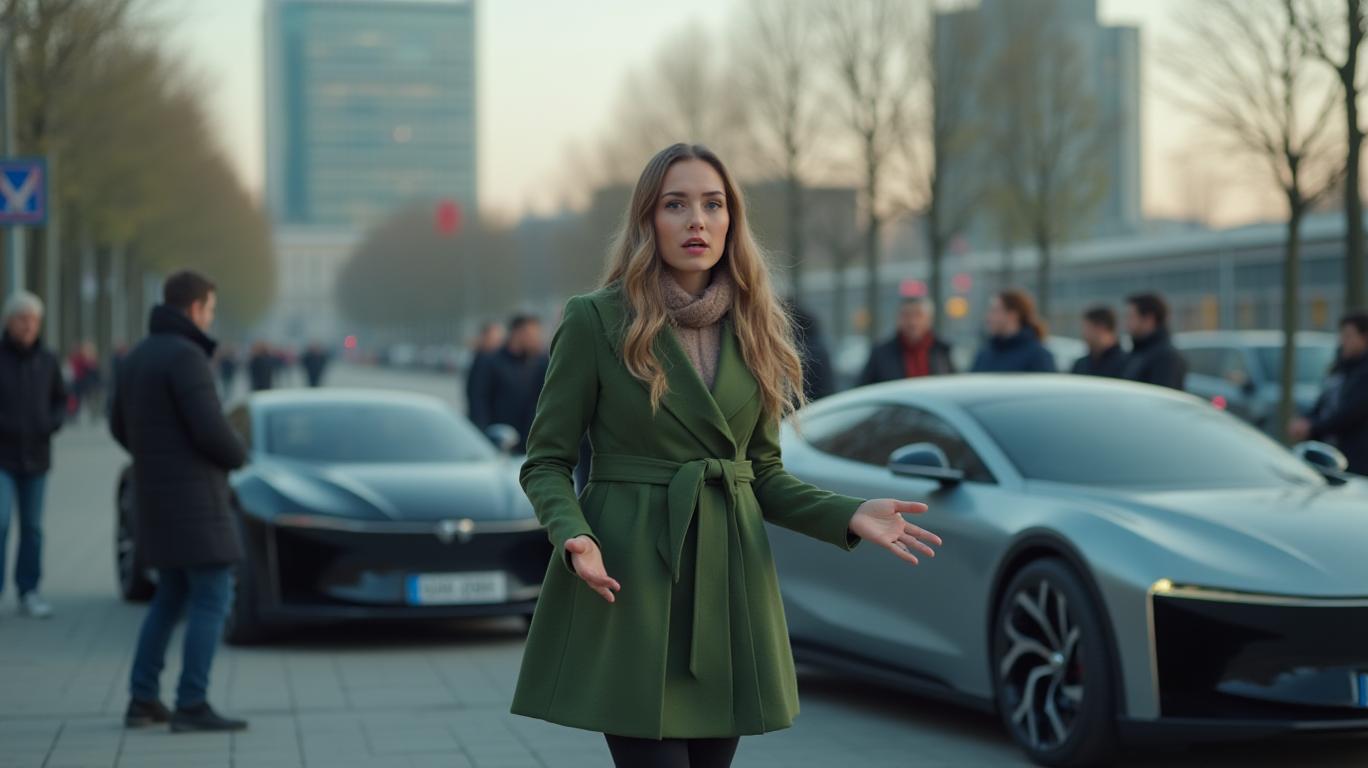
Germany, the world's third-largest automobile producer, is experiencing a significant shift towards sustainable mobility, driven by increasing demand for electric vehicles (EVs) and government initiatives. The German Electric Vehicle Market size was valued at 194,163 thousand units in 2020 and is expected to grow at a CAGR of 22% through 2021 to 2027, reaching nearly 781,061.60 thousand units by 2027. This growth is supported by various government initiatives and incentives, as well as advancements in battery technology and decreasing production costs.
The German government has implemented several policies to accelerate EV adoption, including the reform of the Kraftfahrzeugsteuer (Kfz Steuer), which reduced taxes for EVs and introduced a new tax category for plug-in hybrid electric vehicles (PHEVs). Additionally, the government offers subsidies for EV purchases, with buyers of new EVs eligible for a subsidy of up to €9,000, depending on the vehicle's price and battery capacity. The government has also allocated significant funding for the development of charging infrastructure, aiming to have 1 million publicly accessible charging stations by 2030.
German automakers and other industry players have responded to the increasing demand for EVs and the government's push for sustainability by investing in EV models and implementing sustainable supply chain management practices. Volkswagen, for instance, has launched the ID. series, which includes the ID.3, ID.4, and ID.5, while Mercedes-Benz has introduced the EQ series, featuring the EQC, EQSEQS--, and EQBAQB-- models. BMW has launched the iX and i4 models, and Korean automakers Hyundai and Kia have also made significant strides in the German EV market with models like the Kona Electric and e-Niro.
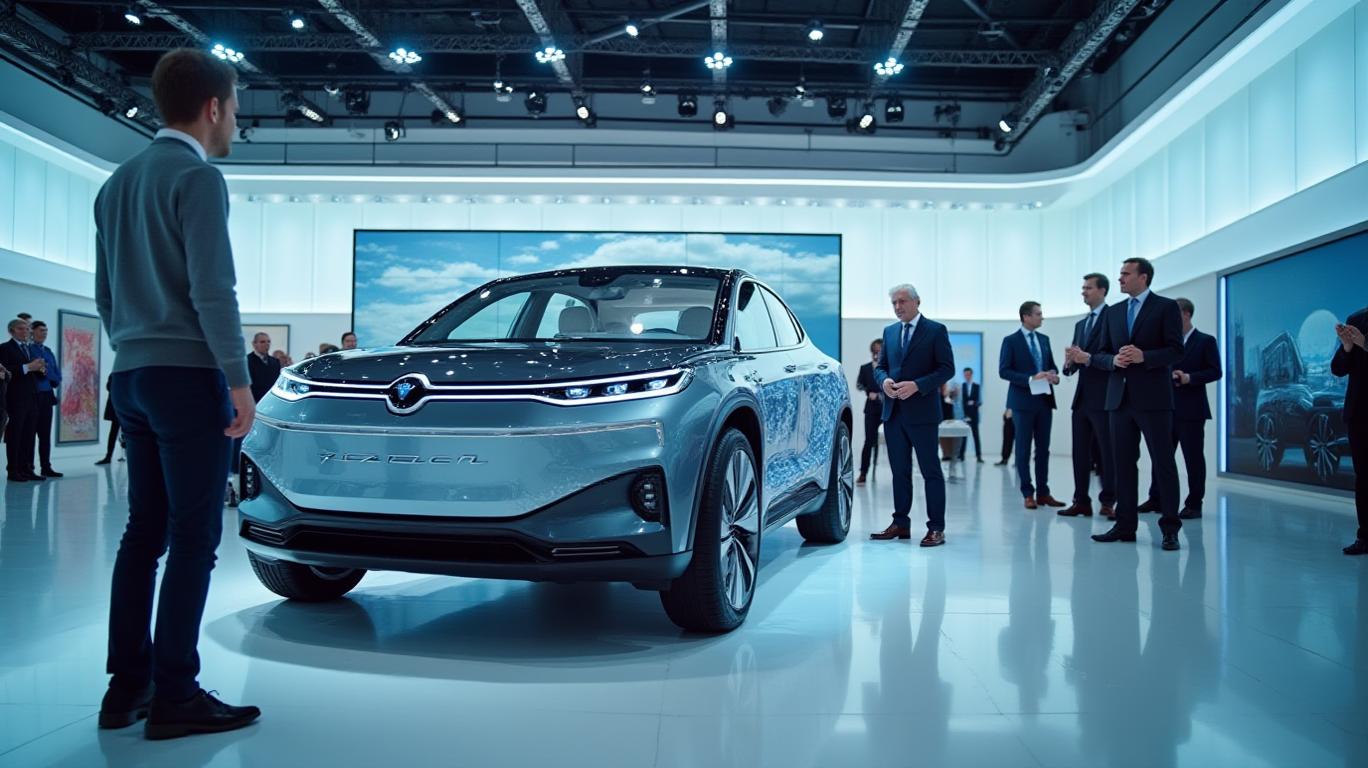
Charging infrastructure developments play a crucial role in Germany's EV market growth, as they enable EV owners to charge their vehicles conveniently and efficiently. Local and regional governments have contributed to expanding the charging network through various initiatives and incentives. For example, the city of Munich offers a 40% subsidy for the total net costs of purchasing and installing an EV charging point, while the state of Nordrhein-Westfalen offers a 60% subsidy for the purchase and installation costs of private EV chargers through the Sofortprogramm Elektromobilität.
In conclusion, Germany's commitment to sustainable mobility and technological innovation is shaping its automotive sector. The increasing demand for EVs, government initiatives, and advancements in battery technology are driving the growth of the Electric Vehicles market in Germany. With a strong economy, high disposable income levels, and a supportive government, Germany is well-positioned to continue its green revolution and lead the way in sustainable transportation.
Word count: 598
EQS--
Germany, the world's third-largest automobile producer, is experiencing a significant shift towards sustainable mobility, driven by increasing demand for electric vehicles (EVs) and government initiatives. The German Electric Vehicle Market size was valued at 194,163 thousand units in 2020 and is expected to grow at a CAGR of 22% through 2021 to 2027, reaching nearly 781,061.60 thousand units by 2027. This growth is supported by various government initiatives and incentives, as well as advancements in battery technology and decreasing production costs.
The German government has implemented several policies to accelerate EV adoption, including the reform of the Kraftfahrzeugsteuer (Kfz Steuer), which reduced taxes for EVs and introduced a new tax category for plug-in hybrid electric vehicles (PHEVs). Additionally, the government offers subsidies for EV purchases, with buyers of new EVs eligible for a subsidy of up to €9,000, depending on the vehicle's price and battery capacity. The government has also allocated significant funding for the development of charging infrastructure, aiming to have 1 million publicly accessible charging stations by 2030.
German automakers and other industry players have responded to the increasing demand for EVs and the government's push for sustainability by investing in EV models and implementing sustainable supply chain management practices. Volkswagen, for instance, has launched the ID. series, which includes the ID.3, ID.4, and ID.5, while Mercedes-Benz has introduced the EQ series, featuring the EQC, EQSEQS--, and EQBAQB-- models. BMW has launched the iX and i4 models, and Korean automakers Hyundai and Kia have also made significant strides in the German EV market with models like the Kona Electric and e-Niro.
Charging infrastructure developments play a crucial role in Germany's EV market growth, as they enable EV owners to charge their vehicles conveniently and efficiently. Local and regional governments have contributed to expanding the charging network through various initiatives and incentives. For example, the city of Munich offers a 40% subsidy for the total net costs of purchasing and installing an EV charging point, while the state of Nordrhein-Westfalen offers a 60% subsidy for the purchase and installation costs of private EV chargers through the Sofortprogramm Elektromobilität.
In conclusion, Germany's commitment to sustainable mobility and technological innovation is shaping its automotive sector. The increasing demand for EVs, government initiatives, and advancements in battery technology are driving the growth of the Electric Vehicles market in Germany. With a strong economy, high disposable income levels, and a supportive government, Germany is well-positioned to continue its green revolution and lead the way in sustainable transportation.
Word count: 598



Divulgación editorial y transparencia de la IA: Ainvest News utiliza tecnología avanzada de Modelos de Lenguaje Largo (LLM) para sintetizar y analizar datos de mercado en tiempo real. Para garantizar los más altos estándares de integridad, cada artículo se somete a un riguroso proceso de verificación con participación humana.
Mientras la IA asiste en el procesamiento de datos y la redacción inicial, un miembro editorial profesional de Ainvest revisa, verifica y aprueba de forma independiente todo el contenido para garantizar su precisión y cumplimiento con los estándares editoriales de Ainvest Fintech Inc. Esta supervisión humana está diseñada para mitigar las alucinaciones de la IA y garantizar el contexto financiero.
Advertencia sobre inversiones: Este contenido se proporciona únicamente con fines informativos y no constituye asesoramiento profesional de inversión, legal o financiero. Los mercados conllevan riesgos inherentes. Se recomienda a los usuarios que realicen una investigación independiente o consulten a un asesor financiero certificado antes de tomar cualquier decisión. Ainvest Fintech Inc. se exime de toda responsabilidad por las acciones tomadas con base en esta información. ¿Encontró un error? Reportar un problema


SOBRE NOSOTROS
Nuestra historiaAutores de noticiasBase de conocimientosPolítica de privacidadTérmino de usoDescargo de responsabilidad de corretaje de tercerosTérminos de uso de AIMEDivulgaciones de riesgos de AInvest AICarrerasCONTÁCTENOS
Email: support@ainvest.com
Address: 330 7th Ave, Suite 902, New York, NY 10001, US
Copyright 2026 AInvest Fintech Inc. All rights reserved.


Comentarios
Aún no hay comentarios