
Germany's Golden Crossroads: How Fiscal Stimulus and Stable Inflation Are Shaping Equity Winners
The German economy stands at a pivotal juncture. With April 2025 inflation easing to +2.1%—nearly matching the ECB’s 2% target—and a €500 billion infrastructure fund unlocking fiscal tailwinds, investors are primed to capitalize on sector-specific opportunities. This is not a time for broad market bets but a strategic pivot to domestic growth plays and inflation-resistant equities. Let’s dissect the sectors poised to thrive and the stocks to act on now.
Policy Stability: The Foundation for Risk-On Investing
The April inflation print, driven by falling energy prices and resilient service-sector cost pressures, confirms the ECB’s policy stability. With rates expected to remain near 3.5% through 2025, borrowing costs are low, and the risk of abrupt rate hikes is minimal. This environment favors equities, particularly those tied to Germany’s homegrown growth story.
The infrastructure fund—€400 billion allocated to federal projects and €100 billion to states—is a game-changer. By bypassing the debt brake, policymakers have created a 12-year fiscal runway for modernizing energy, transport, and climate resilience. Investors should focus on companies positioned to benefit from three key sectors:
1. Construction & Infrastructure: The Immediate Winners
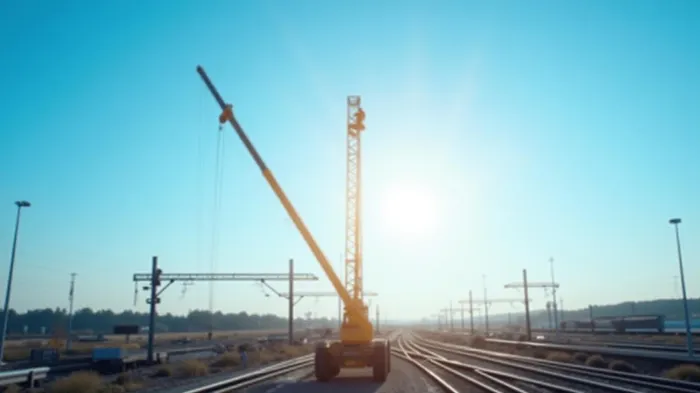
The fund’s €500 billion commitment to roads, railways, and renewable energy grids is a direct tailwind for construction firms. Hochtief (DBO) and Strabag (STRG) are at the forefront of projects like Germany’s hydrogen core network and rail modernization.
Why now?
- Project pipelines are accelerating: The fund’s first tranche will prioritize grid upgrades and climate adaptation.
- Valuations are attractive: Hochtief trades at 8.5x 2025E EPS, below its 10-year average.
- Moats are widening: These firms have decades of experience in complex public-private partnerships.
2. Green Tech: The Long Game in Climate Resilience
The Climate and Transformation Fund (KTF)—€100 billion dedicated to decarbonization—is fueling demand for renewable energy, hydrogen, and energy-efficient tech. Siemens Energy (SIE) and NextEra Europe (NEE) are leading in wind/solar infrastructure and grid tech.
Key catalysts:
- Hydrogen infrastructure boom: Germany’s plan to link industrial hubs via hydrogen pipelines creates a €100 billion market opportunity.
- Carbon pricing tailwinds: Firms with low-emission solutions gain pricing power as EU carbon prices hit €100/ton.
- Valuation upside: Siemens Energy’s R&D spend in fusion and CCS (carbon capture) is underappreciated.
3. Consumer Discretionary: Pricing Power in a Stable Inflation Regime
While headline inflation is low, service-sector inflation (+3.9% in April) signals pricing power for companies with sticky demand. Caterpillar (CAT) (via its German construction machinery arm) and Deutsche Telekom (DTE) are leveraging this to boost margins.
Why consumer discretionary?
- Inflation-resistant models: Firms with subscription-based services (e.g., Telekom’s cloud solutions) or premium brands (e.g., Porsche (PAH3)) can raise prices without losing volume.
- Low interest sensitivity: With rates stable, consumer spending on durable goods (cars, appliances) is less volatile.
Risks? Yes, but Manageable
- Geopolitical headwinds: U.S. tariffs and energy market volatility remain threats.
- Fund execution delays: Bureaucracy could slow project starts.
Mitigation: Invest in firms with diversified revenue streams (e.g., Siemens’ global wind business) and low debt.
Action Plan: Build a Portfolio for Germany’s Growth Phase
- Overweight infrastructure stocks: Hochtief (DBO) and Strabag (STRG) for near-term wins.
- Buy green tech leaders: Siemens Energy (SIE) and NextEra (NEE) for long-term moats.
- Anchor with consumer discretionaries: Caterpillar (CAT) and Telekom (DTE) for stable cash flows.
- Avoid: Utilities and traditional industrials lacking climate exposure.
The ECB’s stability, the infrastructure fund’s scale, and sector-specific tailwinds form a virtuous cycle for German equities. This is not a bet on a market rebound—it’s a sector-specific call to own the engines of Germany’s next decade of growth. Act now before these opportunities become consensus.
DISCLAIMER: Past performance does not guarantee future results. Individual circumstances may vary.







Comentarios
Aún no hay comentarios