
Germany's Fiscal Revival: Why Mid-Caps Are Poised to Lead the Next Growth Cycle
The German economy is undergoing a seismic shift. After years of fiscal restraint, Berlin has launched a €500 billion infrastructure spending blitz paired with sweeping constitutional reforms to spur growth. For investors, the underappreciated beneficiaries are the companies of the MDAX and SDAX—mid- and small-cap firms positioned to capture the upside of this historic fiscal pivot.
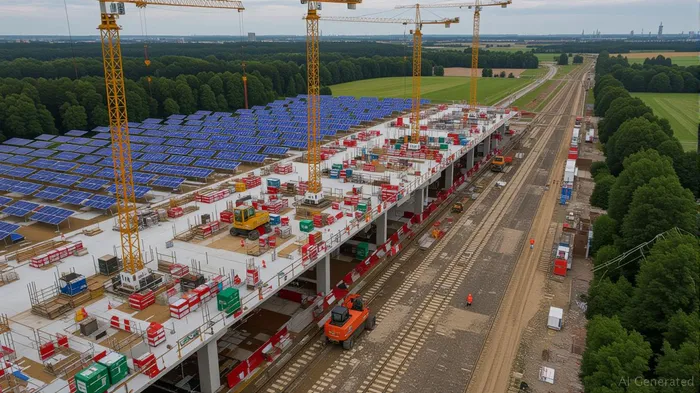
The Fiscal Stimulus: Scale and Structure
The 2025 reforms represent a paradigm shift. By exempting defense spending from debt constraints and allowing regional governments to borrow, Berlin has unlocked a spending spigot to fund projects in transport, energy, and digitization. A **** reveals that over €100 billion is earmarked for rail upgrades alone by 2029, while €46 billion in tax incentives targets private-sector innovation.
This isn't just about bridges and broadband—it's a structural reallocation of capital toward sectors where MDAX/SDAX firms dominate.
Why Mid-Caps Will Lead the Rally
The MDAX and SDAX indices—comprising companies like Hochtief (construction), KSB (industrial valves), and Diehl Defence—are inherently more leveraged to domestic demand. Unlike their DAX-listed peers, which rely on global exports, these smaller firms are embedded in local supply chains.
Three reasons for outperformance:
1. Domestic Focus: 70% of MDAX revenues come from Germany, versus just 40% for DAX firms.
2. Valuation Discount: The MDAX trades at a * of 13.6x, nearly 30% below the U.S. market.
3. *EPS Growth Surge: Analysts project 35.3% EPS growth for MDAX in 2025, versus 10% for the DAX.
Sector-Specific Opportunities
The stimulus isn't a blanket boost—it's a tailored playbook for specific industries:
1. Construction & Infrastructure
With €22 billion allocated to railways in 2025 alone, firms like Hochtief and Goldbeck stand to gain. Look for companies with exposure to:
- ****
- Underground construction for urban transit
- Smart grid equipment for renewable integration
2. Defense & Security
Berlin's pledge to double defense spending to 3.5% of GDP by 2029 has created a “halo effect” for subcontractors. Diehl Defence and Rheinmetall are beneficiaries, but so are smaller firms like Eisenmann, which provides precision machinery for defense equipment.
3. Digitization & Automation
The reforms mandate faster permitting and digitization of public services. This favors —think SAP's government cloud solutions or Software AG's process automation tools.
Risks: Bureaucracy and Labor Shortages
The reforms' success hinges on execution. While leadership changes—such as appointing ex-VC founder Verena Hubertz as Construction Secretary—aim to cut red tape, remain a concern.
Labor shortages in skilled trades could also stall progress. Germany's vocational training system is robust, but immigration reforms are critical to fill gaps.
Investment Strategy: Target the Best-Positioned Firms
- Overweight MDAX/SDAX: Focus on companies with direct contracts to infrastructure projects.
- Sector Picks:
- Construction: Hochtief (HOVG.DE), Goldbeck (GBE.DE)
- Defense: Diehl Defence (DIH1.DE), Eisenmann (EIS2.DE)
- Digitization: Software AG (SOW.DE), SAPSAP-- (SAP.DE)
- Hedge Volatility: Pair equity exposure with VIX ETFs or put options to mitigate geopolitical risks.
Conclusion: A Structural Turnaround
Germany's fiscal stimulus isn't just about spending—it's a reset of economic priorities. Mid-caps, with their domestic focus and valuation upside, are the ideal vehicles to capitalize on this transformation. While risks like bureaucratic inertia linger, the **** suggests the rewards outweigh the risks. For investors, this is a rare chance to profit from a structural revival in Europe's economic engine.
The time to position for Germany's next growth phase is now.







Comentarios
Aún no hay comentarios